If you’ve cleaned mold from the same spot two or three times and it keeps returning, you’re not dealing with unusually stubborn mold. You’re dealing with an unresolved moisture problem. Mold is a symptom. The moisture source is the actual problem, and until that’s addressed, treating the visible mold is like mopping around a running faucet.
Moisture Is Still Present
Mold needs four things to grow: a surface to grow on (available on virtually every building material), a temperature within a survivable range (most indoor environments qualify), mold spores (present in the air in virtually every building at low levels), and moisture. Remove any one of these four and mold cannot establish a colony. The only one of these four that is realistically controllable in a built environment is moisture. This is why every recurring mold situation, without exception, traces back to a moisture source that has not been fully identified and eliminated.
The Most Common Unresolved Moisture Sources Behind Recurring Mold
A Slow Leak That Has Never Been Properly Found
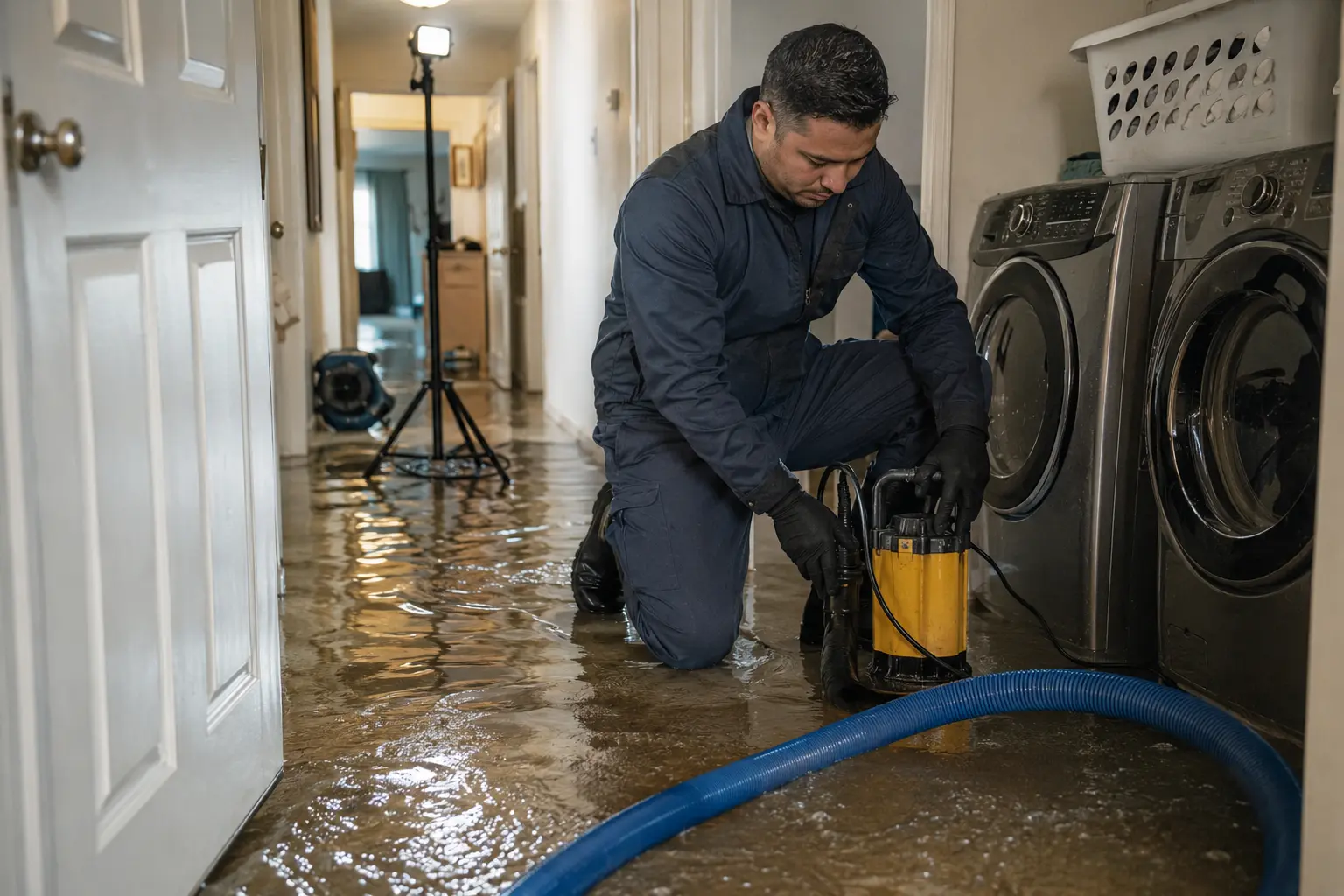
Plumbing leaks do not always announce themselves with visible water or an obvious drip. Pinhole leaks in supply lines, slow seeps at pipe joints, and failing wax seals at toilet bases can all introduce moisture into wall cavities, subfloors, and other concealed spaces at a rate too slow to create obvious visible signs, but fast enough to keep surfaces perpetually damp enough for mold to thrive. These leaks are found with moisture meters and sometimes thermal imaging, not by visual inspection alone. If mold keeps returning in the same spot and no obvious leak source has been identified, a thorough leak investigation rather than another mold treatment is the appropriate next step.
Roof or Ceiling Leak Continuing Between Rain Events
Intermittent roof leaks in Los Angeles often only produce visible symptoms during or after rain, but the moisture they introduce into the attic or ceiling assembly persists long after the rain stops. If the roof leak itself was never repaired, each subsequent rain event reintroduces moisture that sustains ongoing mold conditions even during the dry season. Mold treated between rain events appears to resolve but returns with the next storm because the entry point for moisture was never actually fixed.
Condensation From Poor Ventilation
This is one of the most frequently overlooked recurring mold causes, particularly in Los Angeles bathrooms, closets on exterior walls, and rooms with limited airflow. When warm, humid interior air meets a cooler surface, it deposits moisture. This condensation happens repeatedly, sometimes daily, producing a consistent source of moisture that surface mold treatment does not address because the moisture source is not a leak at all. The fix is ventilation improvement, insulation, or both, not repeated mold cleaning.
Incomplete Drying After the Original Water Event
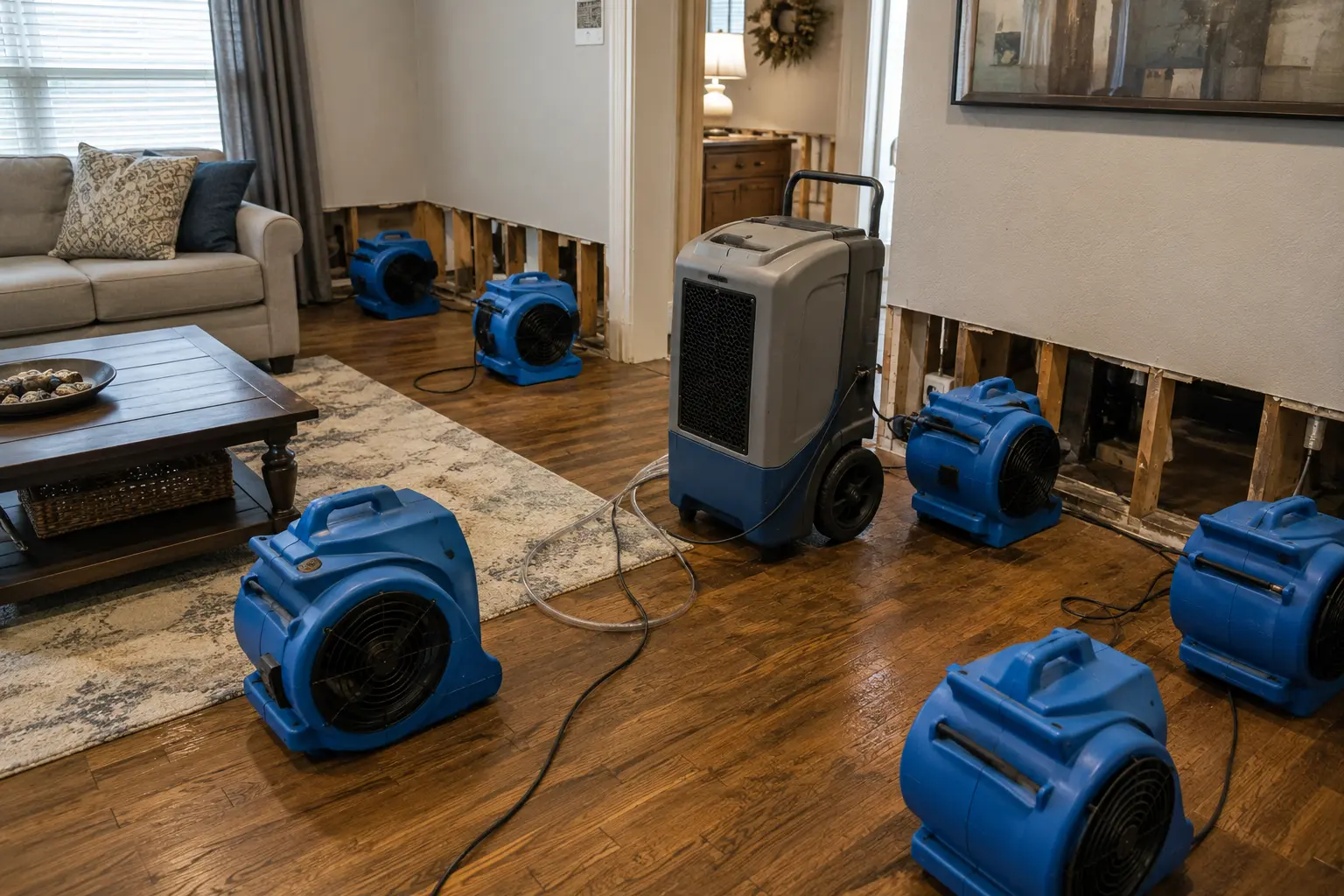
When the original water damage event that triggered mold growth was not fully dried, residual moisture trapped inside wall cavities, under flooring, or within structural framing continues to support mold growth even after visible surface mold was removed. This is one of the most common reasons mold recurs after professionally conducted remediation: the visible mold was removed, but materials that were not fully dried remained a moisture reservoir supporting regrowth. This is exactly why proper structural drying with verified moisture readings matters so much before any rebuilding or sealing work begins.
HVAC System Distributing Spores
If mold developed during a water event and the HVAC system was running during that period, spores almost certainly settled inside the ductwork. Every time the system runs afterward, it can redistribute those spores throughout the building, effectively reseeding areas that were already treated. Mold that returns in multiple rooms, or in rooms without any obvious moisture problem of their own, often points to HVAC contamination as a contributing factor. This requires ductwork cleaning and coil inspection as part of the remediation scope, not just surface treatment of the rooms where mold is visible.
Elevated Indoor Humidity as a Standalone Issue
Some recurring mold situations have nothing to do with a specific leak or water event. Properties with chronically high indoor humidity, generally above 60% relative humidity, can support mold growth on surfaces that are never directly wet, simply from persistent moisture in the air. Coastal-adjacent neighborhoods in Los Angeles, poorly ventilated units in multi-family buildings, and spaces with inadequate heating are all prone to this type of ambient-humidity-driven mold growth. The fix is reducing indoor humidity through improved ventilation, exhaust fans, or dehumidification, not treating mold on surfaces that will simply regrow in the same ambient conditions.
Why Surface Cleaning Alone Is Never Enough
Household cleaners, bleach sprays, and even professional surface disinfectants can eliminate visible mold colonies on a surface. What they cannot do is remove mold that has grown into porous materials below the surface, eliminate the moisture conditions that allowed mold to grow in the first place, or prevent regrowth if those conditions persist. This is the fundamental limitation of surface cleaning as a mold solution, and it is why the same spot keeps getting retreated without the problem ever really going away.
For mold growing on non-porous hard surfaces (tile, glass, metal) with an identified and resolved moisture source, surface cleaning can sometimes be an appropriate long-term solution. For mold growing on porous materials like drywall, wood, grout, or insulation, the affected material typically needs to be removed rather than cleaned, since the mold growth extends into the material rather than sitting only on the surface.
How Building Age Affects Recurring Mold in Los Angeles Specifically
Many homes across Highland Park, Echo Park, Boyle Heights, and other older Los Angeles neighborhoods were built in the early-to-mid 20th century, with plumbing systems, roofing materials, and vapor barriers that are well past their intended service lives. These properties are disproportionately prone to the slow, hidden moisture issues that cause recurring mold precisely because the infrastructure most likely to develop slow leaks is also the oldest and most likely to have multiple concurrent small failures rather than one obvious, dramatic one. A pinhole leak in 70-year-old galvanized pipe inside a wall that also has degraded or non-existent vapor barrier and aging window seals can introduce moisture from multiple sources simultaneously, making it genuinely harder to identify and resolve than a single new-construction leak.
For these older properties, a comprehensive investigation including camera inspection of drain lines, moisture mapping throughout suspected areas, and a review of the building’s ventilation adequacy tends to produce better outcomes than treating visible mold repeatedly without addressing the underlying infrastructure.
What a Proper Root-Cause Investigation Looks Like
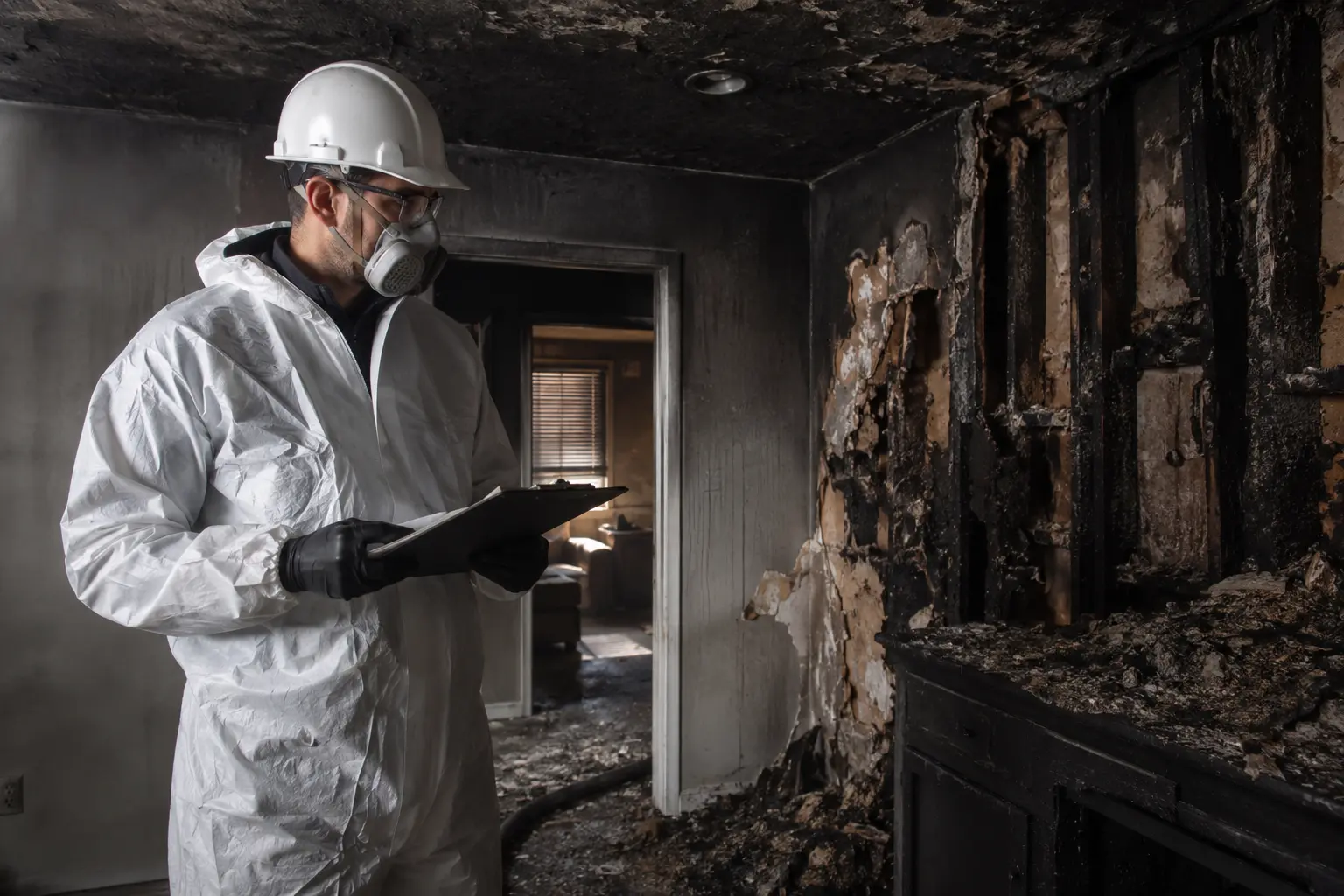
When mold keeps returning despite treatment, the right professional response is a root-cause investigation rather than another remediation pass. This typically involves moisture mapping throughout the affected area and adjacent spaces using meters and thermal imaging, as covered in our guide on moisture mapping for water damage. It may also include reviewing the property’s ventilation, checking HVAC components, inspecting plumbing lines in the affected area, and evaluating whether prior remediation actually removed all affected materials or only surface-treated them. The goal is to identify exactly why moisture keeps returning, not to assume the previous remediation was simply insufficient and do it again.
How to Actually Stop Mold From Coming Back
Step 1: Find and Fix the Moisture Source First
Before any mold treatment, the moisture source needs to be identified and resolved. This requires professional moisture assessment tools in many cases, not just visual inspection.
Step 2: Remove Affected Materials Rather Than Just Clean Them
Porous materials with mold growth need to be removed and replaced, not just treated in place. This is more extensive and expensive than surface cleaning, but it is the only approach that actually eliminates the mold colony rather than just addressing the visible surface portion of it.
Step 3: Dry the Structure Completely and Verify It
The remaining structure must be fully dried and confirmed dry with moisture meter readings before any new materials are installed. Rebuilding over materials that still hold residual moisture restarts the entire cycle.
Step 4: Treat Remaining Surfaces With Appropriate Antimicrobials
After removal of affected materials and confirmation of dryness, antimicrobial treatment of remaining structural surfaces provides a protective barrier before new materials are installed.
Step 5: Address the Environmental Conditions
If poor ventilation or chronic humidity contributed to the mold problem, these conditions need to be improved as part of the overall solution. Installing or upgrading exhaust fans, improving cross-ventilation, or adding a dehumidifier to chronically humid spaces reduces the ongoing risk of recurrence regardless of how thoroughly the current mold was addressed.
How Seasonal Patterns in Los Angeles Create Recurring Mold Cycles
Los Angeles has a climate pattern that creates a specific recurring mold cycle that many homeowners experience without recognizing the seasonal connection. During the dry summer months, moisture issues inside a building are often masked or temporarily resolved as ambient humidity drops and materials dry out naturally. Mold growth slows or becomes dormant. Then the winter rainy season arrives, ambient humidity rises, any unresolved moisture sources reactivate (roof leaks, foundation seeps, condensation on cold exterior walls), and mold reestablishes in the same locations it was present before.
This cycle repeats each year if the underlying moisture sources aren’t addressed during the dry months when conditions are actually favorable for remediation and repair work. A homeowner who cleans mold every spring after the rainy season but doesn’t address the structural issues causing it during the dry summer is essentially managing a symptom on a seasonal schedule rather than fixing the underlying problem. The dry season is actually the best time to address moisture sources: roofing repairs, pipe replacements, ventilation improvements, and waterproofing work are all easier and less disruptive when you’re not working against active rain intrusion.
The Relationship Between Mold and Air Quality in Los Angeles
Los Angeles already has air quality challenges from urban pollution and wildfire smoke, and adding elevated indoor mold to that mix compounds respiratory exposures that can affect sensitive individuals more significantly than in cleaner-air environments. This makes addressing recurring mold in Los Angeles properties not just a property maintenance issue but a genuine indoor air quality concern, particularly for households with asthmatic individuals, young children, elderly occupants, or anyone with a respiratory condition. The compounding effect of already-compromised outdoor air quality during wildfire events alongside elevated indoor mold spore counts is worth understanding as motivation for resolving recurring mold rather than treating it as a cosmetic nuisance.
Why DIY Mold Cleanup Can Make the Situation Worse
Beyond the fundamental limitation that surface cleaning doesn’t address the moisture source, DIY mold cleanup efforts can actively worsen the situation in a few specific ways that are worth understanding. Disturbing mold colonies without appropriate containment releases spores into the air in concentrations far higher than background levels. These spores then settle throughout the building, on furniture, in HVAC systems, and on surfaces in unaffected rooms, dramatically expanding the scope of contamination beyond the original affected area. This is why professional remediation establishes physical containment and runs HEPA air scrubbers during the work: to prevent the cleanup process itself from spreading the problem.
Additionally, some homeowners use bleach as a mold treatment on wood surfaces, which can actually create a nutrient-rich environment for mold regrowth in some situations, since bleach kills surface mold but the water component of the bleach solution can add moisture to already-damp wood, and the organic residue left behind after the bleach dissipates can support subsequent growth. Dry application methods and appropriate antimicrobial products designed for building materials, rather than household bleach applied to structural surfaces, are the more appropriate approach for any structural surface treatment.
How to Monitor for Mold Recurrence After a Remediation Job
After a professional remediation, it’s reasonable to keep a monitoring routine for the following six to twelve months to catch any recurrence early rather than letting it develop unnoticed. A practical monitoring approach doesn’t require any special equipment or frequent inspections; it mostly involves paying attention to a few specific indicators during normal daily use of the space.
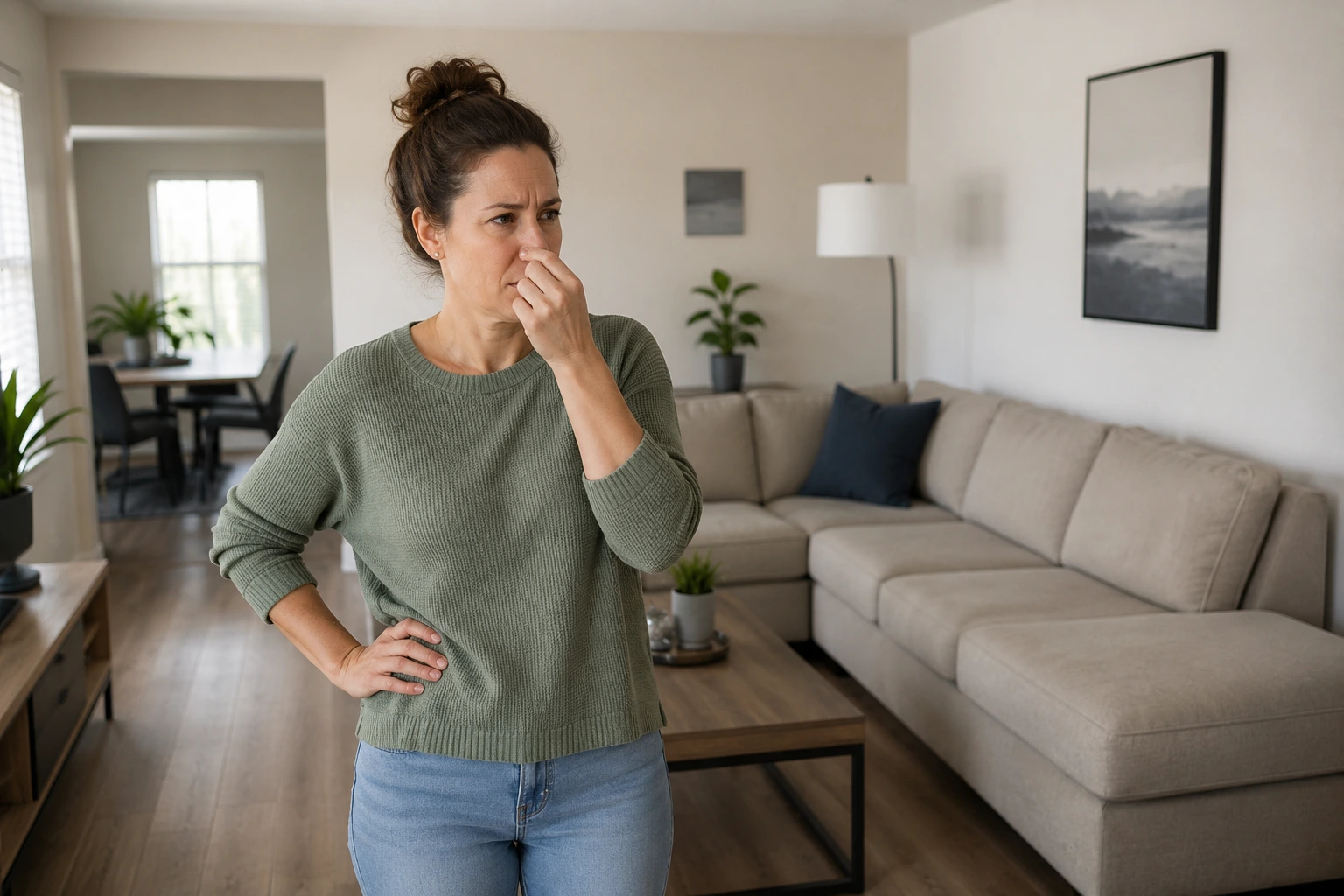
The most reliable early indicator of mold recurrence is smell, specifically a musty, earthy odor that wasn’t present before. This smell, caused by microbial volatile organic compounds released as mold grows, typically becomes detectable before mold becomes visible, giving you an early warning window to investigate before a new colony establishes itself extensively. Check particularly when the space has been closed up for a period, like first thing in the morning in a bathroom or when opening a door to a room that’s been kept closed, since smells that dissipate quickly with ventilation can indicate low-level mold growth that isn’t yet visible.
Beyond smell, watch for any new discoloration on walls, ceilings, or grout lines in the previously affected area, any return of symptoms (allergy-like reactions, respiratory irritation) that were present before remediation and resolved afterward, and any new moisture signs like condensation on surfaces that weren’t condensating before. An early-stage recurrence caught quickly is significantly easier and less expensive to address than one that’s been developing unnoticed for months.
What Whole-Home Humidity Control Looks Like in Practice
For properties with persistent humidity-driven mold issues rather than leak-driven mold, whole-home humidity control is the relevant long-term solution. This can take several forms depending on the property’s existing systems and the specific source of humidity.
A whole-home dehumidifier connected to the existing HVAC system is the most comprehensive solution for properties with central air conditioning, since it maintains target humidity levels throughout the entire conditioned space rather than just a single room. For properties without central HVAC or for specific problem areas, portable dehumidifiers in the highest-humidity spaces (basement, laundry room, bathroom) provide targeted control. Upgrading exhaust fans in bathrooms and kitchens to higher-capacity models on timers that run for 20-30 minutes after the space is vacated significantly reduces the humidity load these rooms introduce into the rest of the building.
The target indoor relative humidity range for mold prevention is generally 30-50%, with anything above 60% considered a meaningful risk zone. An inexpensive digital hygrometer placed in problem areas tracks actual humidity levels over time rather than relying on general impressions of whether a space “feels humid,” and helps confirm whether a ventilation or dehumidification improvement is actually achieving the target range or needs to be supplemented.
When to Call a Professional Instead of Attempting Another DIY Cleanup
If mold has returned after one or more previous cleaning attempts, the DIY cleaning approach has already demonstrated it is not solving the underlying problem. What is needed at that point is not a better cleaning product but a thorough investigation of why the moisture source has not been found or fully resolved. A professional assessment can identify moisture that is not visible to the naked eye, evaluate whether previous cleanup work actually removed all affected materials or only surface-treated them, and determine whether HVAC contamination is contributing to recurrence. For more on what a comprehensive mold follow-up assessment involves, see our companion guide on can mold come back after remediation.
Dealing with mold that keeps returning? Call ASAP Water Damage Restoration for a thorough root-cause assessment rather than another surface treatment, available across Los Angeles.
Los Angeles-Specific Mold Recurrence Factors
Los Angeles properties face unique challenges:
Coastal Moisture
Properties near the coast experience:
- Marine layer humidity
- Salt air increasing moisture
- Condensation from temperature differentials
- Year-round mold growth conditions
Solutions:
- Enhanced dehumidification
- Improved ventilation
- Regular moisture monitoring
- Mold-resistant materials in coastal properties
Aging Housing Stock
Many Los Angeles properties:
- Were built before modern moisture management standards
- Have inadequate ventilation systems
- Lack vapor barriers
- Have deteriorating plumbing and roofing
Solutions:
- Systematic upgrades during renovations
- Proactive plumbing replacement
- Addition of vapor barriers
- Ventilation system improvements
Earthquake Damage
Seismic activity can create:
- Plumbing stress fractures
- Foundation cracks
- Roof damage
- Slow leaks that support mold
Solutions:
- Post-earthquake inspections
- Prompt repair of damage
- Moisture monitoring in affected areas
Limited Rain Creating False Security
Los Angeles’s dry climate creates misconceptions:
- Homeowners underestimate moisture risks
- Limited rain means irregular roof inspections
- When rain occurs, drainage systems often fail from lack of maintenance
- Flash flooding overwhelms poorly maintained systems
Solutions:
- Regular maintenance regardless of recent rain
- Test drainage systems before rainy season
- Don’t assume dry climate prevents mold
What Renters Should Know About Recurring Mold
If you’re renting and dealing with mold that keeps coming back despite the landlord arranging remediation, a few things are worth understanding. Document every instance with photos and dated written communication to your landlord or property manager, since this creates a record showing the problem is ongoing rather than a single isolated incident. In California, landlords generally have a legal obligation to maintain habitable conditions, and recurring mold tied to an unaddressed structural or plumbing issue can fall under that obligation, though the specifics depend on your lease, local ordinances, and the circumstances involved. If a landlord’s remediation efforts repeatedly fail to resolve a moisture source they control (a building-wide plumbing issue, a roof affecting your unit specifically), it’s reasonable to formally request, in writing, that the underlying cause be investigated and fixed, not just the visible mold treated again.
Why “Just Bleach It” Doesn’t Actually Solve the Problem
A common DIY response to recurring mold is to simply clean the visible area with bleach or a similar household cleaner. This can remove surface mold and improve appearance temporarily, but it doesn’t address moisture trapped within porous materials like drywall or wood, and bleach in particular doesn’t effectively penetrate porous surfaces the way it’s often assumed to. This is part of why mold treated this way so often returns within weeks, the visible symptom was addressed, but neither the underlying moisture nor any mold growth already established beneath the surface was actually resolved.
Keep reading
- Mold Removal vs Mold Remediation vs Mold Abatement: What’s the Difference?
- How to Prevent Mold After Water Damage in Los Angeles
- How to Check for Mold After Water Damage
Need help now? See our Mold remediation in Los Angeles or call (323) 677-2811, 24/7.