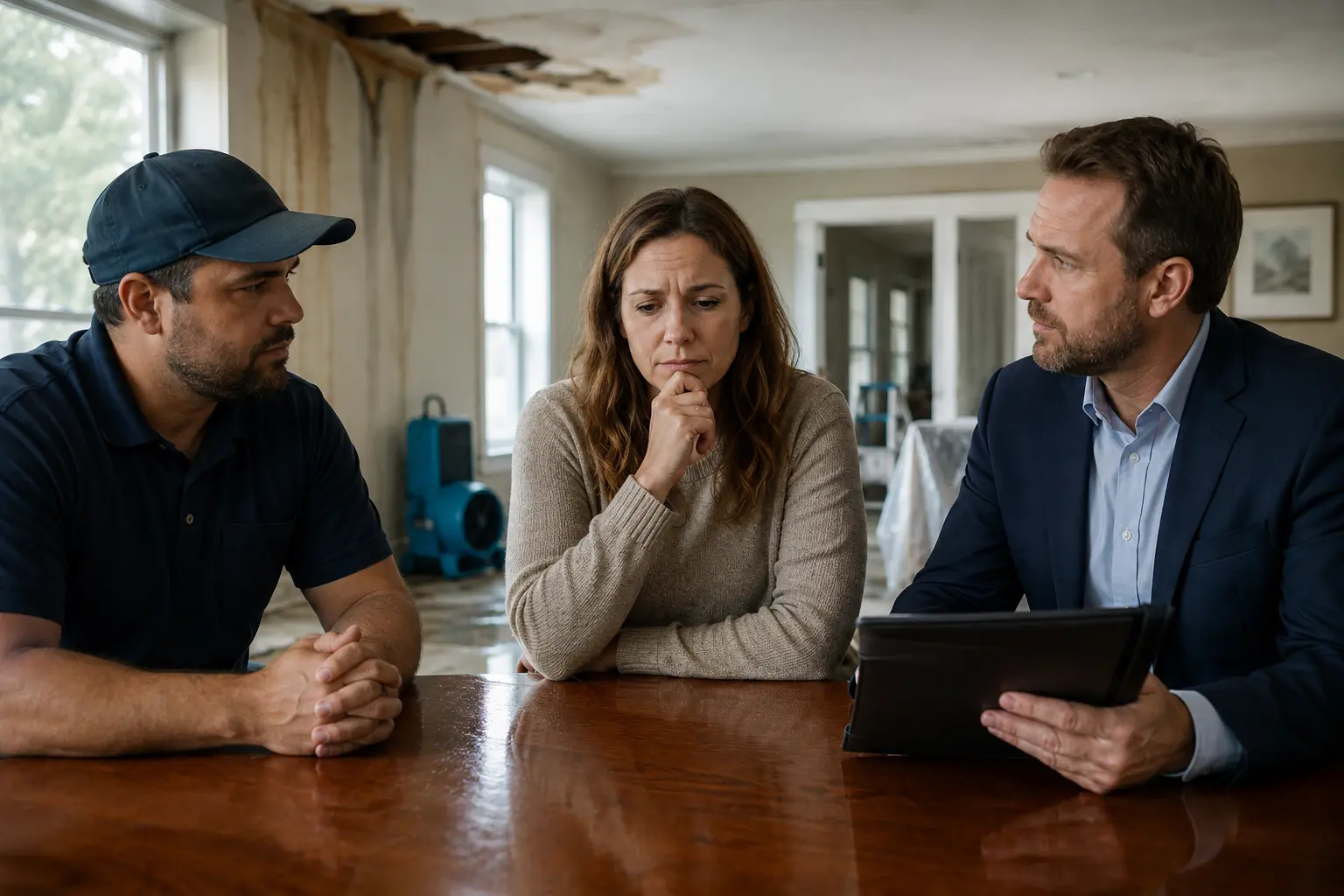
If you’ve called around for help after a leak or flood in Los Angeles, you’ve likely heard both “water mitigation” and “water restoration” used by different companies, sometimes by the same company in the same conversation. They’re not interchangeable, and understanding the distinction helps you know what’s actually happening at each stage of recovery and what you’re being billed for.
What Is Water Mitigation?
Water mitigation means stopping water damage from getting worse. It’s the emergency response phase that happens immediately after water enters a property, and its entire purpose is damage control, not rebuilding.
Water mitigation typically includes:
- Identifying and stopping the water source where possible
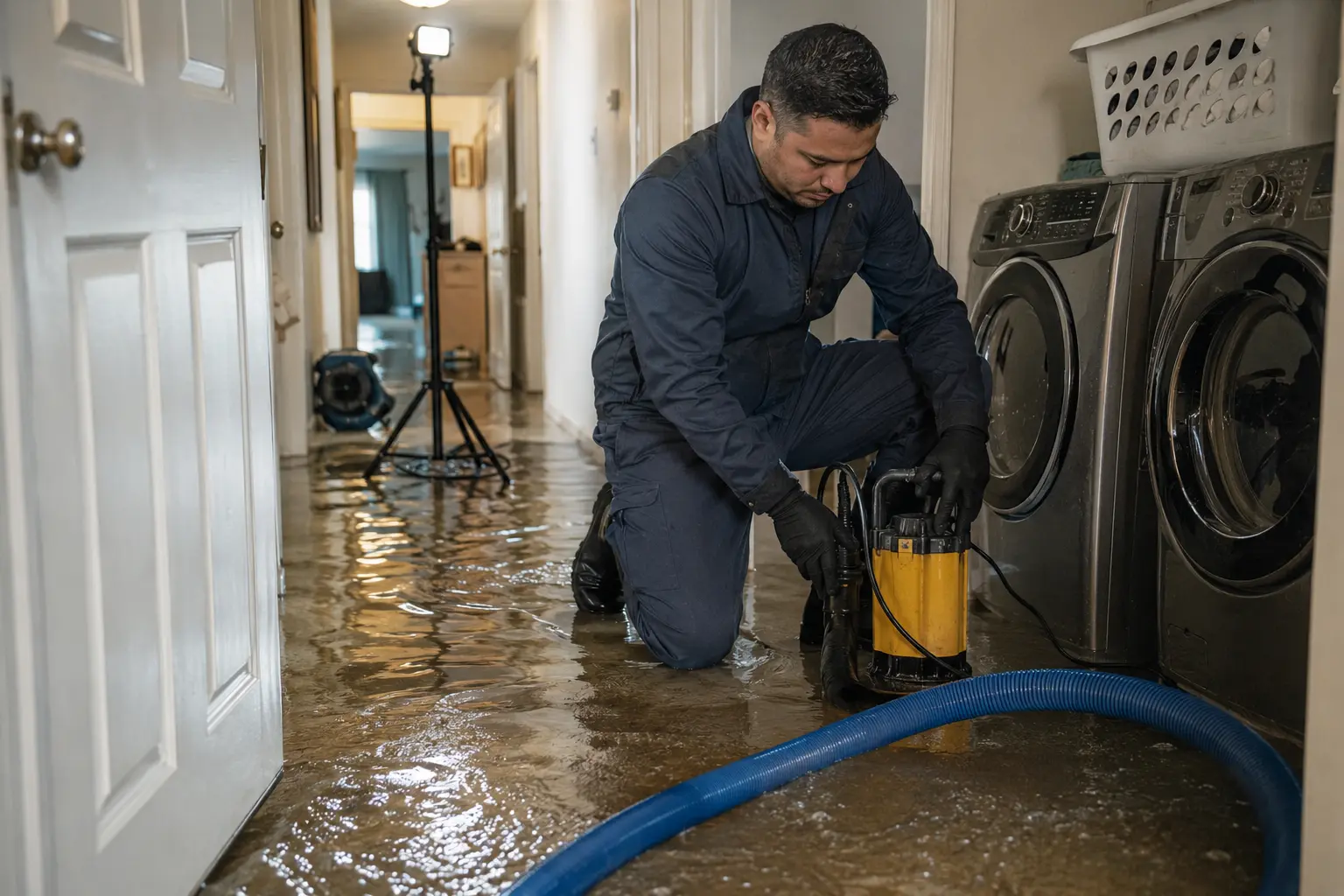
- Extracting standing water using pumps and extraction equipment
- Removing items and materials that can’t be saved before they cause further damage (like wet carpet padding or saturated insulation)
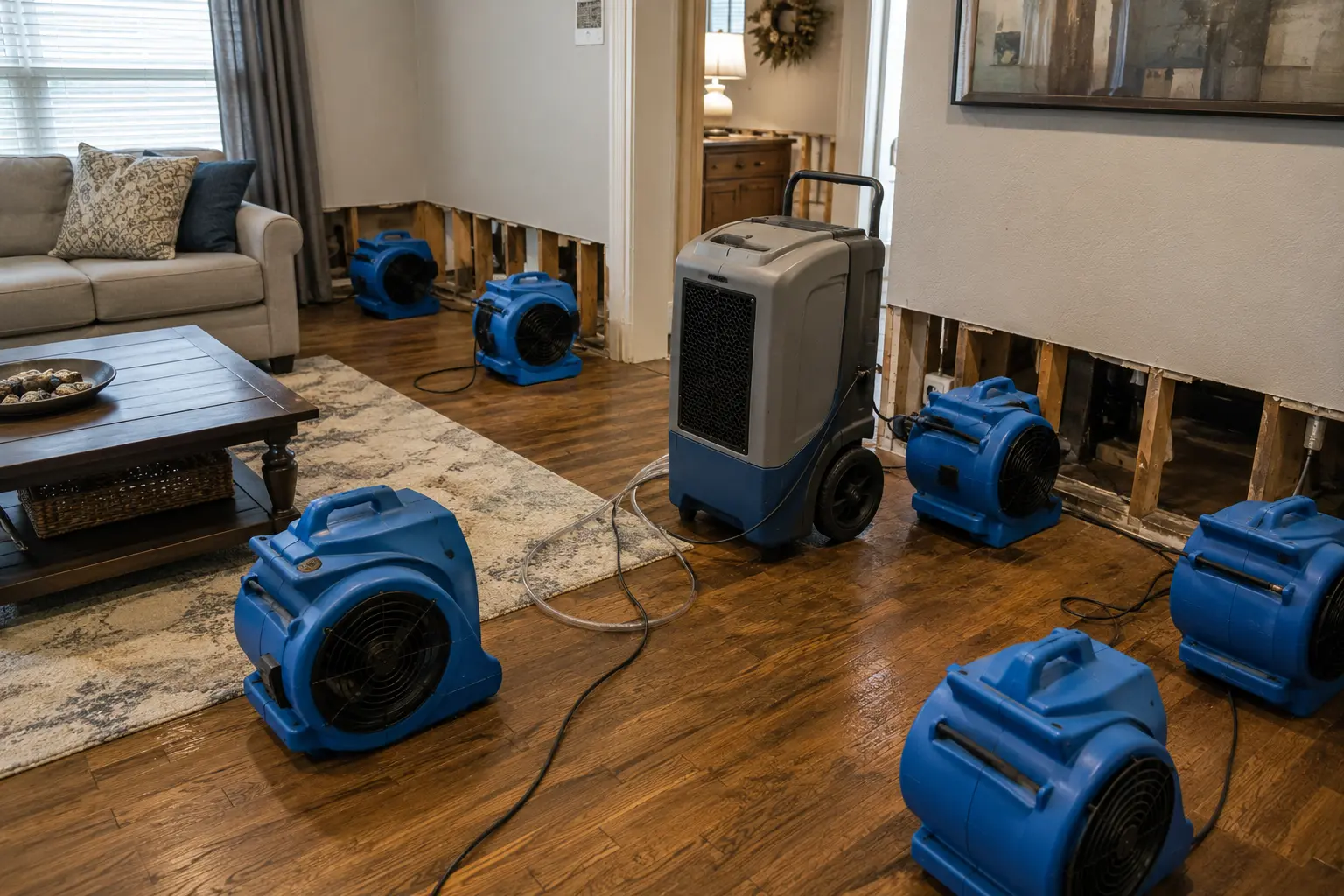
- Placing air movers and dehumidifiers to begin drying
- Applying antimicrobial treatment to prevent mold growth before it starts
Mitigation is almost always time-sensitive. Mold can begin developing within 24 to 48 hours of water exposure, so the speed of the mitigation response directly affects how much additional damage occurs and how extensive the eventual restoration needs to be.
What Is Water Restoration?
Water restoration is the rebuilding phase that happens after mitigation is complete and the property has been confirmed dry. While mitigation is about stopping damage, restoration is about reversing it, bringing the property back to its pre-loss condition.
Water restoration typically includes:
- Replacing drywall, flooring, baseboards, and insulation that were removed during mitigation
- Repainting and refinishing affected surfaces
- Reinstalling cabinetry, fixtures, and other built-ins
- Final inspection and walkthrough to confirm the space matches its original condition
Why the Distinction Matters for Timing
One of the biggest mistakes in water damage recovery is treating mitigation and restoration as a single, continuous task instead of two distinct phases with a hard checkpoint in between. Restoration work should never begin until mitigation has been verified complete, meaning moisture readings throughout the affected structure have returned to normal, dry levels. Builders who skip this step and rebuild over still-damp materials are essentially sealing moisture inside the wall, which is one of the most common causes of mold developing behind newly finished surfaces. For more detail on how proper drying is verified before any rebuilding starts, see our guide on structural drying services.
How Insurance Treats Mitigation vs Restoration
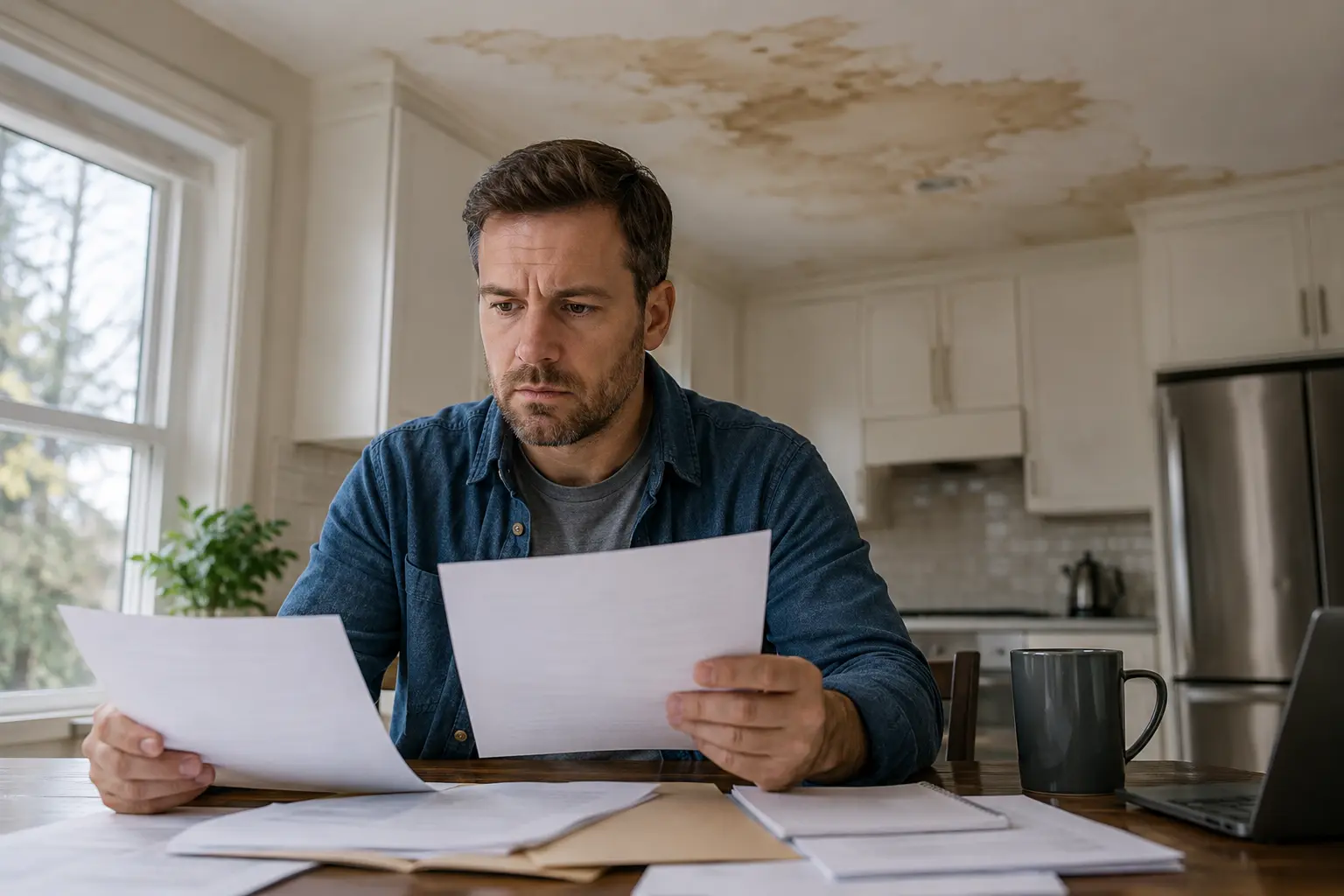
Most property insurance policies require policyholders to take reasonable steps to mitigate damage after a loss, and failing to do so can actually affect your claim. This is part of why mitigation needs to happen quickly, regardless of whether you’ve finalized anything with your insurance company yet. Restoration costs, on the other hand, are typically evaluated against your policy’s dwelling coverage and any applicable “like kind and quality” standards, meaning your insurer generally restores your property to a similar condition, not an upgraded one, unless you’ve purchased specific endorsements. Understanding which invoice line items belong to which phase helps you follow along with your adjuster’s evaluation. Our guide on water damage insurance claims in Los Angeles covers this in more depth.
A Practical Example
Imagine a washing machine hose fails in a Los Angeles home while no one is there. Water spreads across the laundry room and into an adjacent hallway. Mitigation starts immediately: a technician extracts standing water, removes the saturated baseboards and a section of wet drywall, and sets up air movers and a dehumidifier. Over the next few days, moisture readings are checked daily until everything tests dry. That’s the end of mitigation.
Restoration then begins: new drywall goes up, gets taped and sanded, baseboards are reinstalled, and the area gets repainted to match the rest of the hallway. The two phases involve completely different tasks, timelines, and often different technicians, even though to the homeowner it can feel like one continuous project.
Why Some Companies Only Do One Phase
Not every company handles both mitigation and restoration. Some specialize purely in emergency mitigation and hand off the rebuild to a general contractor. Others are construction-focused and rely on a separate mitigation company to get a property dry before they start. Working with a company that manages both phases under one roof, like ASAP Water Damage Restoration, generally means fewer handoff issues, since the same team that knows exactly how dry the structure tested is the one responsible for rebuilding over it. Explore our full water damage restoration services to see how both phases are handled from first call to final walkthrough.
How to Tell Which Phase You’re Currently In
- If equipment (air movers, dehumidifiers) is still running in your home, you’re in mitigation
- If a technician is still taking daily moisture readings, you’re in mitigation
- If drywall, paint, or flooring installation has started, you’re in restoration
- If you’re doing a final walkthrough to check for cosmetic issues, you’re in restoration
How Water Category Affects the Mitigation Phase Specifically
Just as with the remediation/restoration distinction, the category of water involved (clean, gray, or black) changes how aggressive the mitigation phase needs to be. Clean water from a supply line allows more materials to be dried in place rather than removed, which shortens the mitigation timeline. Gray and black water require more extensive removal of porous materials regardless of how quickly they’re addressed, since contamination risk, not just moisture content, drives the decision to remove rather than dry. This is part of why two water damage events that look similarly sized can have very different mitigation costs and timelines depending on the water source.
What Happens If You Try to Skip Mitigation and Go Straight to Restoration
Some homeowners, especially with smaller water events, are tempted to skip a professional mitigation step entirely and just hire a contractor to patch the visible damage. This is one of the more common and costly mistakes in water damage recovery. Without proper extraction and drying, a contractor rebuilding over still-wet materials is essentially sealing the moisture problem behind a fresh wall. Within weeks to months, this typically resurfaces as a mold issue, often more expensive to address at that point than proper mitigation would have cost upfront, since now both the original moisture problem and an active mold colonization need to be addressed together.
How to Verify Mitigation Was Actually Done Properly
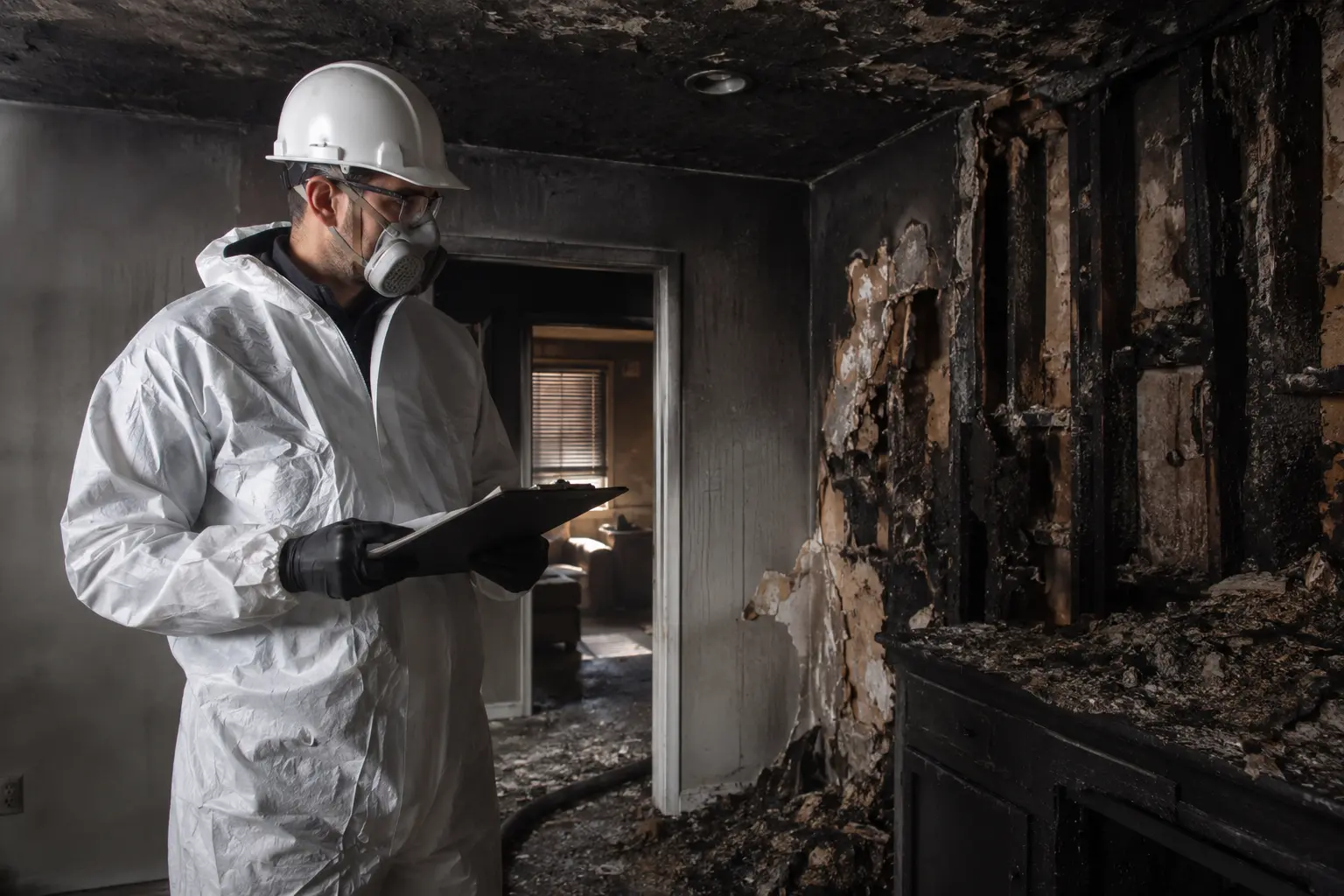
If you’ve already had mitigation work done and are wondering whether it was thorough, ask for the moisture log, a record of readings taken throughout the drying period showing the progression from initial wet readings down to a dry baseline. A legitimate mitigation job should have this documentation readily available. If a company can’t produce moisture readings, or if the drying period seemed unusually short for the size of the affected area (a large, saturated space drying out in a single day, for example, is generally not realistic), it’s worth getting an independent moisture check before proceeding to restoration.
How Commercial Properties Handle This Differently Than Homes
For commercial properties, including office buildings, retail spaces, and multi-unit residential buildings, the mitigation and restoration distinction often carries additional operational stakes beyond just the physical repair. Mitigation in a commercial setting frequently needs to happen alongside business continuity planning, since a retail space or office can’t always simply shut down for a week of drying equipment. This sometimes means mitigation work is scheduled around business hours, or temporary partitions are used to isolate the affected area while the rest of the space stays operational. Restoration in commercial properties also tends to involve more coordination with building codes and, for leased spaces, with both the tenant and the property owner, since responsibility for different parts of the repair can be split between a commercial lease’s terms.
What “Drying in Place” Actually Means and When It’s Appropriate
Throughout the mitigation process, technicians make ongoing decisions about which materials can be dried in place versus which need to be removed entirely. This isn’t an arbitrary call. Materials are generally dried in place when moisture hasn’t penetrated deeply, when the material itself (like solid wood subfloor, as opposed to particleboard) can structurally handle the drying process without warping or degrading, and when there’s no contamination risk requiring removal regardless of moisture level. Materials are removed when they’re too saturated to dry effectively within a reasonable timeframe, when they’ve already begun to show signs of degradation (swelling, delamination), or when contamination from gray or black water makes drying in place inappropriate regardless of how quickly it’s addressed. Understanding this distinction helps make sense of why two seemingly similar water events can result in very different amounts of demolition.
How to Talk About These Two Phases When Calling for Help
Using accurate terminology when you first call a company actually helps you get better service from the first conversation. Instead of just saying “I need water damage fixed,” describing your situation as “I think I need emergency mitigation, water is actively present” versus “the area has already dried out and I need it rebuilt” helps the company route your call appropriately and gives you a sense of whether they understand the distinction at all. A company representative who asks clarifying questions about which phase you’re in, rather than treating every call the same way, is generally a sign of a more experienced, process-driven operation.
What a Combined Mitigation-Restoration Contract Should Specify
If you’re working with a single company for both phases, the contract or written agreement should ideally separate the two phases clearly rather than presenting one lump estimate for the entire project. This matters for a few practical reasons: it gives you a natural checkpoint to confirm mitigation is genuinely complete before authorizing restoration work to begin, it makes it easier to compare each phase’s costs against your insurance company’s evaluation, and it protects you if, partway through, you decide to use a different contractor for the rebuild phase for any reason (a personal preference, a pricing comparison, or simply wanting a different finish quality than the mitigation company typically provides).
Quick Reference
| Water Mitigation | Water Restoration |
|---|---|
| Water extraction | Drywall and flooring replacement |
| Removing unsalvageable materials | Painting and finishing |
| Drying with air movers and dehumidifiers | Reinstalling fixtures and cabinetry |
| Antimicrobial treatment | Final inspection and walkthrough |
| Moisture verification | Cosmetic repairs to match pre-loss condition |
If you’re dealing with water damage anywhere in Los Angeles, whether you need emergency mitigation right now or you’re ready to start the rebuild, our team handles the entire process so nothing gets missed between the two phases. See our guide on how to choose a water damage restoration company near you for what to check before hiring anyone for either phase.
Need emergency water mitigation right now? Call ASAP Water Damage Restoration for fast, IICRC-certified response anywhere in the Los Angeles area, available 24/7.
Keep reading
- How to Get Rid of Water Damage Odor in 2026
- Structural Drying vs Dehumidification: What’s Actually Happening
- How Long Does Structural Drying Take After a Flood?
Need help now? See our Structural drying services or call (323) 677-2811, 24/7.