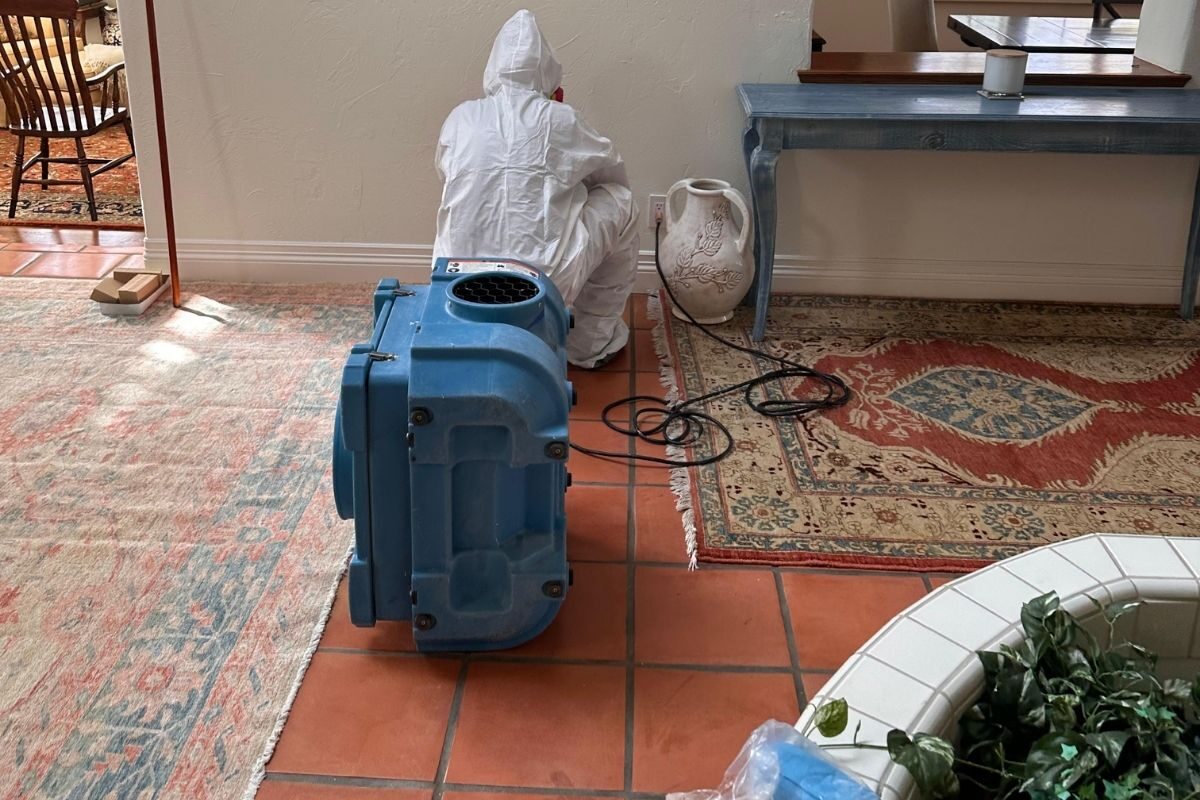
Contained, Certified Mold Removal for Los Angeles
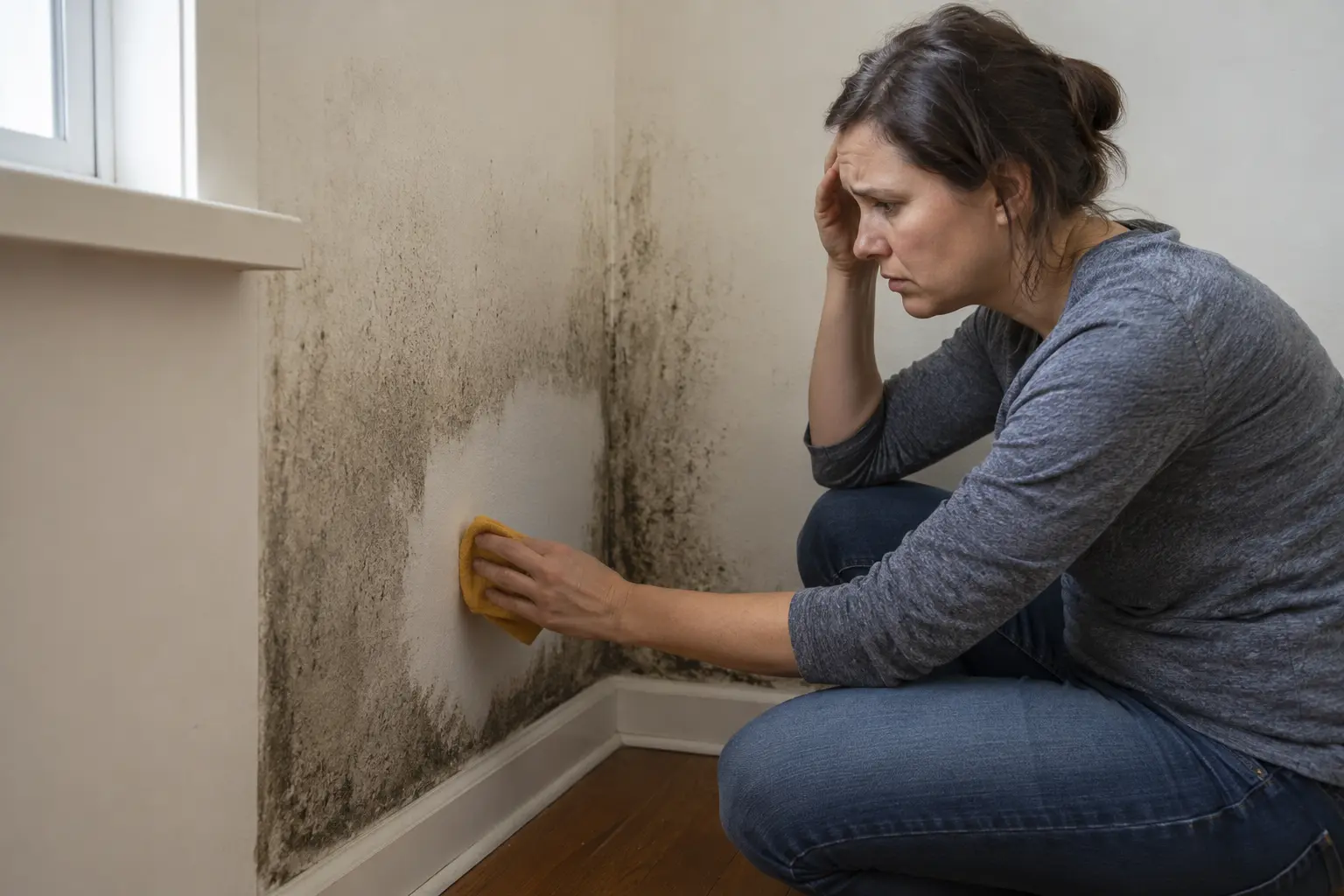
Bleach and a fresh coat of paint make mold disappear for a few weeks. Then the spots creep back through the primer, because the problem was never on the surface.
We find the moisture feeding it, seal the area off, take out what is contaminated and prove the space is clean before anything gets rebuilt.
Sealed work zones | HEPA air scrubbing | Moisture source corrected | Clearance testing available | Insurance documentation
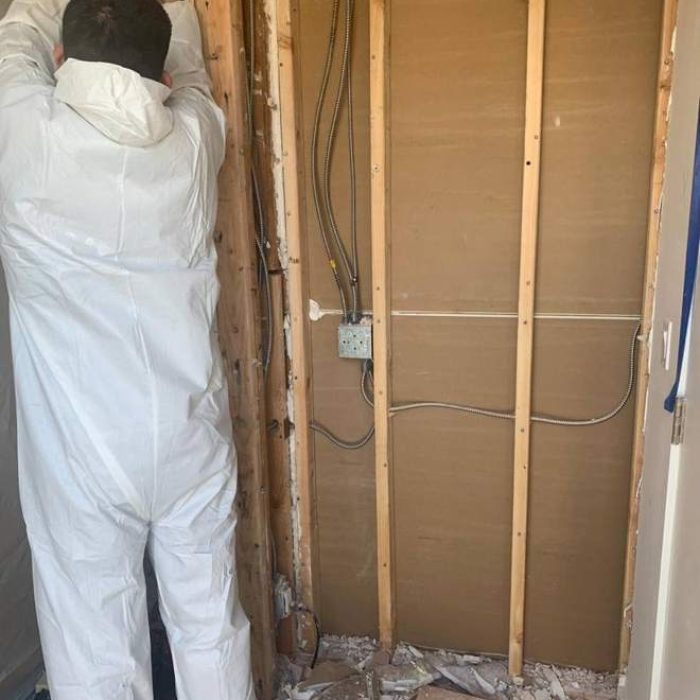
People use the two terms interchangeably, but they describe very different jobs. Knowing the difference helps you compare quotes and avoid paying for a shortcut.
| Mold removal | Mold remediation | |
|---|---|---|
| What it usually means | Wiping, scrubbing or cutting out visible growth | A full process from moisture source to verified clean space |
| Moisture source | Often ignored | Found and corrected first |
| Containment | Rarely used | Sealed area under negative air |
| Air cleaning | None | HEPA scrubbers throughout the job |
| Proof it worked | None | Visual check plus optional clearance testing |
Mold spores exist naturally everywhere, so no company can make a home spore-free. Remediation brings growth back to normal background levels and keeps it there.
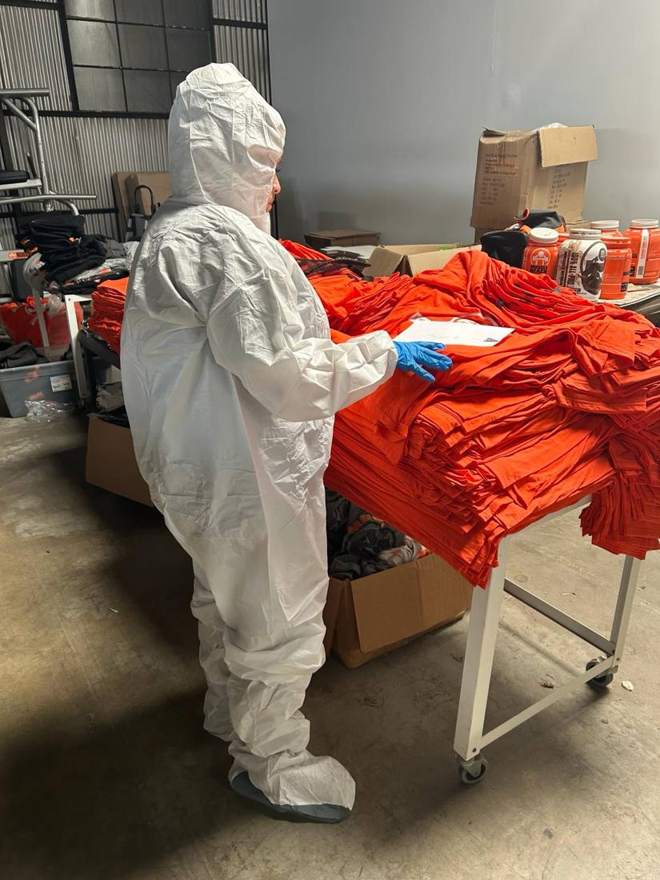
Regrowth almost always traces back to one of these. Each one leaves mold a reason to return, no matter how hard the surface was scrubbed.
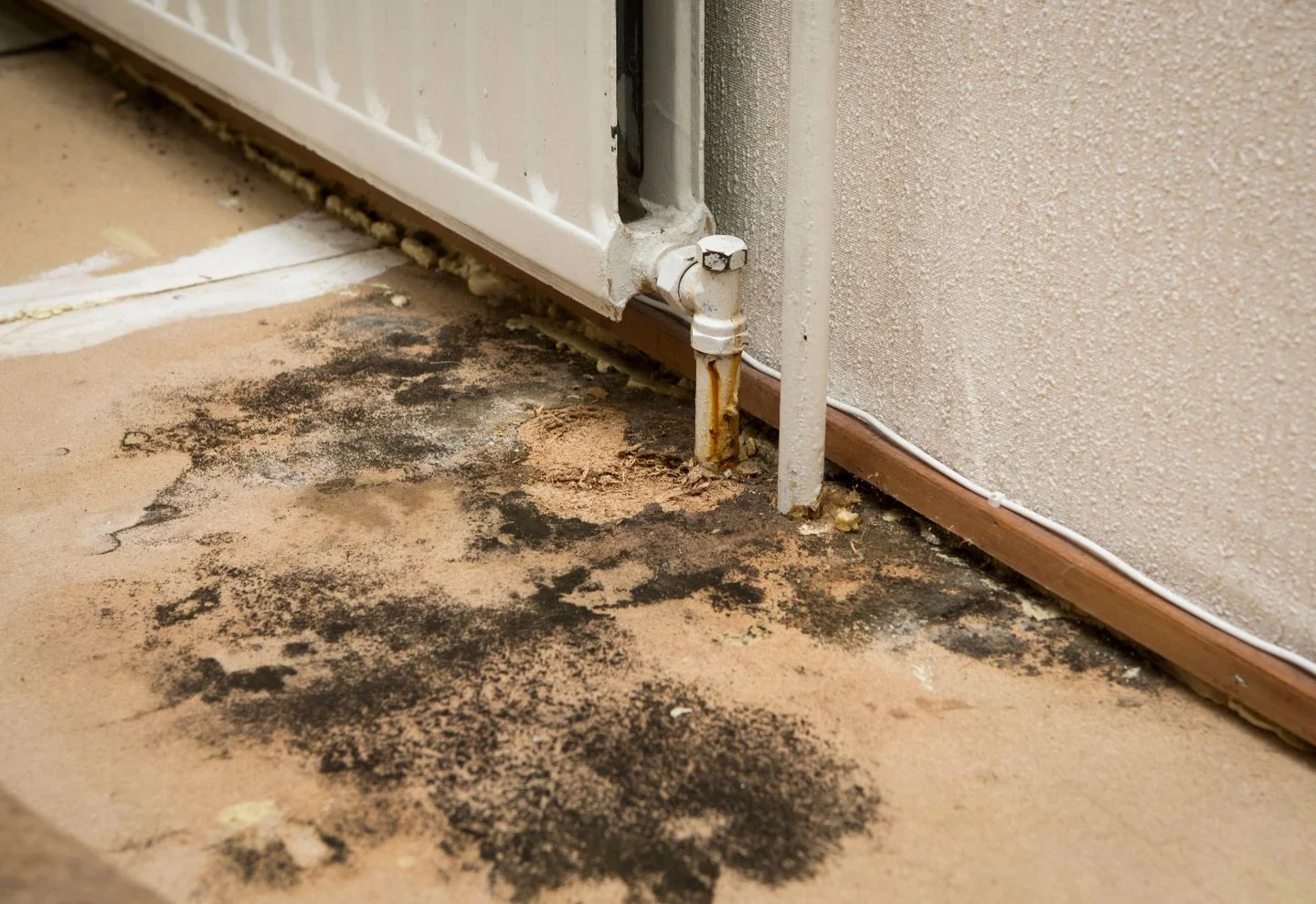
A slow drip, roof seep or condensation problem keeps feeding the same spot, so growth returns within weeks of cleaning.
Mold grows into drywall paper, wood grain and carpet backing, where surface sprays and household wipes simply cannot ever reach.
Scraping or sanding without containment pushes spores into other rooms, starting brand new colonies far away from the original patch.
Patching drywall over studs that are still damp traps moisture inside the wall, creating perfect conditions for fast, hidden regrowth.
Bathrooms, laundry rooms and closets without good airflow hold moisture long enough for airborne spores to settle and grow again.
Some small spots are fine to handle yourself. These situations call for containment, protective gear and professional equipment instead of a spray bottle.
LA County guidance treats roughly a 3 by 3 foot area as the practical limit for safe, do-it-yourself homeowner cleanup.
Drywall, insulation, ceiling tiles and carpet absorb growth below the surface and usually need to be cut out and replaced.
A persistent musty odor often means growth inside wall cavities, under flooring or deep inside the HVAC ductwork of the home.
Sewage backups and outdoor flood water carry bacteria along with spores, which requires full protective gear and proper disinfection procedures.
Regrowth in the same place means moisture is still present and the contaminated material was never removed from the wall.
Babies, older adults and anyone with asthma or a weakened immune system should not be exposed to any cleanup dust.
When an inspection or air test calls for remediation, a written scope turns those findings into a clear, practical plan.
Our Process
We inspect each affected room with moisture meters and infrared cameras, then write a scope listing what will be removed.
The plumbing leak, condensation or drainage problem feeding the mold is fixed or controlled before any contaminated material gets touched.
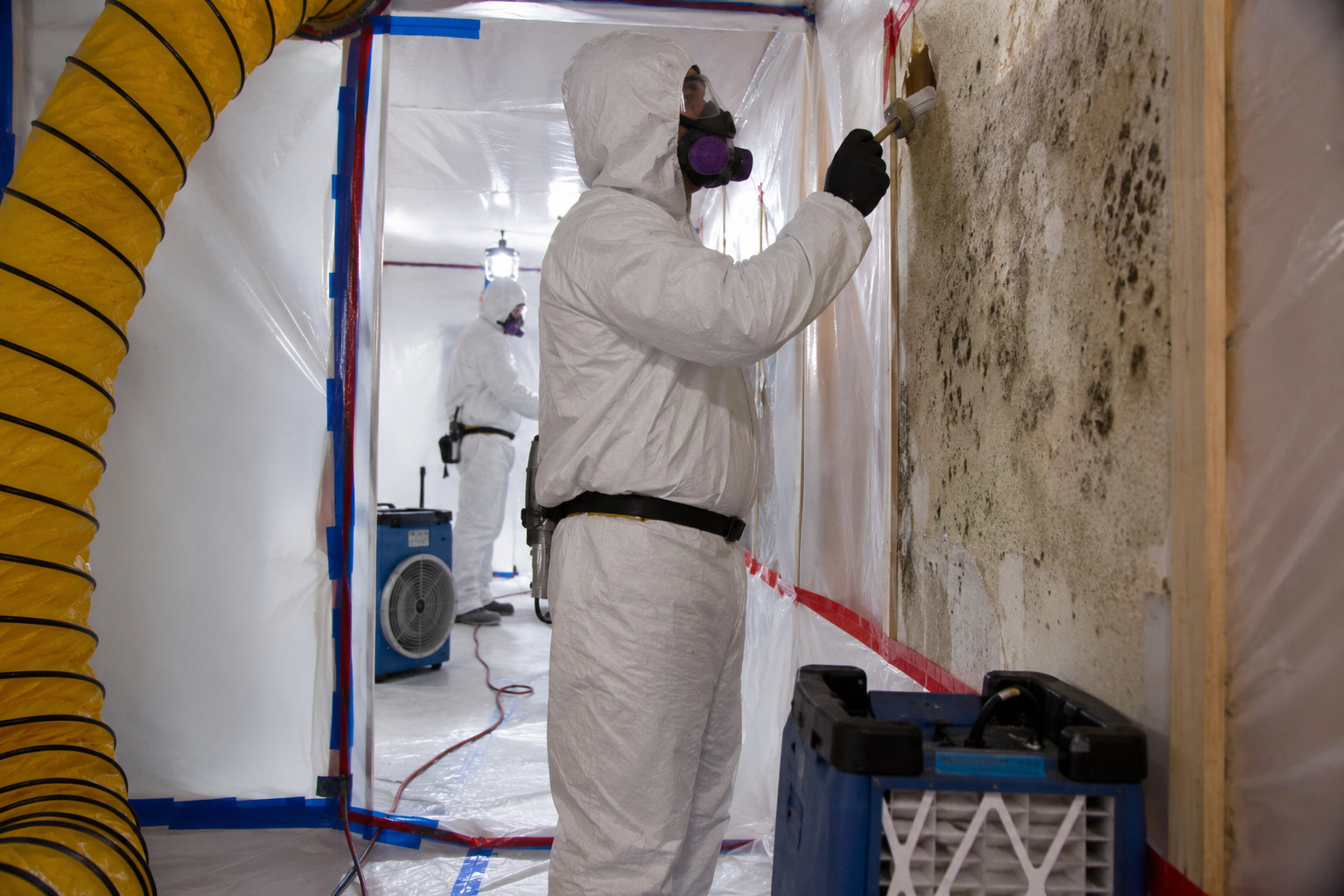
Plastic sheeting walls, zipper doors and sealed vents isolate the work zone, so spores cannot drift into nearby clean rooms.
HEPA air scrubbers pull air out of the sealed zone and filter it, keeping pressure lower inside than around it.
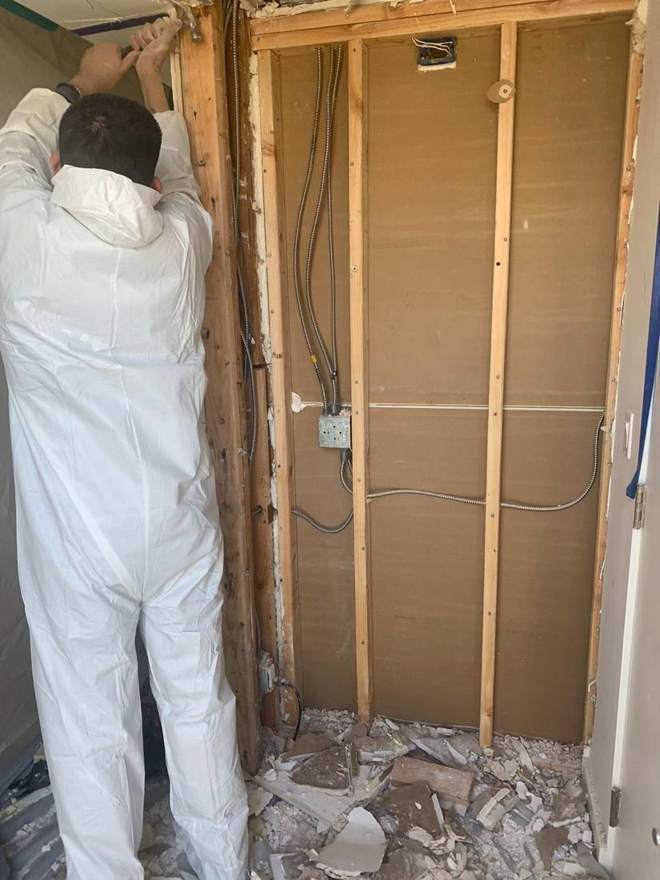
Moldy drywall, insulation, carpet pad and ceiling tile are removed, bagged inside containment and carried straight out for proper disposal.
Studs, joists, subfloor and sheathing are HEPA vacuumed, scrubbed and treated with an antimicrobial to remove remaining growth and staining.
Dehumidifiers run until framing and subfloor read at normal moisture, so nothing is closed up while it is still damp.
After a visual check and optional third-party air test, containment comes down and drywall, paint and flooring go back in.
Our technicians are IICRC-certified and work to the industry standard for professional mold remediation, IICRC S520, along with EPA guidance on mold cleanup.
Respirators, gloves, eye protection and disposable coveralls are worn inside containment and taken off before anyone leaves the work zone.
Whenever contaminated material is disturbed, the area stays under filtered negative air until all cleaning and drying are completely finished.
Moldy materials are bagged and sealed inside the work area, then carried out along a covered path to the truck.
Drywall and insulation with growth inside are removed, because sprays and bleach cannot reach the roots growing below the surface.
Photos, moisture readings and the scope of work are kept in one file for you, your landlord or your insurer.
Black mold usually means Stachybotrys chartarum, a dark greenish-black mold that grows on drywall, ceiling tiles and wood that stay wet for a long stretch.
Plenty of other molds look black too, so color alone does not identify the type. Whatever the species, the safe method is the same: contain, remove, clean, dry and verify.
Never scrape or sand it yourself, because disturbing it sends spores into the air.

Mold follows moisture, so it turns up in the same places again and again. These are the spots our crews treat most across Los Angeles properties.
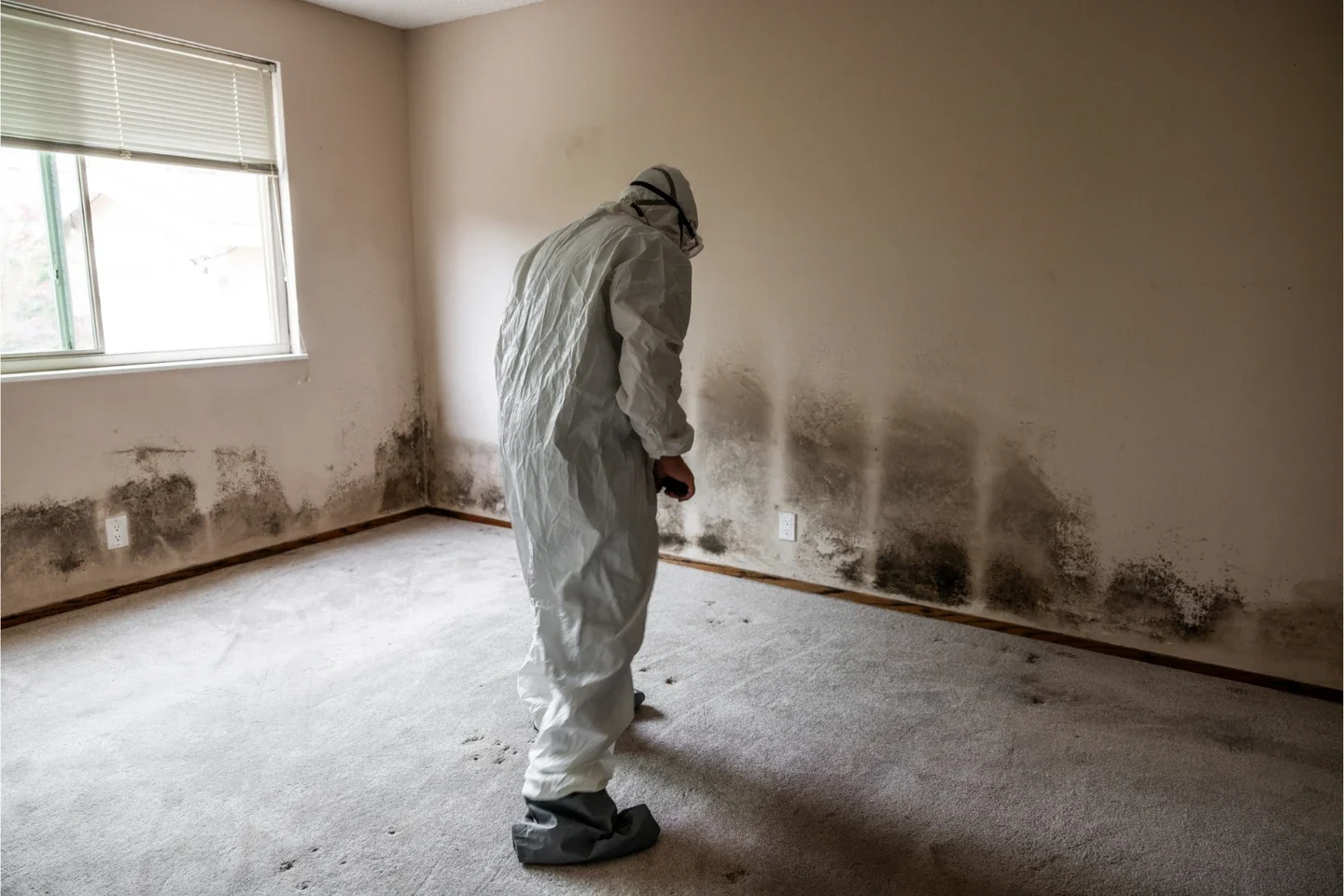
For very small spots, yes. LA County Public Health says areas under about 10 square feet can often be cleaned by the homeowner, using soap and water on hard surfaces with an N-95 mask, gloves and goggles.
Anything larger, porous or recurring belongs with a professional crew.
Every job is priced after we see it, and you get a written estimate first. These six factors drive the number.
More affected area means more containment sheeting, more material removed and more hours of careful cleaning inside the work zone.
Mold inside walls, attics, crawl spaces or ductwork takes more labor to reach than growth on an open, exposed surface.
Drywall, insulation, carpet and ceiling tile are removed and later replaced, which adds both disposal fees and later rebuild costs.
A hidden plumbing leak, slab leak or roof failure adds detection and repair work before any actual remediation can start.
Wet framing and subfloor may need several days of equipment running before the area is truly safe to close up.
Post-remediation air sampling by a lab or independent tester adds a separate cost, but it gives you documented, written proof.
Timing depends on how much material is affected and how wet the structure is. A small, contained area can often be finished in a few days, while larger jobs with drying and rebuilding take longer.
You receive a written schedule after the assessment, so you know what to expect before containment goes up.
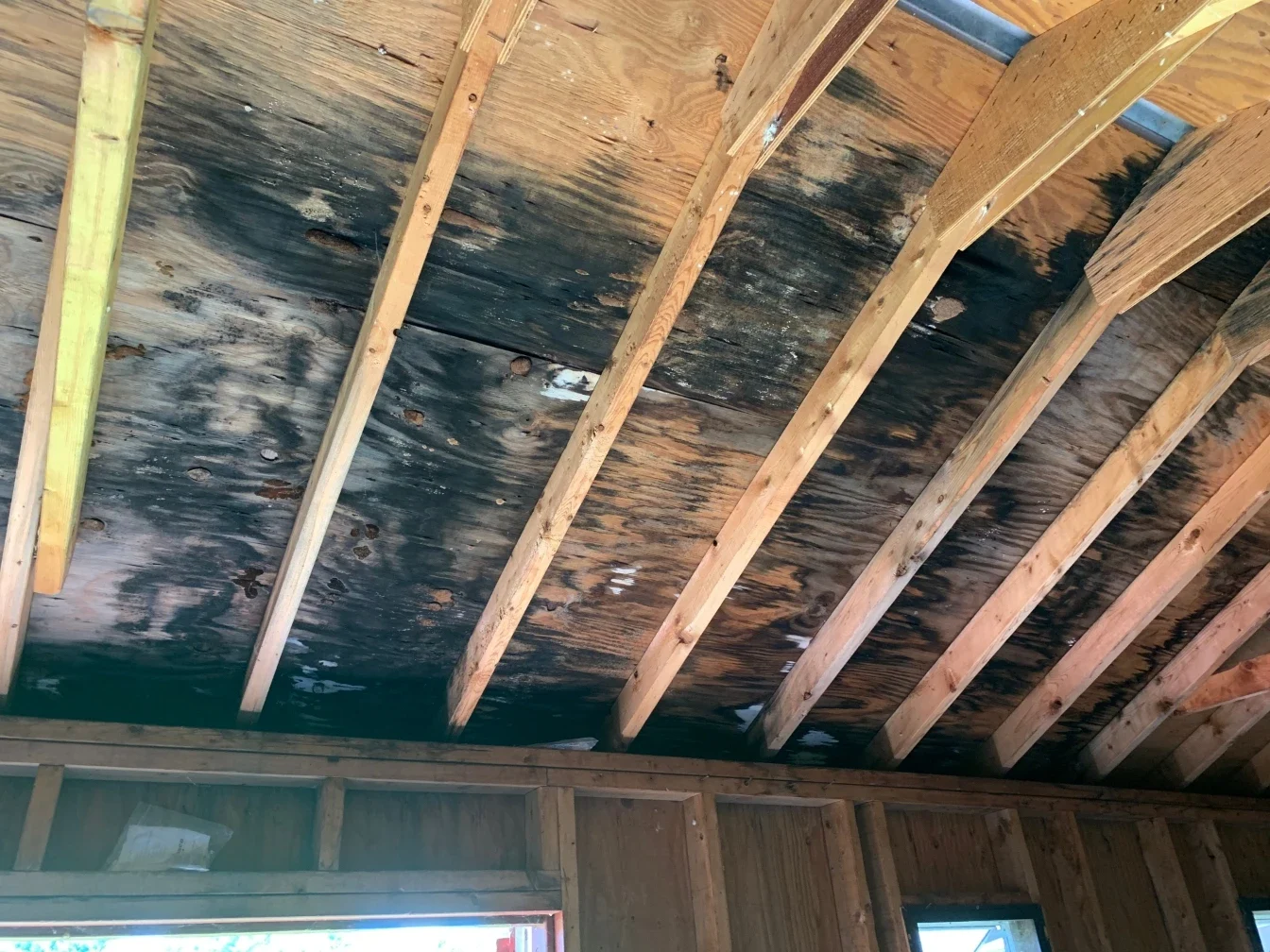
Coverage turns on what caused the mold and how your policy is written. These are the patterns homeowners in California run into most often.
Always confirm the details with your own policy or agent. We work directly with adjusters and provide the paperwork they request through our insurance claim assistance service.
Twenty-five years of water damage work means we understand how moisture moves, so we remove the mold and its cause.
Our IICRC-certified technicians follow IICRC S520 procedures for containment, removal and cleaning on every single remediation project we take on.
Leak detection and structural drying come from the same crew, so there is no waiting around between two separate trades.
We remove contaminated material and leave sound material in place, and customers mention in their reviews that we avoided upselling.
Scope of work, photos and moisture logs are organized for insurance review, which helps claims move along faster and smoother.
Mold that follows a flood, burst pipe or sewage backup gets a fast crew response, with nights and weekends included.
We remediate houses, condos and apartment buildings, along with restaurants, offices and retail spaces across all of greater Los Angeles.
Full licensing and insurance cover your property and our crew, and every job ends with a documented final walkthrough together.
Mold Remediation Across Los Angeles
Older homes in neighborhoods like Boyle Heights, Highland Park, Echo Park and Mid-City often hide aging plumbing and mold. From 925 N La Brea Ave, we also serve:
FAQs
Removal usually means cleaning visible growth. Remediation covers the whole job: correcting moisture, sealing the area, removing contaminated materials, filtering air, drying the structure and confirming the space is clean.
It depends on how much area is affected, where the growth sits, what materials must go and whether drying or rebuilding is needed. Estimates are written before any work starts.
Small contained areas are often done within a few days. Bigger projects that need drying, clearance testing and rebuilding take longer, and you receive a written schedule after the assessment.
Often when mold follows a sudden event, such as a burst pipe reported promptly. Slow leaks and humidity are commonly excluded, and some policies cap mold coverage. Review your policy.
Active growth can be removed completely. Background spores exist in every home and outdoors, so the realistic goal is normal levels with no active colonies growing anywhere in the building.
Usually because the moisture source is still there, or the roots stayed inside porous material. Surface cleaning hides the stain for a while, but growth returns once conditions allow it.
Treat any visible growth seriously, especially around sensitive family members. Dark mold on wet drywall should be removed under containment by professionals, because scraping or sanding releases spores into rooms.
No. Bleach stays on the surface of porous materials, cannot reach growth inside them and adds water. Moldy drywall should be cut out, while hard surfaces need only mild detergent.
In most cases, yes. The work zone is sealed and kept under negative air. For large projects or family members with health concerns, we discuss temporary arrangements before work begins.
Every job ends with a visual inspection of the cleaned area. Post-remediation air testing, including testing by an independent third party, is available whenever you want documented confirmation of results.
Yes. Our team locates leaks, corrects moisture sources and dries the structure, so the mold has nothing left feeding it once the contaminated materials are gone for good, preventing regrowth.
Yes. We remediate restaurants, offices, shops and apartment buildings, and we plan containment and work hours with you to keep the space usable wherever possible during the whole remediation project.
Every week mold keeps growing, more material has to come out. Call ASAP Water Damage Restoration Los Angeles at (323) 677-2811 for a free remediation quote, or fill out the form below to get started.