Pinpoint the Source. Spare the Drywall.
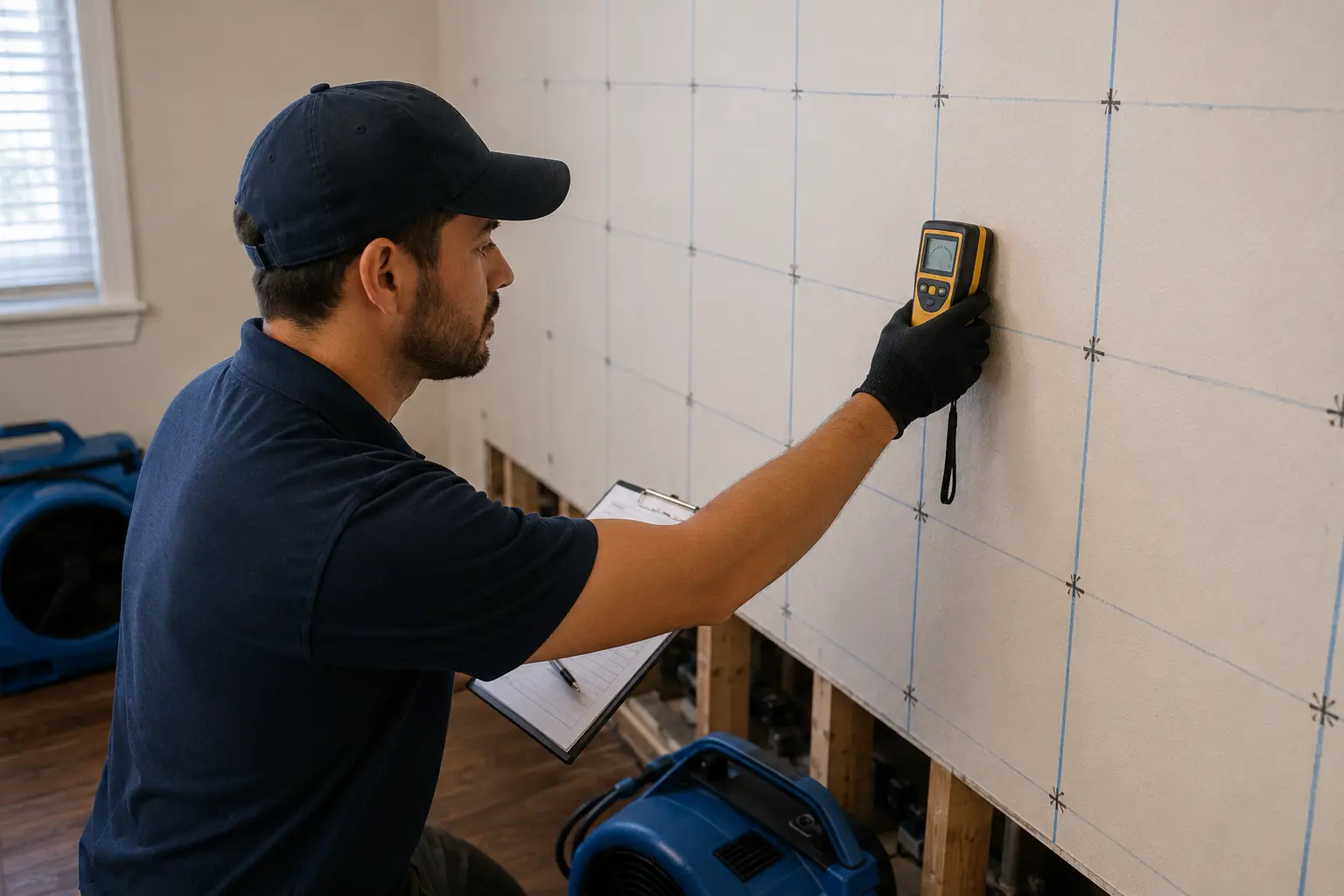
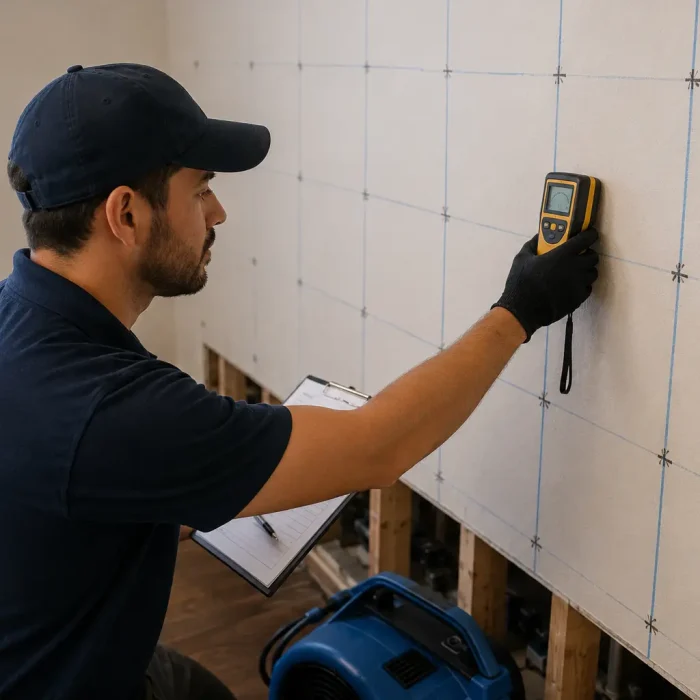
Water is patient. It drips behind tile, soaks into subfloor and creeps along framing long before a stain reaches the surface. Our technicians trace it with infrared cameras and moisture meters, mark the exact spot on your wall or floor, then show you photos of what happened.
Pinpoint, not demolition | Infrared and moisture mapping | Damage plan on the same visit | Adjuster-ready photos | Phones answered 24/7
Leaks inside walls and floors stay quiet, but a house almost always drops hints. Any one of these clues deserves a closer look.
A stain widening a little each week means water is pooling overhead, often from a drain, supply line or bathtub.
Bubbles, peeling and swollen trim near the floor show moisture wicking up or running down inside the hollow wall cavity.
Cupped hardwood, lifting laminate or loose tile tell you water is traveling underneath, often from an appliance line or slab.
A damp smell that stays put in one room, even after cleaning, usually comes from wet framing or insulation nearby.
Usage climbing month after month while your household habits stay the same is often the first clue of a leak.
Hearing water move when every tap, toilet and appliance is off means pressure is escaping from a hidden supply pipe.
Heat rising through tile or carpet in one area often points to a hot water line leaking below the slab.
New cracks near tubs, showers and kitchen floors can mean the subfloor below is swelling from water it has absorbed.
Our city mix of older bungalows, hillside homes and dense condo buildings creates a few repeat offenders. These are the ones we trace most.
Decades of mineral-heavy LA water thin copper pipe walls until pinholes open, then drip slowly inside a wall for months.
Pipes buried in concrete slabs crack from age, corrosion and ground movement, then quietly soak flooring and baseboards from below.
Under sinks and behind toilets, these small connectors wear out quietly without warning and fail at the worst possible time.
Corroded tanks, relief valves and loose connections leak into garages, utility closets and the walls standing right beside the heater.
Washer hoses, dishwasher lines and refrigerator ice maker tubing leak behind heavy machines that rarely get moved for a look.
A cracked shower pan or failed grout lets water reach the subfloor, then stain the ceiling of the room below.
Winter storms drive rain through worn roof flashing, plumbing vent boots and old window frames into attics and exterior walls.
In condos and apartments, water from one unit often surfaces as a stain in the unit below or beside it.
Try This First
Close all faucets and pause the dishwasher, washer, sprinklers, pool fill and ice maker everywhere on the property before starting.
Locate your water meter near the street and find the small triangle or star dial that spins with any flow.
Note the numbers or snap a quick photo, then leave all water turned off for at least sixty full minutes.
Put a few drops of food coloring in each tank; color reaching the bowl without flushing means the flapper leaks.
A meter that moved while every toilet passed points to a hidden leak inside your walls, floors or concrete slab.
Guessing with a saw is slow, messy and expensive. Our technicians read moisture from the surface first, so any opening we make lands on target.
Wet drywall, ceilings and floors show up cooler on screen, revealing the water path without touching a single painted surface.
Readings taken on every wall and floor section map exactly how far water traveled from the source, inch by inch.
Hygrometers show whether moisture is trapped inside a closet, a cabinet or a sealed wall cavity at this very moment.
We inspect supply lines, drains, valves, water heaters, appliances and roof penetrations, the exact spots where most household leaks begin.
Our Process
We ask about stains, sounds, smells and your water bill, so the technician arrives already knowing a good starting point.
The technician checks fixtures, appliances, ceilings and floors room by room, noting every sign of moisture found along the way.
Scans and readings follow the water back to where it started and outline every material it has reached so far.
We show you the exact leak location marked on the wall or floor, with photos and readings that you keep.
We help isolate the leaking line, protect belongings nearby and line up your plumber for the pipe repair right away.
If materials got wet, you receive a written plan for extraction, drying and repairs before our technician leaves your home.
Finding the source is only half the job. The water already in your walls and floors still needs to come out, fast.
Shutting off the affected supply keeps fresh water from feeding the damage while the repair is arranged with your plumber.
Moisture maps, images and written notes record where the water started and everything it touched, one room at a time.
Commercial extractors remove pooled water from carpet, padding and subfloor quickly, before it has any time to soak deeper inside.
Air movers and dehumidifiers run until daily meter readings confirm every material is back to its normal, dry level again.
Damp wall cavities receive an antimicrobial treatment, and any mold growth already present is removed safely under full plastic containment.
Drywall, ceilings, baseboards and flooring are replaced and finished so the room shows no trace of the leak at all.
Most homeowners need both. Knowing who handles each part keeps the job moving and stops you from paying twice for the same work.
| Task | ASAP | Your plumber |
|---|---|---|
| Locate the hidden leak | Yes | Sometimes |
| Repair or replace the pipe | We coordinate | Yes |
| Extract water and dry the building | Yes | No |
| Treat or remove mold | Yes | No |
| Rebuild drywall, ceilings and floors | Yes | No |
| Photos and readings for insurance | Yes | Rarely |
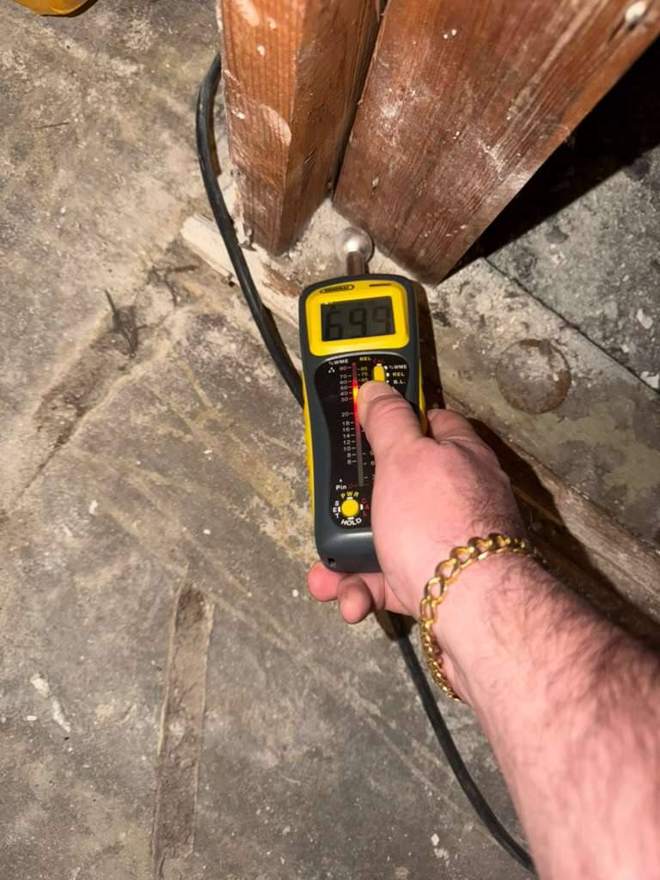
You get a price before work begins. These five things move it.
A one-bedroom condo takes far less scanning time than a two-story house with a crawl space, garage and full attic.
Water hiding inside a slab, ceiling or shared wall takes more tracing time than a drip under an open sink.
Several stains in different rooms can mean several separate sources, and each one needs its own careful trace and record.
Tight or hard to reach areas add setup and inspection time, especially under older hillside homes built on raised foundations.
Extraction, drying and rebuild work are quoted separately, once we know exactly how far the water spread through the home.
A hidden leak soaks drywall, framing and flooring every day it runs. Finding the exact spot keeps openings small, repairs shorter and the final bill lower.
Leak reports that help your insurance claim. Policies often cover sudden water damage and exclude slow leaks. Either way, adjusters ask where the water came from. Our photos and readings answer that clearly, and our insurance claim assistance team packages it the way adjusters expect.

The same crew that finds your leak also extracts, dries and rebuilds, so you never chase three separate contractors again.
Every conclusion comes with infrared images and meter numbers you can see, keep and share with anyone you choose later.
Most sources are confirmed from the surface, and when we must open a wall, it is a small, targeted cut.
Our photo and moisture records are organized the way insurance companies review claims, which keeps follow-up questions to a minimum.
A real person answers at 2 a.m. on a Sunday, and a technician can be on the way that night.
We trace water between units and give owners, property managers and associations clear documentation of exactly where the leak started.
Long experience with LA housing, from Spanish bungalows to glass towers, tells us exactly where water likes to travel next.
Our IICRC-certified team carries full licensing and insurance, so your property stays fully protected throughout every single visit we make.
Leak Detection Near You in Los Angeles
From our office at 925 N La Brea Ave, technicians reach homes and businesses across the city and the surrounding communities every day.
We proudly serve homeowners, businesses and property managers across:
FAQs
Price depends on property size, where the water is and how many wet areas we trace. You get a quote first, and any drying or rebuild work is priced separately.
Usually. Each day a hidden leak runs, more drywall, wood and flooring soak up water. Pinpointing the source keeps openings small and the repair bill much lower in the end.
Turn everything off and watch your water meter for one full hour. If it still moves and every toilet passes a dye test, the leak is probably hidden somewhere inside.
Rarely to find it. Infrared scans and meters locate most leaks from the surface. When an opening is needed for repair, it is small, targeted and explained to you beforehand.
The pipe itself is plumbing work. We find the leak, stop the damage and restore the home, coordinating with your chosen plumber so all repairs happen in the correct order.
Most homes take a few hours, depending on size, access and the number of wet areas. You finish the visit knowing the source and holding photos of every single finding.
Yes. Warm floor spots, cracked tile and a spinning meter often point to one. We trace the wet area, document it and repair everything the water damaged above the slab.
Some policies include the cost of finding the source when the water damage is covered. Coverage varies, so check your policy. Our report gives your adjuster clear evidence either way.
Yes. Drywall, insulation or wood that stays damp for more than a day or two can start growing mold, which is why fast drying matters so much after any leak.
Yes. We trace water across shared ceilings and walls, identify exactly which unit it came from and document everything for the owners, property managers, homeowner associations and insurance companies involved.
Yes. Phones are answered 24/7, and technicians are dispatched nights, weekends and holidays. Call us and we will give you an arrival window before you hang up.
Yes. We trace leaks in offices, shops, restaurants and apartment buildings, then schedule drying and repairs around business hours so your customers and tenants are disturbed as little as possible.
A hidden leak only gets more expensive. Call ASAP Water Damage Restoration Los Angeles at (323) 677-2811, day or night, or send a request below and we will call you back.