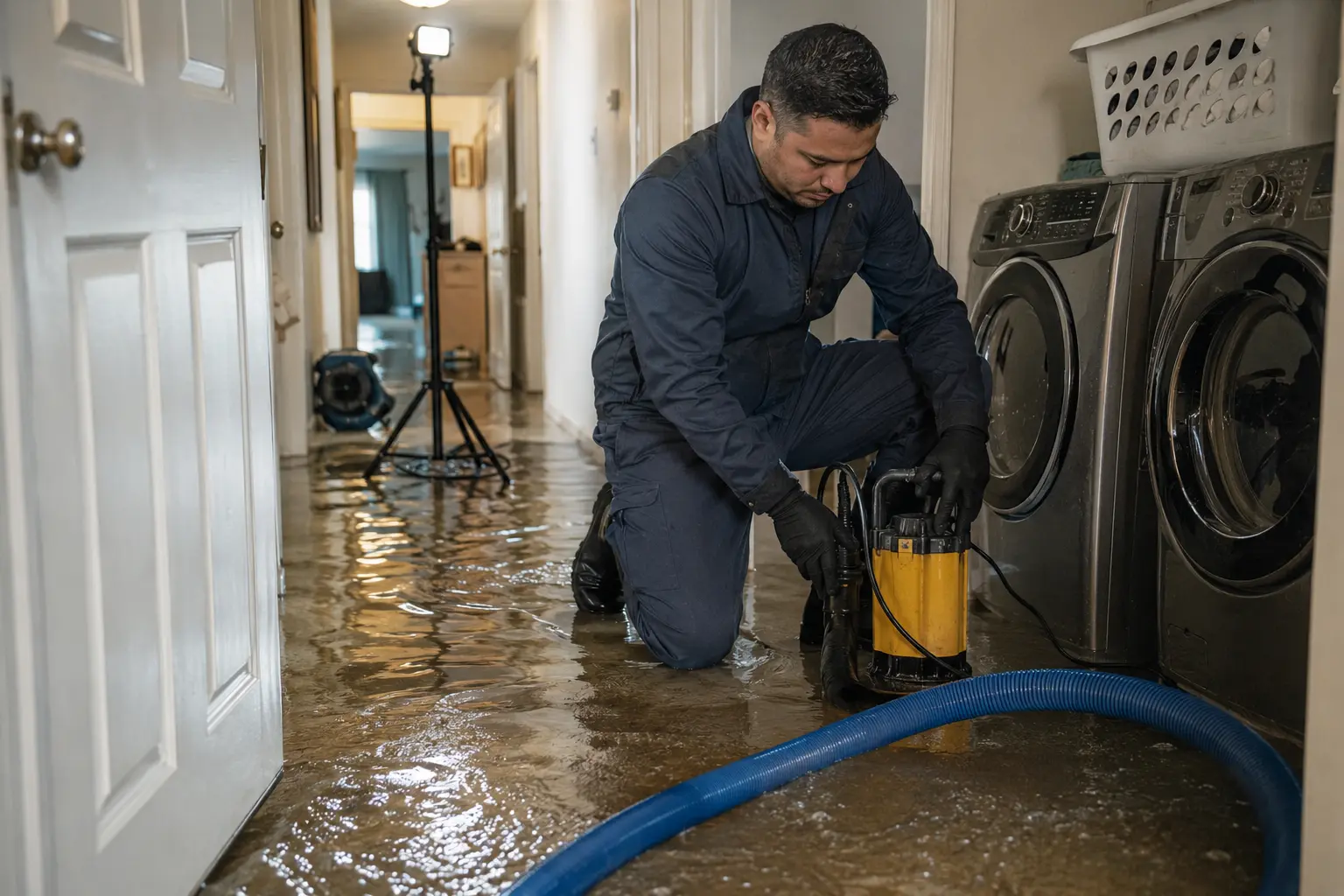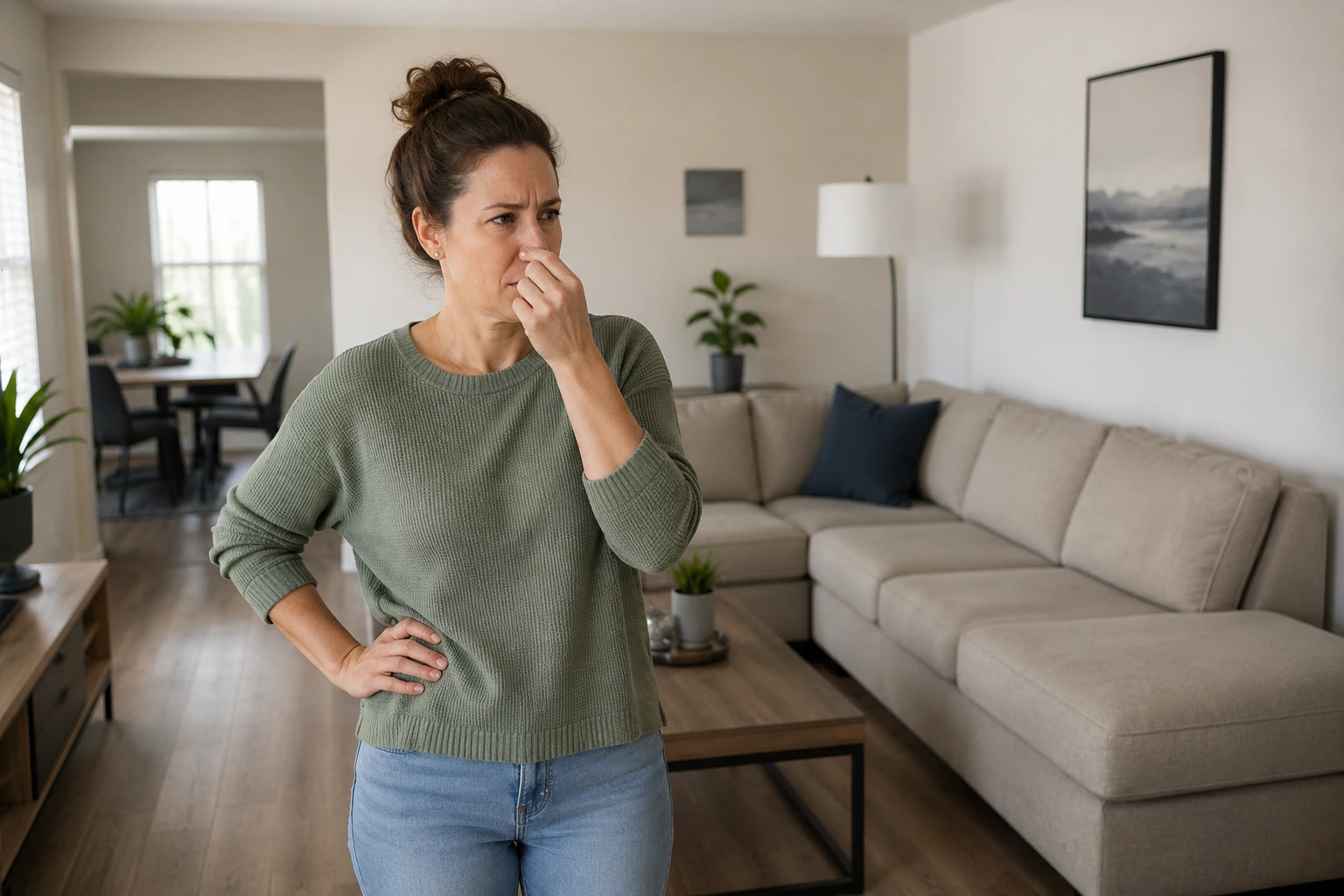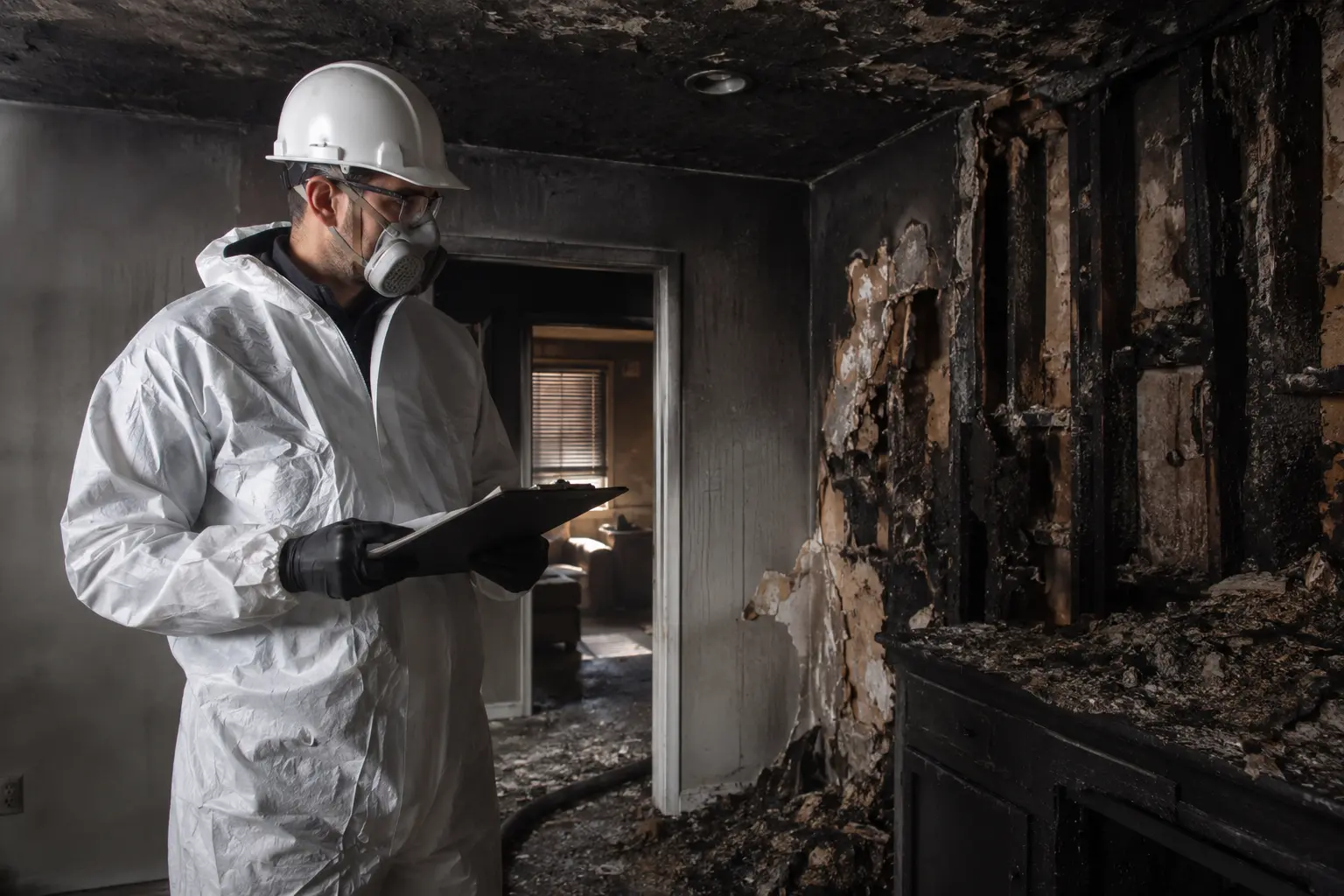
The musty, damp smell that follows water damage is one of the most persistent and frustrating aspects of recovery. Candles, air fresheners, and even professional-grade cleaning products can temporarily mask it, but the smell returns because the source hasn’t been addressed. Here is what actually causes water damage odor, why the common fixes don’t work, and what genuinely eliminates it.
What Actually Causes the Smell
Water damage odor isn’t simply a smell of dampness that disappears as things dry out. It has specific biological and chemical sources that produce odor molecules even after surfaces appear dry, which is why the smell can persist for weeks or months after visible water is gone.
Microbial volatile organic compounds (MVOCs) are the primary source of the musty smell associated with water damage. These are gases released by mold and bacteria as metabolic byproducts of their growth process. When mold begins developing in wet materials, it releases these compounds continuously, and they penetrate surrounding materials and the air of the entire space. The smell is essentially mold and bacterial activity announcing itself before any visible growth is apparent, which is why a musty smell often precedes visible mold by days or weeks.
Residual moisture in structural materials supports ongoing microbial activity even after surfaces appear dry. Materials that were wet and then dried to the touch but not to their full depth continue to provide the moisture conditions that sustain microbial growth and therefore continued MVOC production. This is why a space that seems dry can still smell for an extended period if structural drying wasn’t completed properly.
Contamination from gray or black water introduces additional odor sources beyond MVOCs. Sewage backup odor involves hydrogen sulfide and other compounds produced by the organic content of wastewater, which penetrate porous materials and require different treatment approaches than moisture-driven mold odor.
Why Air Fresheners and Surface Sprays Don’t Work
Air fresheners introduce competing fragrance molecules that temporarily overwhelm the odor-causing compounds in the air, but they don’t neutralize or remove those compounds. The moment the fragrance dissipates, the underlying odor reasserts itself because its source, the microbial activity in the structural materials, is still ongoing.
Surface disinfectant sprays on visible surfaces treat what can be reached but don’t penetrate into the wall cavity, subfloor, or other enclosed spaces where the active microbial growth and MVOC production are often occurring. Cleaning the visible surface of a wall with an odor-neutralizing product while leaving wet, actively molding material inside the wall cavity behind it is like washing the outside of a trash can without emptying it.
The Correct Sequence for Eliminating Water Damage Odor
Step 1: Identify and Resolve Any Ongoing Moisture Source
Persistent odor is almost always a sign that moisture is still present somewhere in the structure. If the odor keeps returning after surface cleaning and airing out, a moisture investigation is the right next step rather than more aggressive odor treatment. Our guide on moisture mapping for water damage covers how this investigation works.
Step 2: Remove All Affected Porous Materials
The odor-producing materials need to be physically removed, not just cleaned and dried. Drywall, insulation, carpet padding, and other porous materials that absorbed the original water and began supporting microbial growth are the source of the odor. No amount of topical treatment eliminates odor from materials that still contain active microbial growth inside them.
Step 3: Complete Structural Drying of Remaining Materials
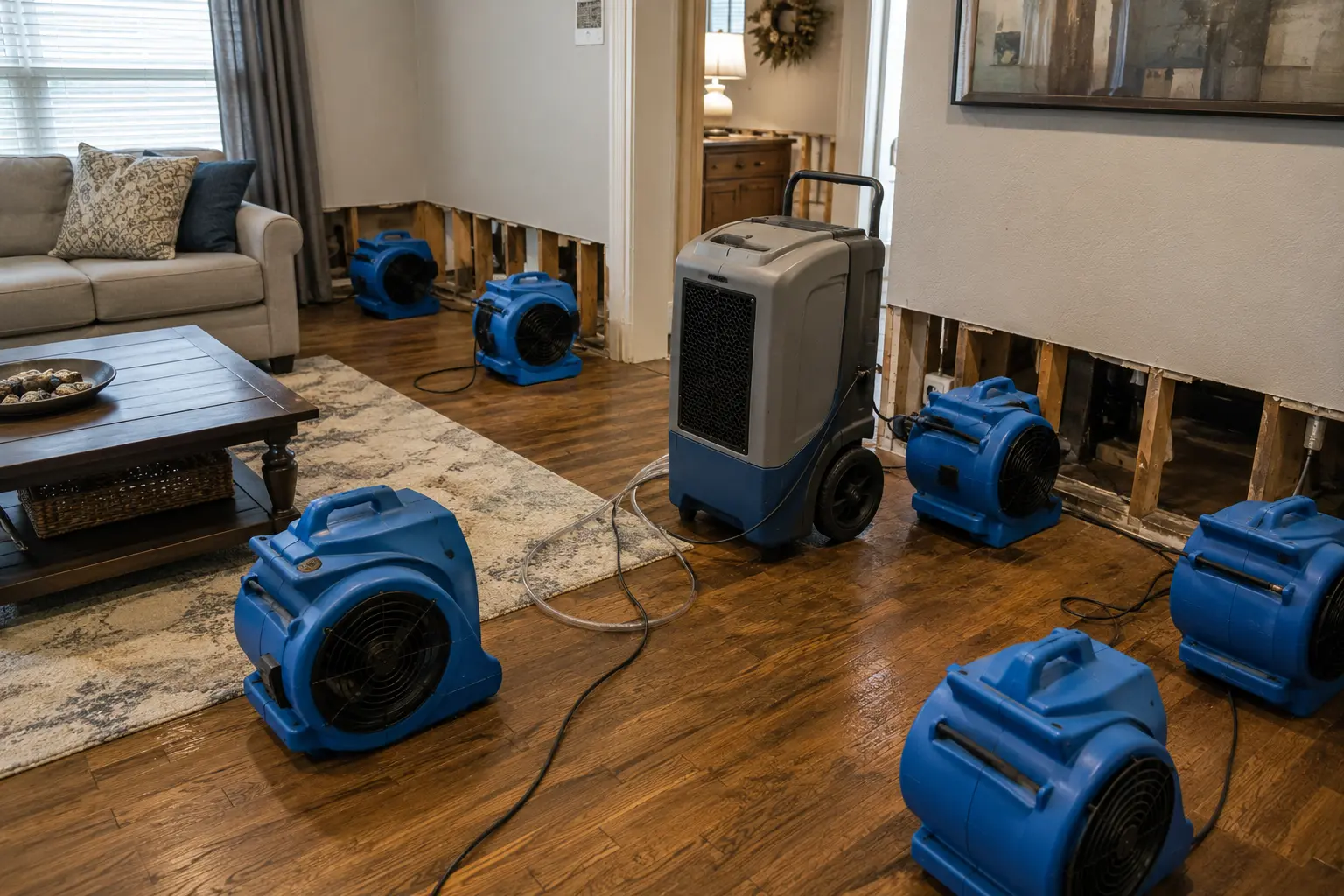
After affected materials are removed, the remaining structure needs to be fully dried to eliminate the moisture conditions that support ongoing microbial activity. Odor treatment applied to materials that still hold elevated moisture will not be effective long-term because the source of odor production continues. Proper structural drying with verification through moisture readings is covered in our guide on structural drying vs dehumidification.
Step 4: Apply Professional-Grade Antimicrobial and Odor Treatment
After the structure is confirmed dry, professional odor treatment uses products and techniques that actually neutralize or destroy the odor-causing compounds rather than masking them. These include EPA-registered antimicrobial treatments applied to exposed structural surfaces, and potentially specialized odor elimination techniques for severe cases.
Professional Odor Elimination Techniques That Actually Work
Thermal fogging uses a heat source to vaporize a deodorizing solution into a fine fog that penetrates porous materials at the same depth that odor molecules have embedded themselves. Because it uses heat to open the pores of materials similar to how the original hot, humid conditions of an active water event allowed odor compounds to penetrate, it reaches places that surface sprays cannot. Thermal fogging is particularly effective for smoke odor but is also used for persistent water damage odor in severe cases.
Hydroxyl generators produce hydroxyl radicals that react with and neutralize odor-causing VOCs in the air and on surfaces. Unlike ozone treatment, hydroxyl generators can be used in occupied spaces, making them more practical for situations where complete evacuation of the building isn’t feasible.
Ozone treatment uses high concentrations of ozone gas to oxidize odor-causing compounds throughout an enclosed space, including inside porous materials and HVAC ductwork. It is highly effective for penetrating embedded odors but requires complete evacuation of the space during treatment since ozone at the concentrations used for odor elimination is harmful to humans and pets. The space needs to be well-ventilated before reoccupancy after treatment.
HEPA air scrubbing during the remediation process reduces airborne mold spores and particulates that contribute to odor, particularly during the active phase when materials are being disturbed and spore counts are elevated.
How Long Odor Elimination Actually Takes
For a properly addressed water damage situation where all affected materials were removed, the structure was fully dried, and professional odor treatment was applied, the odor typically resolves once rebuilding is complete and fresh materials replace the removed ones. New drywall, new insulation, and new flooring don’t carry odor from the previous event, and with the moisture source resolved, there is no ongoing production of odor compounds.
For situations where the water damage wasn’t fully remediated and odor persists despite surface treatments, there is no timeline for natural resolution because the source is still active. In these cases, the correct path is reopening and properly addressing the underlying moisture and material issue rather than continuing to apply odor treatment to a space where the source hasn’t been resolved.
What Persistent Odor After Claimed Remediation Actually Means
If a professional remediation was completed and persistent musty odor remains, this is a meaningful signal that something in the remediation was incomplete. The most common causes are: materials that should have been removed were dried in place instead, structural drying wasn’t completed to a genuinely dry baseline before rebuilding began, or an adjacent area with moisture that wasn’t part of the original remediation scope is now contributing its own microbial activity. Persistent odor after remediation warrants a follow-up moisture investigation rather than additional odor treatment. See our guide on can mold come back after remediation for more on the common causes of incomplete remediation.
How to Address Odor in HVAC Systems
If the HVAC system was running during a water damage or mold event, it almost certainly distributed spores and odor compounds through the ductwork and deposited them on coils, in drain pans, and on duct surfaces. Every time the system runs after this, it continues recirculating these compounds throughout the building, making room-level odor treatment largely ineffective since the HVAC system keeps reintroducing the source.
Addressing odor that keeps returning despite repeated treatment in a specific room or throughout a building warrants a specific check of whether the HVAC system serves the affected area and whether ductwork cleaning has been included in the scope of work. In many cases, HVAC cleaning is the missing piece that explains why odor treatment elsewhere in the building keeps failing.
Why Water Damage Odor Affects Some Properties More Than Others
Property owners sometimes notice that one water damage event produces a severe, persistent odor while another seemingly similar event produces little to no smell. The difference usually comes down to a few specific factors that determine how much microbial activity the event produces and how deeply the resulting compounds penetrate surrounding materials.
Water temperature at the time of the event has a significant impact. Warm water from a water heater failure or a hot water supply line burst in a warm room creates ideal bacterial growth conditions far faster than cold water from a winter pipe burst or an outdoor-temperature roof leak. Warm water events that go unaddressed for even a few hours produce more rapid and extensive microbial activity than colder events of the same physical size.
Material porosity in the affected area determines how deeply odor compounds penetrate. A space with concrete and tile flooring and painted drywall retains odor less aggressively than a space with carpet over padding, wood subfloor, and textured plaster walls, since the more porous materials absorb both moisture and the resulting MVOC compounds more deeply and release them more slowly.
Ventilation history of the affected space matters because poorly ventilated spaces maintain higher humidity after a water event, supporting more aggressive microbial activity and allowing odor compounds to accumulate in the air at higher concentrations than a well-ventilated space would produce even from the same physical damage.
Previous water events in the same space can compound current odor problems. A space that has had unaddressed or incompletely addressed water damage in the past may have residual mold in wall cavities or subfloor spaces that the new event reactivates, producing a faster and more intense odor response than a first-time event in the same space would generate.
How Odor Documentation Supports Your Insurance Claim
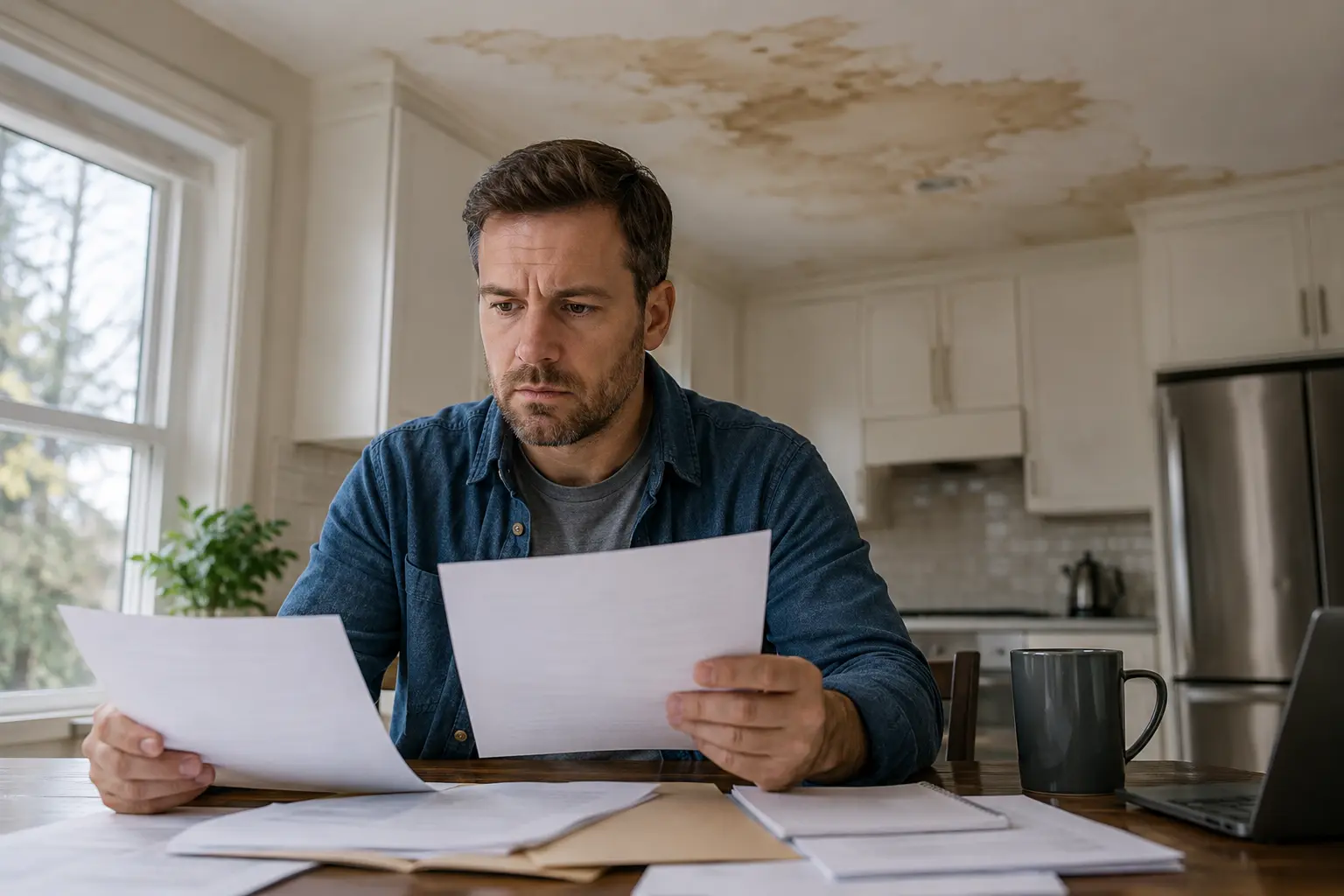
Odor is one of the harder aspects of water damage to document for insurance purposes because it is not visible in photographs the way physical damage is. However, odor documentation is worth including in your overall claim record because professional odor treatment has real costs that are legitimate covered expenses under many policies, and adjusters sometimes question these costs without adequate documentation supporting why they were necessary.
Useful documentation for odor-related claim elements includes: photographs of visibly mold-affected materials that were the source of the odor, any air quality testing results that provide quantitative data on mold spore or MVOC levels, written notes from the restoration company’s assessment specifically mentioning odor as a finding, and an itemized breakdown in the restoration invoice showing odor treatment as a distinct line item with the specific technique used. A restoration company that documents their odor assessment and treatment approach as a standard part of their job file provides this material naturally; one that doesn’t document odor findings specifically may require prompting to ensure your claim record is complete.
Practical Steps You Can Take Between Professional Visits
- Increase ventilation by opening windows when outdoor air quality allows, running exhaust fans continuously, and ensuring the HVAC system is operating normally to move air through the space
- Run a HEPA air purifier in the affected room to reduce airborne spore and particulate levels, which reduces the airborne contribution to the overall odor without addressing structural sources
- Avoid masking products like plug-in air fresheners, scented candles, or aerosol sprays, since these temporarily mask the odor while making it harder to track whether the underlying condition is improving or worsening
- Keep humidity in the affected space below 50% using a dehumidifier if needed, since lower humidity slows microbial activity and therefore slows MVOC production while a more comprehensive solution is arranged
Dealing with persistent water damage odor in Los Angeles? Call ASAP Water Damage Restoration for a thorough assessment to identify the source and a treatment plan that actually addresses it, rather than just masking it temporarily.
Keep reading
- Structural Drying vs Dehumidification: What’s Actually Happening
- How Long Does Structural Drying Take After a Flood?
- Moisture Mapping for Water Damage in Los Angeles
- Fire Damage Restoration vs Smoke Damage Restoration: What’s the Difference?
Need help now? See our Structural drying services or call (323) 677-2811, 24/7.