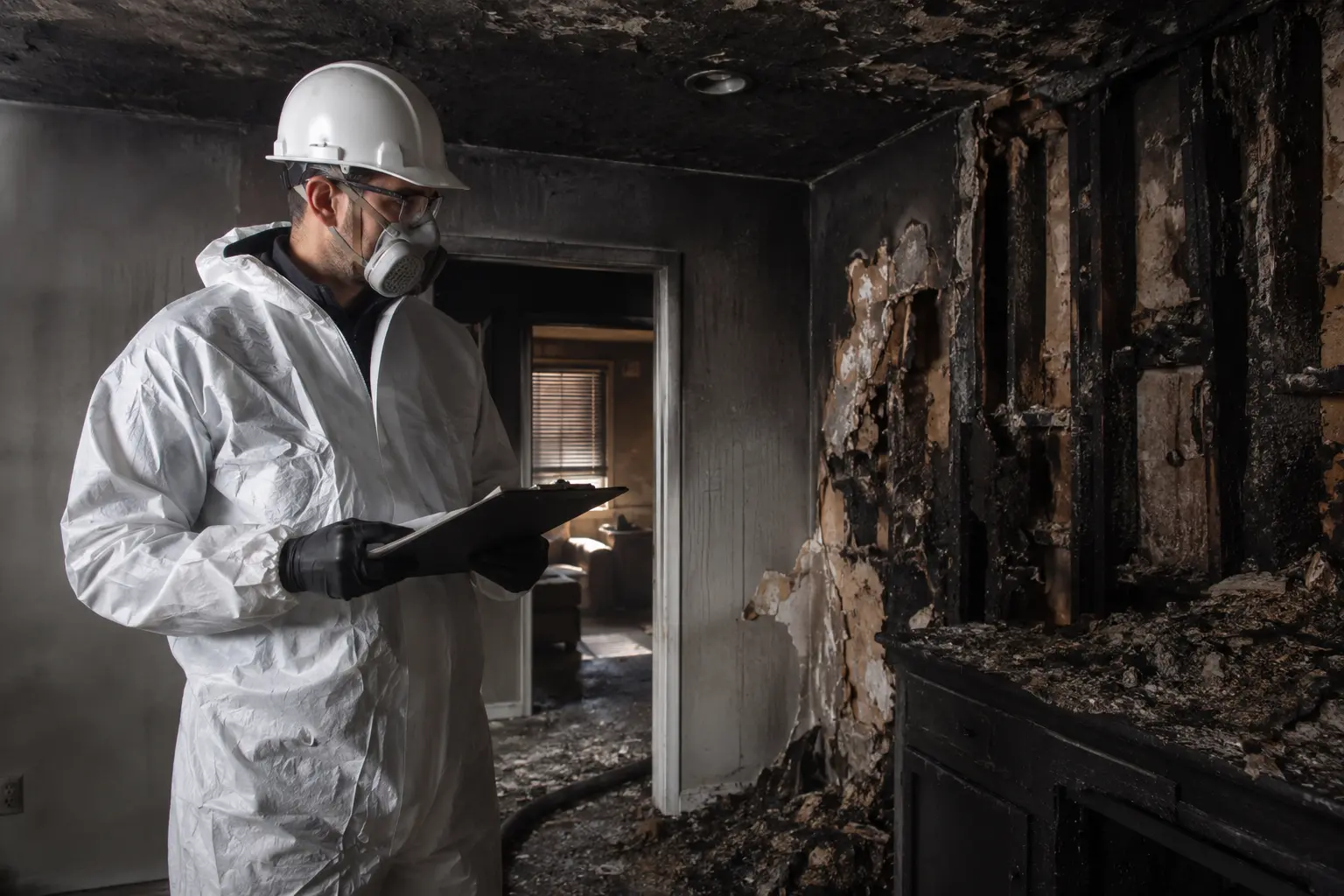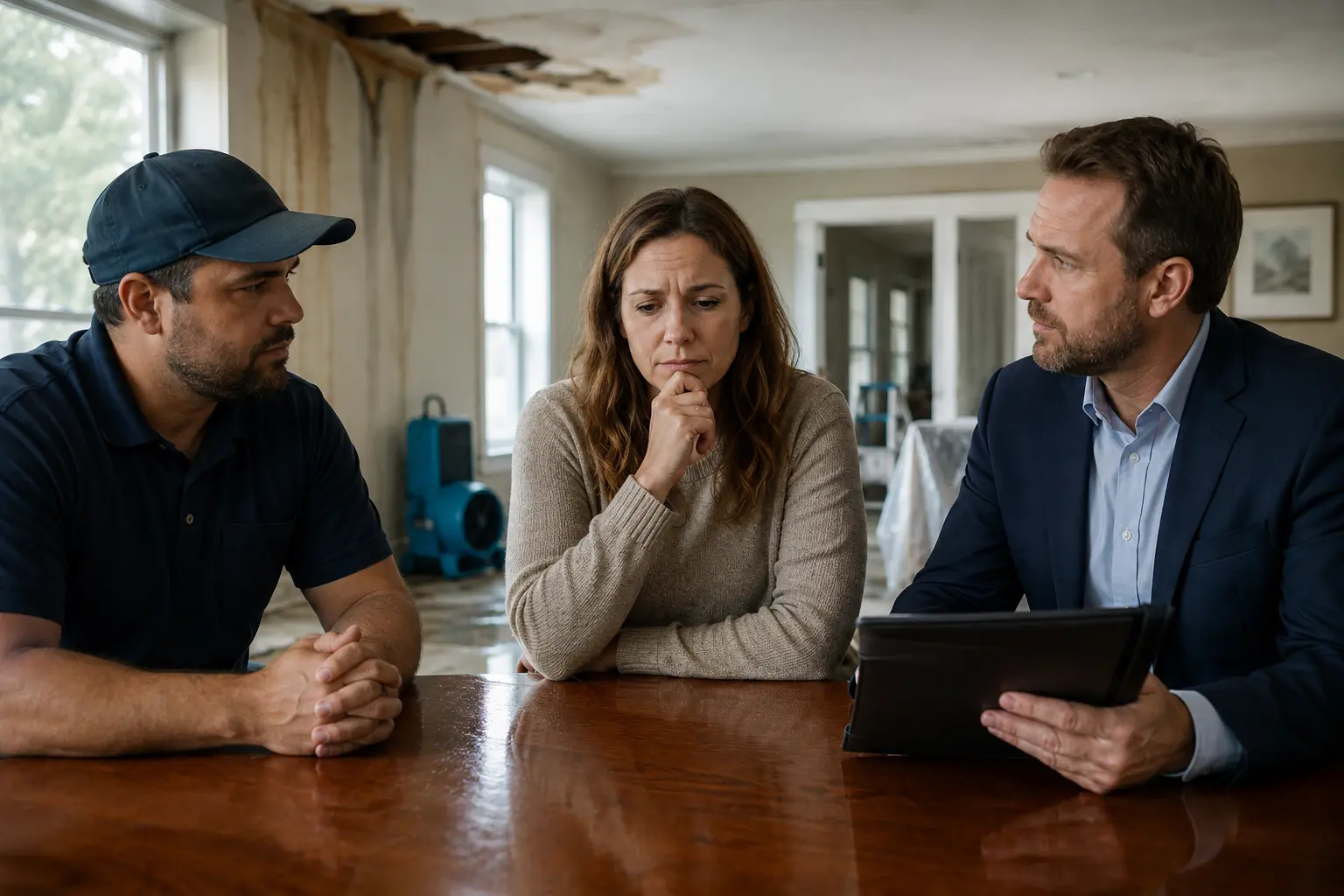
After a fire, the visible damage, charred materials, burned structures, is only part of what needs to be addressed. Smoke travels far beyond the area that actually burned, and water used to extinguish the fire adds a third layer of damage on top of both. Fire damage restoration and smoke damage restoration address different parts of this combined problem, and understanding the distinction helps you know what’s actually being repaired and why the process often takes longer than people expect.
What Fire Damage Restoration Covers
Fire damage restoration addresses the physical destruction caused directly by flames and intense heat. This includes:
- Structural assessment of burned framing, walls, and roofing to determine what’s salvageable versus what needs replacement
- Removing charred and structurally compromised materials
- Rebuilding damaged structural elements, drywall, flooring, and other materials destroyed by direct fire exposure
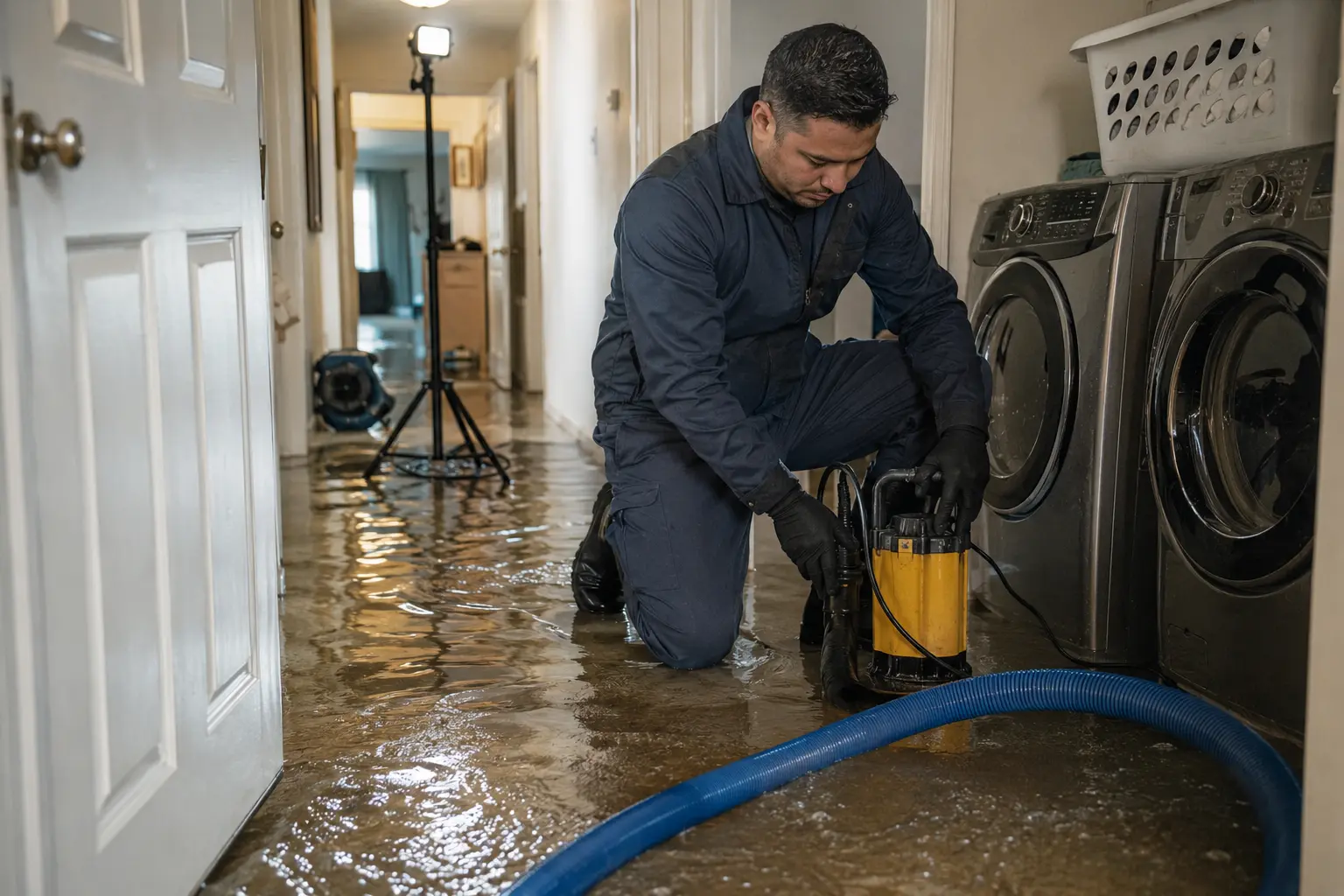
- Addressing water damage from firefighting efforts, since significant amounts of water are typically used to extinguish a fire, creating a secondary water damage situation layered on top of the fire damage itself
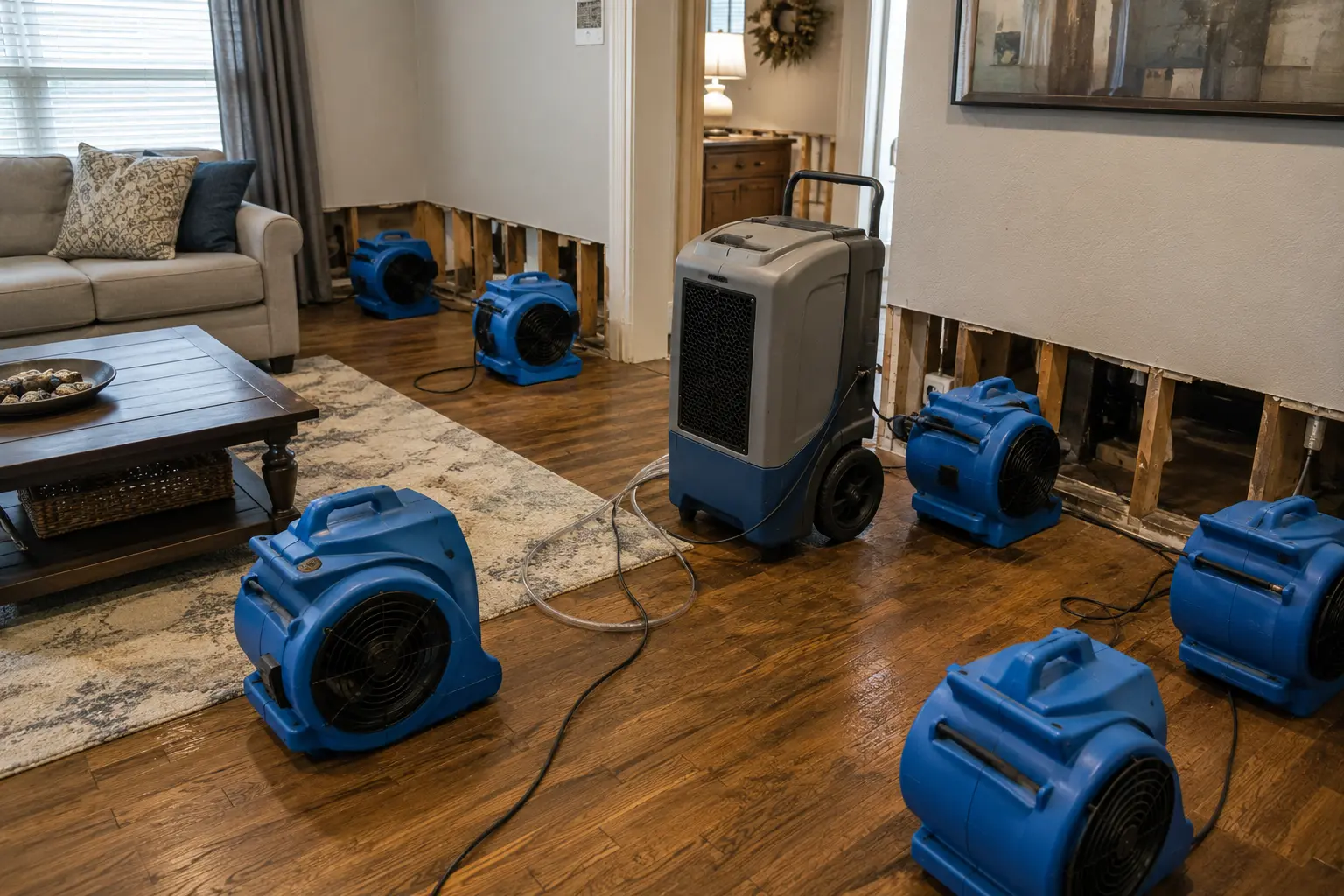
This water damage component connects directly to standard water mitigation and restoration processes, covered in our guide on water mitigation vs water restoration, since structural drying is often necessary even in fire-damaged properties.
What Smoke Damage Restoration Covers
Smoke damage restoration addresses the residue and odor that spreads throughout a property during a fire, often reaching areas far from where the fire actually occurred. Smoke particles are extremely fine and travel through HVAC systems, gaps around doors and windows, and even through walls in some cases, which is why smoke damage frequently affects an entire property even when the fire itself was contained to one room.
Smoke damage restoration typically includes:
- Cleaning smoke residue (soot) from walls, ceilings, and surfaces throughout the affected property
- Cleaning or replacing HVAC components and ductwork, since smoke particles settle inside the system and get recirculated every time it runs
- Odor removal treatment, which often requires more than just cleaning, since smoke odor can penetrate porous materials like drywall, insulation, and fabric
- Cleaning or restoring personal belongings affected by smoke, including furniture, clothing, and electronics
Why Smoke Damage Often Extends Further Than Fire Damage
This is one of the more surprising aspects of fire recovery for homeowners. A fire contained to a kitchen can still produce smoke damage throughout an entire home, since smoke rises and spreads through any available path, stairwells, HVAC ducts, gaps around doors. It’s common for a property to need extensive smoke cleaning in rooms that were never anywhere near the actual fire, which is part of why a thorough inspection of the entire property, not just the room that burned, matters before finalizing a restoration scope.
Why Both Often Happen Together, Plus Water
In most real fire scenarios, you’re actually dealing with three forms of damage simultaneously: fire damage to the directly affected area, smoke damage throughout a much wider area, and water damage from firefighting efforts. This is why fire restoration is rarely a single, simple process. A property might need structural rebuilding in the kitchen where the fire occurred, smoke odor treatment throughout the entire house, and full structural drying in rooms where firefighting water pooled or seeped through floors and ceilings. Addressing only one of these three components leaves the recovery incomplete, even if the most visually obvious damage (the burned area itself) has been fixed.
Why Smoke Odor Is So Difficult to Remove
Smoke odor lingers because smoke particles are microscopic and embed themselves into porous materials at a molecular level, not just sitting on the surface the way dust does. Simply wiping down a wall or running an air freshener doesn’t address odor that’s penetrated into drywall, insulation, or fabric. Effective smoke odor removal typically requires specialized techniques like thermal fogging (which uses heat to open up material pores and neutralize odor molecules), ozone treatment, or hydroxyl generators, depending on the severity and the materials involved. Some of the same underlying principles apply to persistent water damage odor as well, covered in more detail in our guide on how to get rid of water damage odor.
How Insurance Typically Treats Fire and Smoke Damage
Fire damage is almost universally covered under standard homeowners and commercial property insurance policies, since fire is one of the core perils these policies are designed to address. However, the scope of coverage for smoke damage specifically (cleaning costs throughout a large property, HVAC system remediation, personal property cleaning) can sometimes be underestimated in an initial insurance assessment if the full extent of smoke spread isn’t properly documented. A thorough inspection that documents smoke damage in every affected room, not just the room that burned, supports a more accurate and complete claim. For more on documenting and navigating a claim of this scale, see our guide on water damage insurance claims in Los Angeles (much of the documentation logic applies similarly to fire and smoke claims).
Why Soot Type Matters for Cleaning Approach
Not all soot behaves the same way, and the type of fire that produced it changes how it needs to be cleaned. Dry soot, typically from a fast-burning fire involving paper or wood, is powdery and relatively easier to clean from hard surfaces, though it can still embed in fabric and porous materials. Wet soot, typically from a slower-burning, smoldering fire involving materials like plastic or rubber, is sticky and oily, smearing easily if wiped with the wrong technique and often requiring specialized solvent-based cleaning rather than standard methods. Protein residue, common after kitchen fires involving cooking grease or food, leaves a nearly invisible film with an extremely strong odor that’s particularly difficult to fully eliminate without thorough, specialized treatment. Identifying which type of residue is present helps determine the right cleaning approach from the start, rather than discovering partway through that a different method is needed.
What Happens to HVAC Systems After a Fire
Even if your HVAC system wasn’t directly damaged by fire, it almost certainly circulated smoke throughout the ductwork while the fire was active or while the system continued running afterward. A thorough fire and smoke restoration should include inspection and cleaning of the entire HVAC system, including ductwork, coils, and filters, since running an uncleaned system after a fire effectively recirculates soot and smoke odor throughout the property indefinitely, undoing cleaning work done elsewhere in the home.
What Can and Can’t Typically Be Saved
Whether an item can be restored versus needs to be replaced generally depends on the material and how directly it was exposed to fire, heat, or smoke. Hard, non-porous items (metal, glass, some plastics) can often be cleaned and restored even after fairly significant smoke exposure. Porous and absorbent materials (upholstered furniture, mattresses, carpeting, some clothing) are much more likely to retain smoke odor permanently even after cleaning, making replacement the more practical choice in many cases, especially for items directly in the fire’s path rather than just exposed to ambient smoke. Electronics exposed to smoke can sometimes be restored if addressed quickly, since smoke residue is corrosive and can cause delayed failures if not professionally cleaned soon after exposure.
Why Wildfire Smoke Damage Is a Distinct Concern in Los Angeles
Beyond structure fires, Los Angeles properties can experience smoke damage from nearby wildfires even when the fire itself never reaches the property directly. Wildfire smoke carries fine particulate matter that can infiltrate homes through HVAC systems, gaps around windows and doors, and attic ventilation, sometimes affecting properties miles away from the actual fire perimeter during periods of heavy smoke and poor air quality. This type of smoke exposure tends to be lower in intensity than smoke from a structure fire but can occur repeatedly during fire season, leading to a gradual accumulation of residue and odor over multiple events rather than a single dramatic incident. Homeowners noticing a persistent smoky smell or visible film on surfaces after a period of regional wildfire activity, even without any fire on their own property, may still benefit from professional smoke damage assessment and cleaning, particularly for HVAC systems that have been actively pulling in outside air during those periods.
How Insurance Claims Differ for Total Loss vs Partial Loss Fires
The restoration and claims process looks meaningfully different depending on the severity of the fire. For a partial loss, contained to a portion of the property, the process generally follows the structure outlined throughout this guide: assessment, mitigation, smoke and odor treatment, and rebuilding the affected area. For a total loss, where the property is no longer safely habitable or repair costs would exceed the property’s insured value, the claims process shifts toward a different track entirely, focused on dwelling replacement cost calculations, additional living expense coverage for extended temporary housing, and often a much longer timeline involving permitting and full reconstruction rather than targeted repair. Understanding which category your situation falls into early on helps set realistic expectations for both the timeline and the type of professional support you’ll need throughout the process.
Why Air Quality Testing Is Often Recommended After Fire Restoration
Even after a thorough smoke cleaning, it’s increasingly common for restoration companies or independent indoor air quality professionals to recommend post-restoration air quality testing, particularly for properties with significant smoke exposure or for households with members who have respiratory sensitivities. This testing typically measures residual particulate levels and can confirm whether odor-causing compounds have been adequately addressed, providing an objective benchmark beyond simply “it doesn’t smell like smoke anymore” to the people living there, since smoke odor sensitivity varies significantly between individuals and prolonged exposure can sometimes cause occupants to become less aware of a lingering smell that a fresh visitor would immediately notice.
How Fire Restoration Coordinates With Code Upgrade Requirements
When rebuilding fire-damaged structural elements, particularly for older properties, local building codes sometimes require certain upgrades beyond simply restoring what was there before, such as updated electrical wiring, improved fire-rated materials in specific locations, or updated smoke detector and fire suppression requirements. Many homeowners insurance policies include a specific endorsement for “ordinance or law” coverage that helps offset the additional cost of these code-required upgrades, since standard dwelling coverage is generally based on restoring the property to its prior condition, not necessarily covering the cost difference of complying with current code requirements that didn’t exist when the property was originally built. Checking whether your policy includes this endorsement before a fire occurs, rather than discovering the gap during a claim, is a worthwhile step for owners of older properties in particular.
What to Expect From the Restoration Timeline
Fire and smoke restoration timelines vary enormously based on severity, ranging from a contained kitchen fire requiring a few weeks of work to a significant structural fire requiring months of rebuilding. A realistic process generally moves through: emergency board-up and water extraction immediately after the fire, a full assessment of fire, smoke, and water damage throughout the property, structural drying where firefighting water caused saturation, smoke residue cleaning and odor treatment throughout affected areas, and finally structural rebuilding of any fire-damaged areas.
Quick Reference
| Fire Damage Restoration | Smoke Damage Restoration |
|---|---|
| Addresses direct burn and heat damage | Addresses residue and odor spread throughout the property |
| Often limited to the directly affected area | Frequently extends well beyond the room that burned |
| Involves structural rebuilding | Involves cleaning, HVAC remediation, and odor treatment |
| Usually paired with water damage repair from firefighting | Can affect rooms with no fire or water damage at all |
If you’re recovering from a fire anywhere in Los Angeles, a thorough recovery addresses all three components, fire, smoke, and water damage, rather than treating the visible burn damage as the entire scope of the job.
Dealing with fire damage right now? Call ASAP Water Damage Restoration for emergency board-up, water extraction, and full fire and smoke damage assessment, available 24/7 across Los Angeles.