This is one of the most common questions homeowners ask once equipment is set up and running in their home: how long is this actually going to take? The honest answer is that it depends on several specific factors, but there are realistic ranges and clear signs of what’s driving a longer or shorter timeline.
The General Timeline for a Standard Drying Job
For a typical, moderate water event, a single room or limited area, clean water source, addressed within the first day, structural drying generally takes 3 to 5 days. This isn’t an arbitrary number; it reflects how long it typically takes for materials like drywall, subflooring, and framing to release absorbed moisture down to a safe, dry baseline when proper equipment is in place and running continuously.
Larger events, multiple rooms, denser materials, or water that sat for an extended period before mitigation began, can extend this timeline to 7 to 10 days or longer. Severe cases involving extensive saturation of dense materials like hardwood flooring, plaster, or concrete can take two weeks or more in some situations.
The Five Main Factors That Determine Drying Time
1. How Quickly Mitigation Began
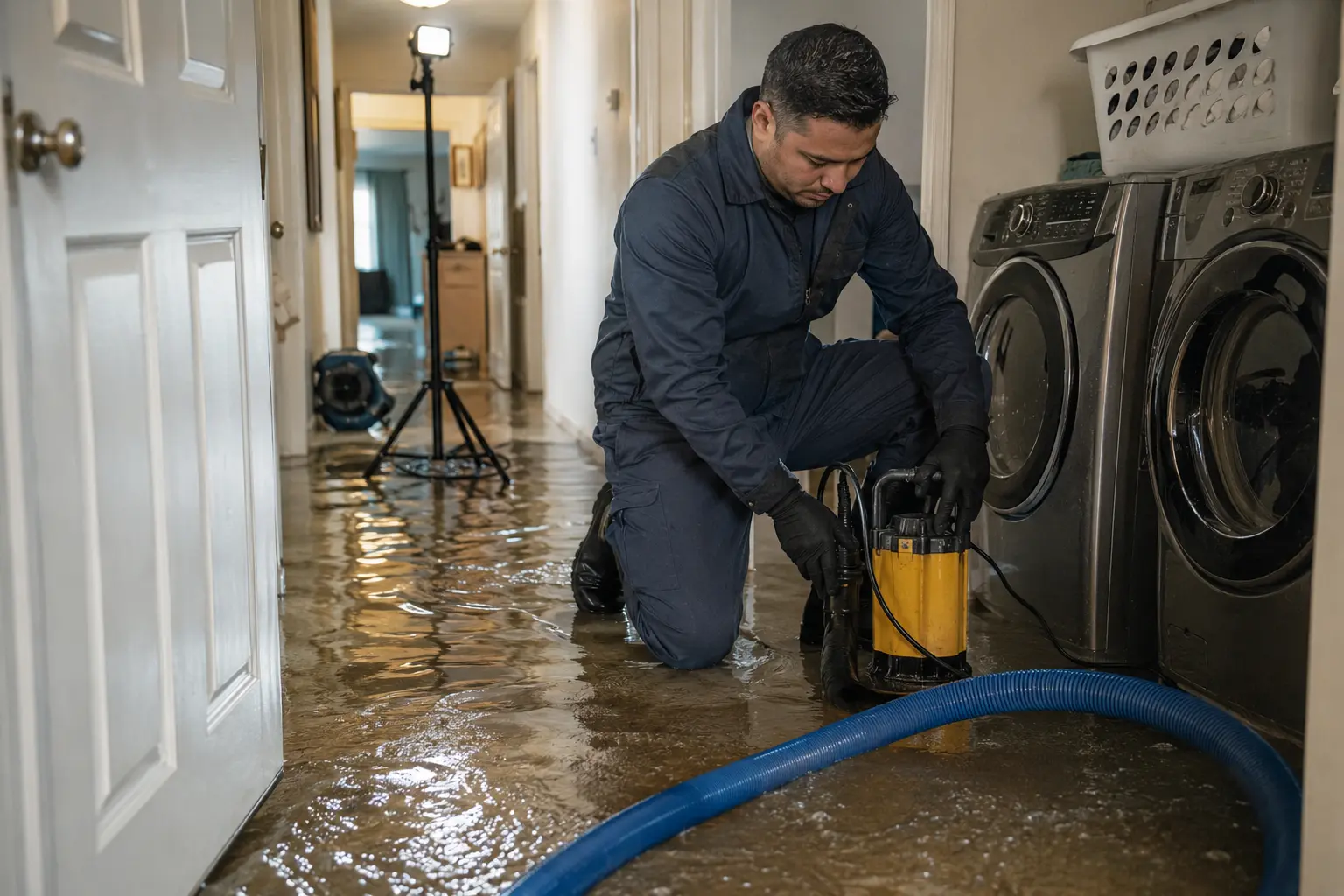
This is often the single biggest factor. Water that’s extracted and drying equipment placed within hours of the event generally dries faster than water that sat for a day or more before professional mitigation started, since materials absorb progressively more moisture the longer they’re exposed. This is part of why same-day response matters so much beyond just preventing additional damage; it also directly shortens the overall drying timeline.
2. Water Category
Clean water (Category 1) generally allows more materials to be dried in place rather than removed, which can mean a more predictable, often shorter overall timeline despite drying intact materials. Gray and black water situations typically require more extensive removal of porous materials due to contamination concerns, which changes the drying calculation since less material remains to dry, but more reconstruction work follows afterward.
3. Class of Water Damage
IICRC standards classify damage based on how much moisture was absorbed and how readily the structure can release it, ranging from Class 1 (minimal absorption) to Class 4 (specialty drying for very low-permeability materials like dense hardwood, plaster, or concrete). A Class 4 situation can take significantly longer to dry than a Class 1 situation of the same square footage, since the materials involved simply release moisture more slowly regardless of equipment used.
4. Ambient Humidity and Temperature
Warmer, drier ambient conditions generally support faster drying, since the air can absorb more moisture before becoming saturated. Coastal-adjacent areas of Los Angeles or poorly ventilated spaces with naturally higher humidity can see somewhat extended drying timelines compared to drier, better-ventilated areas, all else being equal.
5. Equipment Quantity and Placement
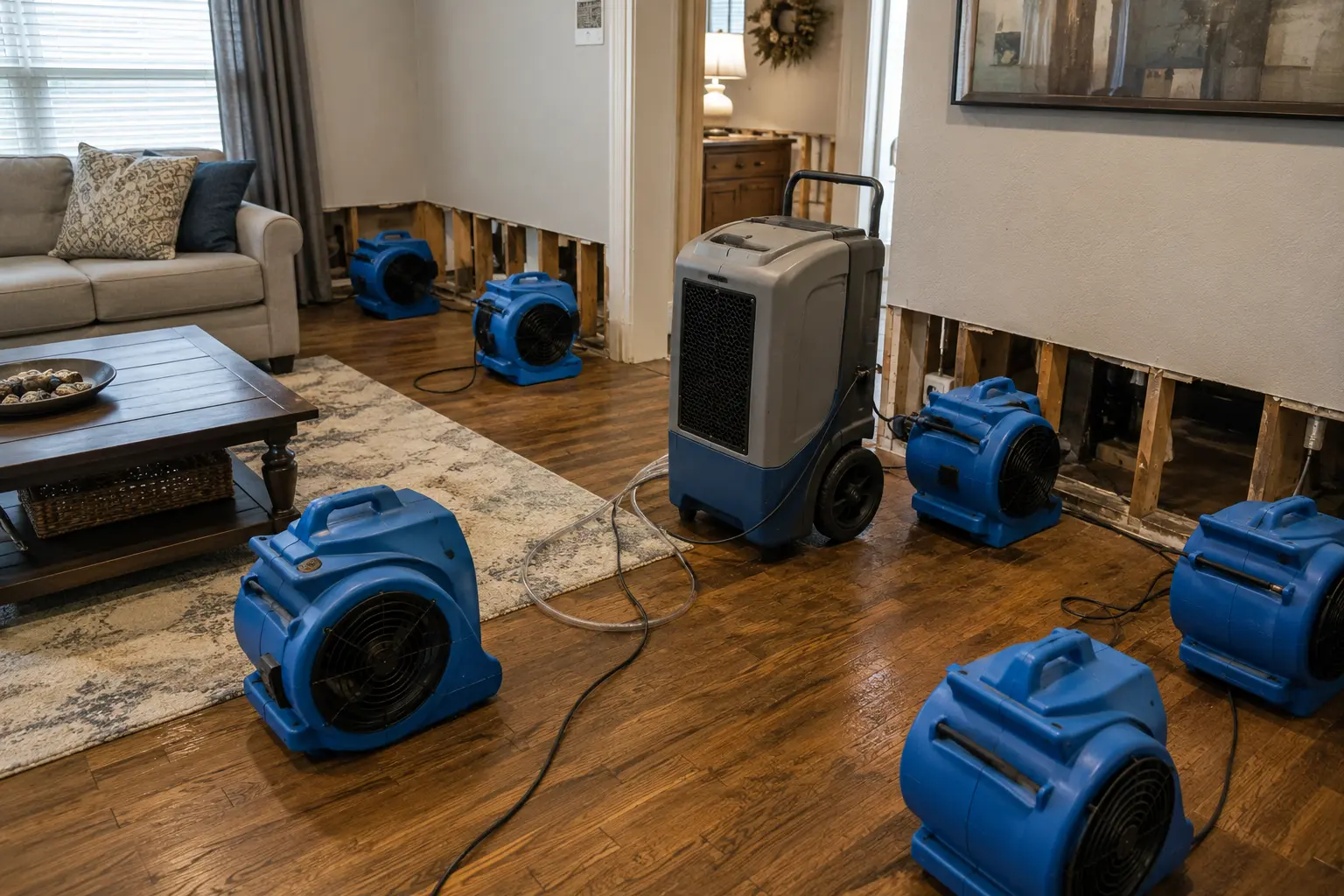
Properly calculated equipment, the right number of air movers and dehumidifiers for the specific square footage and materials involved, dries a space significantly faster than under-equipped setups. This connects directly to the relationship between air movers and dehumidifiers covered in our guide on structural drying vs dehumidification.
How Technicians Actually Determine When Drying Is Complete
Drying isn’t considered complete based on a calendar date; it’s confirmed through moisture meter readings compared against a dry standard, typically an unaffected reference area in the same property. A technician checks moisture content in drywall, subflooring, and framing daily (or, for some setups, through remote sensors), and drying continues until these readings consistently match the dry reference area, not just until the space “feels” dry. For more on how technicians map and verify moisture throughout a property, see our guide on moisture mapping for water damage in Los Angeles.
Why Drying Sometimes Takes Longer Than Initially Estimated
It’s not uncommon for an initial estimate to extend once drying is underway. This usually happens for a few specific reasons: moisture is discovered in an adjacent area not initially identified as affected, materials that seemed to be drying normally plateau and require additional time or a change in approach, or hidden moisture behind walls or under flooring is identified partway through the process using thermal imaging. A reputable company will explain clearly why a timeline has extended, supported by actual moisture readings, rather than simply running equipment longer without justification.
What Happens If Drying Stops Too Early
Removing equipment before materials reach a genuinely dry state is one of the most common causes of mold developing after a water damage event that otherwise seemed handled correctly. Materials that feel dry to the touch can still hold meaningful moisture internally, and rebuilding over that residual moisture creates ideal conditions for mold to develop behind newly finished surfaces, often not discovered until months later. This is exactly the scenario covered in detail in our guide on why mold can come back after remediation.
Can You Speed Up the Process Yourself?
A few things genuinely help: keeping the equipment running continuously rather than turning it off at night to save on electricity (a common but counterproductive instinct), keeping doors open between rooms to allow proper airflow rather than closing off the affected space, and avoiding the temptation to bring in personal fans or space heaters that aren’t part of the calculated drying setup, since these can sometimes work against the intended airflow pattern. Beyond this, the timeline is primarily determined by the factors above, materials, water category, and how quickly mitigation began, rather than anything a homeowner can meaningfully accelerate once professional equipment is in place.
How Drying Timelines Affect Your Daily Life During the Process
For most homeowners, the more immediate concern alongside “how long” is “what does this mean for living in my home during that time?” In most cases, drying equipment can run in one or several rooms while the rest of the home remains fully livable, with some noise and inconvenience from running air movers and dehumidifiers. The main practical impacts: the affected rooms are inaccessible or limited-access during active drying, the equipment produces meaningful noise (air movers in particular are loud enough to make conversation in the same room difficult), and the electricity usage of running multiple units continuously is noticeable on your power bill, though generally manageable for a typical residential job duration. If the damage is extensive enough to affect a large portion of the home or creates health and safety concerns (significant mold, structural damage, sewage contamination), temporary relocation may be advisable or necessary, and most homeowners policies include additional living expense (ALE) coverage to offset reasonable temporary housing costs when a covered loss makes the property uninhabitable.
What “Drying in Place” Means for the Timeline
When materials are dried in place rather than removed, the drying timeline is typically longer than for a job where affected materials were demolished and removed. This sounds counterintuitive since less material remains, but the reason is that an intact, closed wall or floor assembly is harder to dry than an open, exposed structure with demolition completed. This is part of why some restoration approaches deliberately open up walls or remove baseboards not because those materials are necessarily beyond saving, but because doing so significantly speeds up the overall drying process by exposing the interior framing and cavity to active airflow. The tradeoff between drying in place (lower initial demolition cost, longer drying time) versus targeted demolition (higher initial cost, faster overall drying and sometimes lower total cost) is a judgment call made based on specific moisture readings and material type, and a good technician explains this reasoning clearly rather than just proceeding without explanation.
How to Read the Daily Moisture Reports a Good Company Should Provide
Daily moisture logs typically show readings at specific labeled locations (for example, “wall A, 18 inches from floor” or “subfloor center room 2”) with the reading value and the date. The numbers will mean different things depending on the material being measured, since drywall, wood framing, and subfloor all have different target moisture content ranges that define “dry.” A technician should be able to explain what the target reading is for each material type they’re monitoring and show you the progression from the initial reading (when equipment was placed) toward that target over successive days. If readings are plateauing rather than declining, that’s worth discussing explicitly since it can indicate either a need for equipment adjustment or a still-active moisture source that hasn’t been fully addressed.
How Different Flooring Types Affect Drying Time Significantly
Flooring material is one of the single biggest variables in how long structural drying takes, and it’s worth understanding why specific materials behave so differently before making any decisions about whether to attempt drying versus replacement.
Carpet and carpet padding is generally the fastest to address in terms of decision-making: carpet itself can sometimes be cleaned and reinstalled if extracted and dried quickly enough, but carpet padding almost universally needs to be replaced since it absorbs and retains water in a way that makes complete drying effectively impossible in place. When padding remains, it acts as a persistent moisture reservoir that keeps the subfloor damp regardless of surface drying efforts.
Luxury vinyl plank (LVP) and laminate flooring present a particular challenge because the materials themselves are relatively water-resistant, but the subfloor and adhesive layers beneath them are not. Water gets under LVP and laminate easily through seams and edges, then sits trapped against the subfloor with limited evaporation paths. In many cases, these floating floor systems need to be lifted to allow the subfloor to dry properly, even when the surface material itself is undamaged.
Tile flooring over a concrete slab is generally the most forgiving, since neither material is particularly porous. However, tile over a wood subfloor can trap moisture between the tile and the wood, leading to subfloor damage and potential mold that isn’t visible until the tile is lifted.
Hardwood flooring requires the most careful management. Solid hardwood can sometimes be saved if addressed extremely quickly, but it warps, cups, and cracks as it absorbs moisture, and the window for successful drying in place is narrow, often only 24-48 hours before damage becomes permanent. Engineered hardwood is somewhat more stable but still vulnerable. Specialized floor mat drying systems applied directly over the hardwood can sometimes achieve drying that standard air movers alone cannot.
What Insurance Companies Typically Expect Regarding Drying Documentation
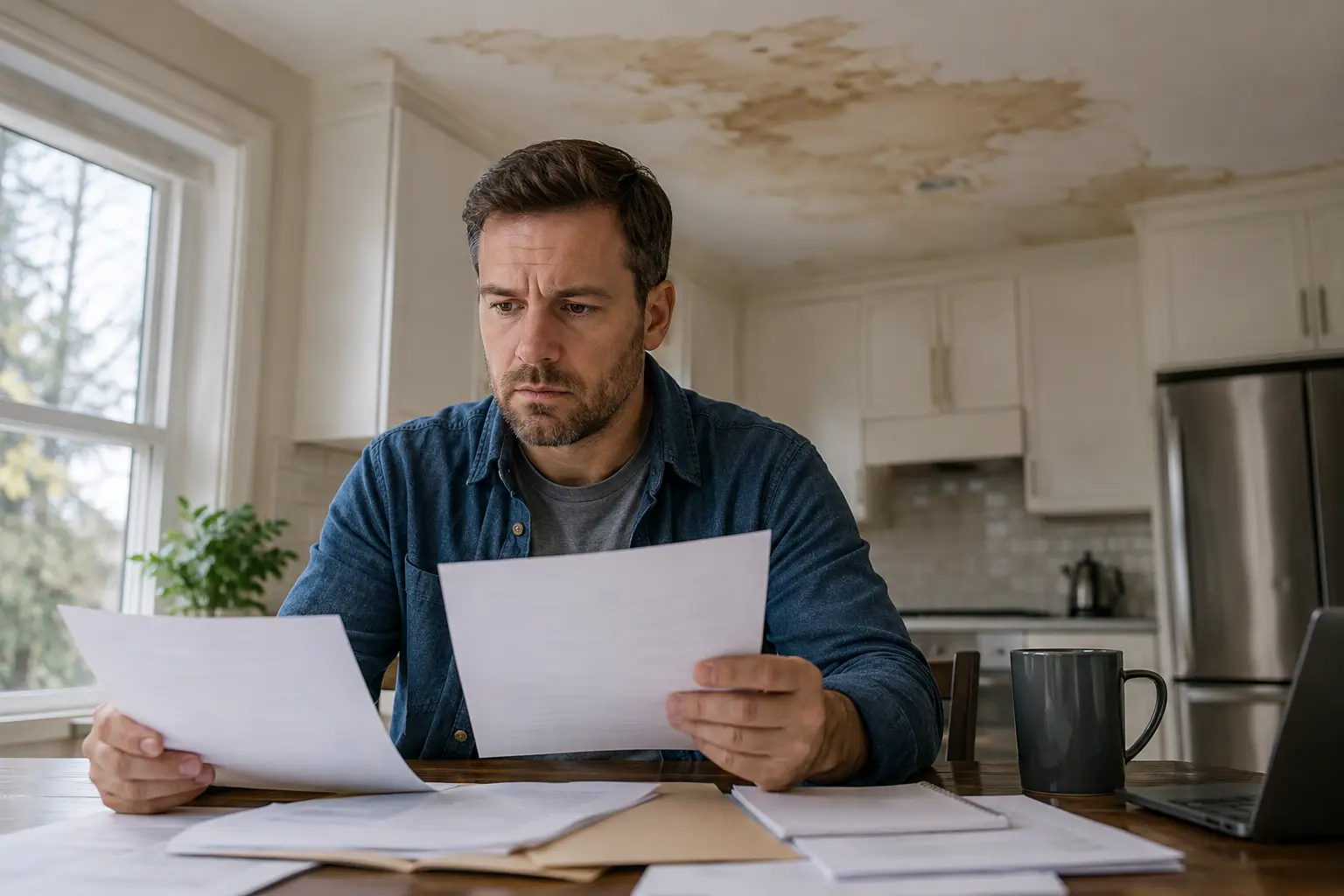
When submitting a water damage claim that includes a significant structural drying component, most insurers expect documentation that justifies the equipment usage and duration rather than simply billing for an arbitrary number of equipment days. This typically means: an initial moisture assessment establishing that drying was genuinely needed, daily or regular moisture readings showing the drying progression over time, and a final clearance reading confirming the structure reached a dry baseline before equipment was removed. Without this documentation, insurance companies sometimes push back on equipment rental charges, particularly for longer drying jobs, arguing that the duration was excessive without evidence showing why it actually took that long. A restoration company that provides this documentation routinely, rather than only when asked, generally has a more professional and defensible claims process overall.
The Difference Between a Structure That’s Dry and One That’s Safe
It’s worth clarifying that “structurally dry” and “safe to rebuild” are not always the same thing. A structure can reach acceptable moisture levels for rebuilding purposes while still requiring antimicrobial treatment before new drywall or flooring goes in, particularly for any gray or black water event. Rebuilding over materials that are dry but haven’t been treated for microbial contamination creates a different kind of risk than rebuilding over materials that are wet, but the outcome can be similarly problematic. A thorough restoration process addresses both moisture content and contamination treatment as separate, sequential checkpoints before any restoration work begins, not just moisture alone.
Quick Reference: Typical Drying Timelines
| Scenario | Typical Drying Time |
|---|---|
| Small area, clean water, addressed same day | 3-5 days |
| Multiple rooms, clean to gray water | 5-7 days |
| Larger area, delayed mitigation start | 7-10 days |
| Dense materials (hardwood, plaster), Class 4 situations | 10-14+ days |
If you’re dealing with water damage anywhere in Los Angeles, our team calculates a realistic drying timeline based on your specific situation and provides daily moisture documentation throughout the process, so you know exactly when the structure is genuinely ready for rebuilding.
Need professional structural drying right now? Call ASAP Water Damage Restoration for fast equipment deployment and full moisture verification, available 24/7 across Los Angeles.
Keep reading
- Moisture Mapping for Water Damage in Los Angeles
- Water Extraction vs Water Removal: What’s the Difference?
- Water Mitigation vs Water Restoration: What’s the Difference?
Need help now? See our Structural drying services or call (323) 677-2811, 24/7.