These two terms appear constantly in water damage restoration, sometimes used interchangeably, sometimes used to describe distinct stages of the same process. Whether a company means the same thing or something different when they use each term matters for understanding what’s actually happening during your mitigation job and what to expect at each stage.
How These Terms Are Generally Used in the Industry
In most professional contexts, water extraction and water removal describe closely related but technically distinct actions within the broader mitigation process.
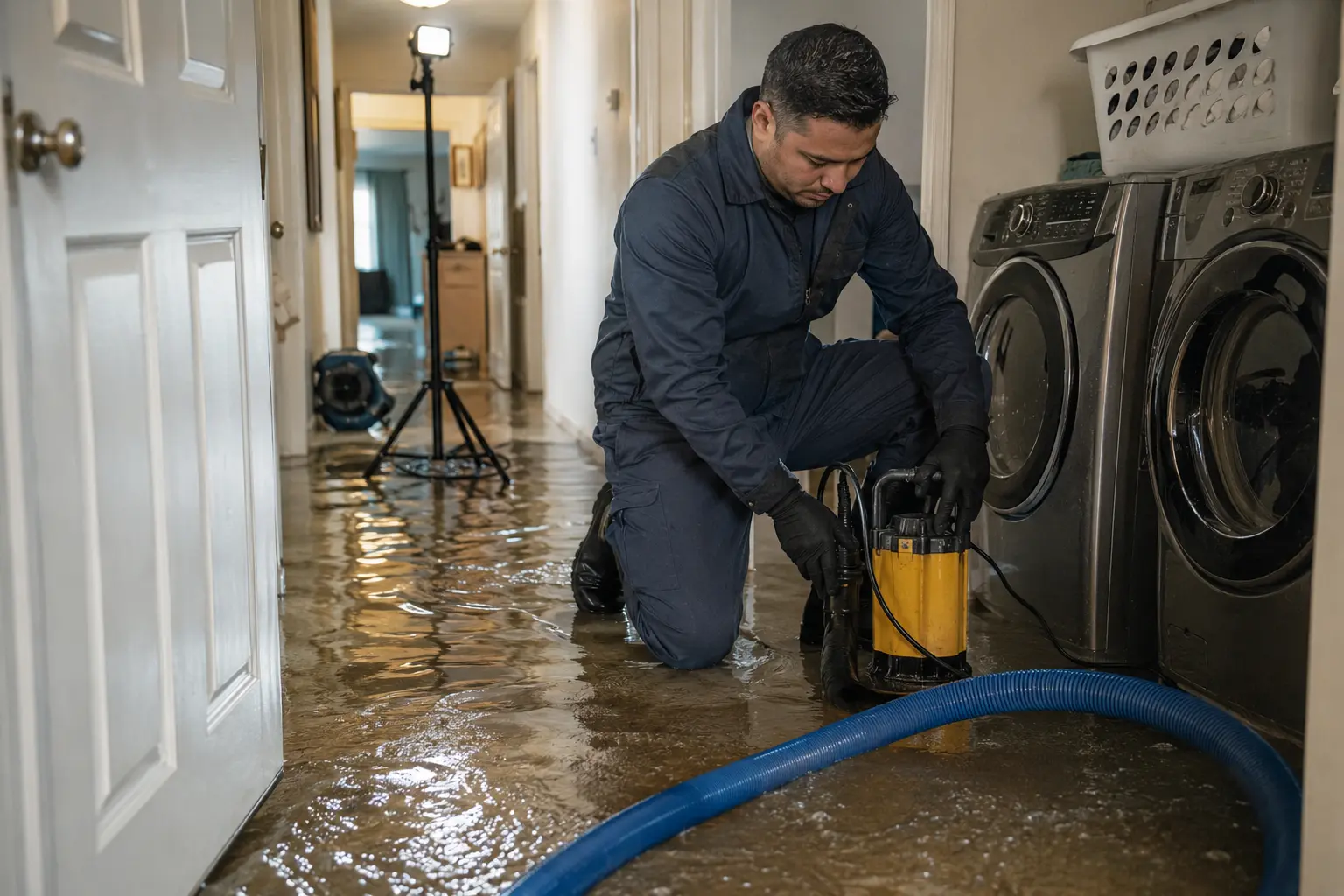
Water extraction specifically refers to the mechanical removal of standing or free water from a surface using equipment designed to pull water up and contain it. This includes truck-mounted extraction units, portable extractors, and submersible pumps for standing water. Extraction addresses water that is still liquid and accessible on surfaces, not water that has already been absorbed into materials.
Water removal is often used as a broader term that encompasses both extraction of free water and the subsequent process of removing absorbed moisture from materials through evaporation, driven by air movers and dehumidifiers. Some companies use water removal to describe the entire initial mitigation phase rather than the equipment-based extraction step specifically.
In practice, both terms are often used interchangeably in everyday communication, and the distinction matters less than understanding that both stages of the process need to happen for mitigation to be complete. A job that only extracts free standing water without addressing absorbed moisture is incomplete, and a job that only runs drying equipment without first extracting standing water is working against itself since the equipment has to overcome far more evaporative load than necessary.
The Two-Phase Process in Practice
Phase 1: Mechanical Extraction of Free Water
The first priority in any water damage response is removing standing water as quickly as possible using mechanical extraction equipment. This reduces the volume of water available to be absorbed by surrounding materials and stops the spreading and wicking process that occurs as long as free water remains present.
Different types of extraction equipment are appropriate for different situations. Truck-mounted extractors, which use a vehicle-mounted pump and tank to provide high-power suction, are the most powerful option and work well for large affected areas and deep-seated water in carpet and padding. Portable extractors are more versatile for areas with limited access. Submersible pumps are used for situations with significant standing water volume, such as flooded basements or ground-level flooding from storm events, where the volume is too large for suction-based extraction alone.
The speed of this phase is critical. Every hour of delay allows water to travel further and soak deeper into structural materials, expanding the area that then needs to be dried rather than simply extracted. This connection between response speed and eventual scope is covered in detail in our guide on same-day water damage response.
Phase 2: Evaporative Drying of Absorbed Moisture
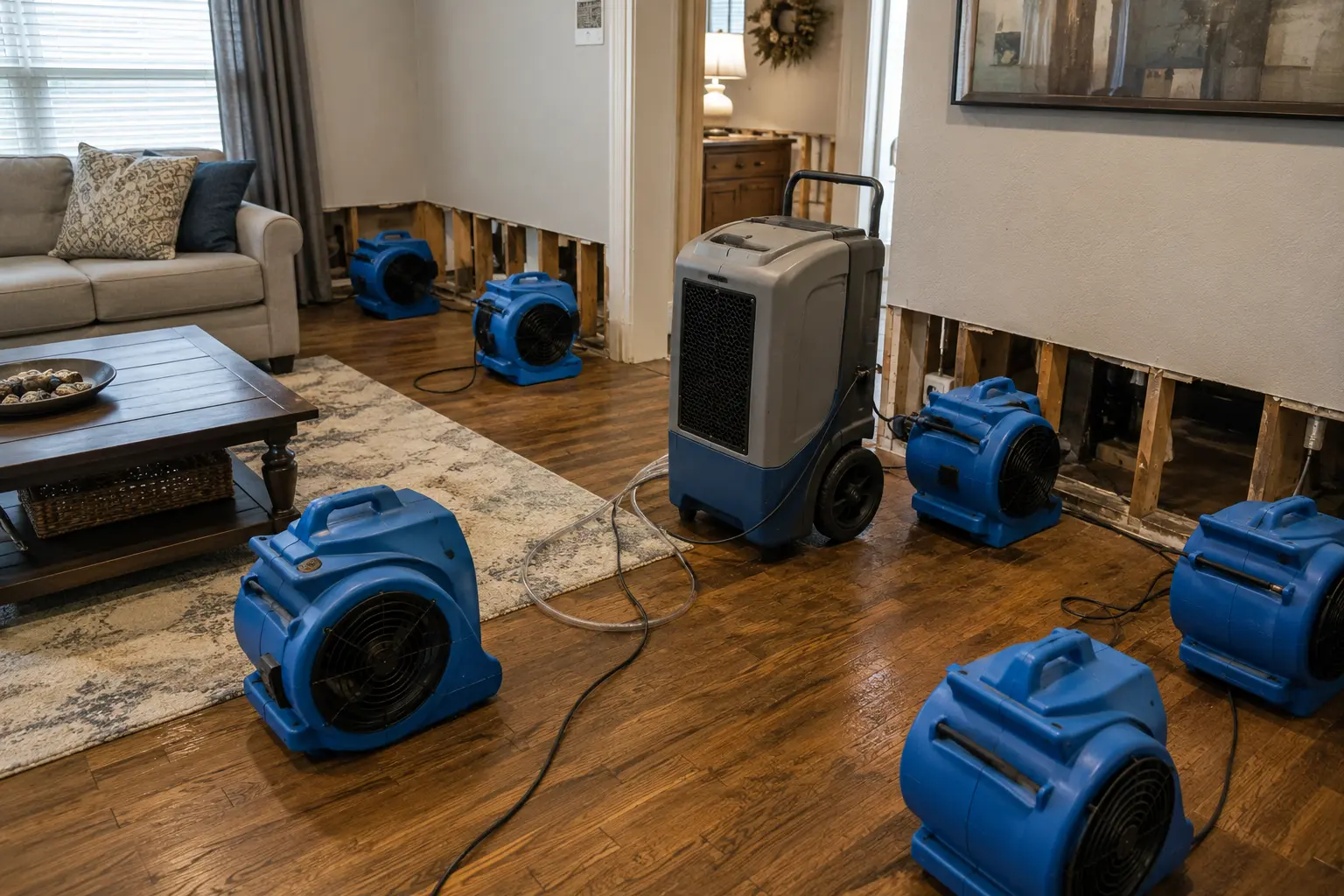
Once free standing water has been extracted, the moisture that has already been absorbed into drywall, subflooring, framing, and other structural materials cannot be extracted mechanically. It has to be removed through evaporation, driven by air movers that accelerate evaporation from material surfaces and dehumidifiers that remove the evaporated moisture from the air before it can reabsorb into surrounding materials.
This phase is where the distinction between extraction and removal becomes most relevant: after extraction equipment leaves, there is still significant water removal work underway in the form of active drying. A property that looks like it has been “taken care of” after the extraction crew packs up and leaves is still in the middle of its water removal process until drying equipment has run to completion and moisture readings confirm dry baselines throughout the structure.
Equipment Used for Each Phase
Extraction phase:
- Truck-mounted extraction systems for maximum power and capacity
- Portable electric extractors for areas without truck access
- Submersible pumps for high-volume standing water
- Weighted extraction tools for pulling water from carpet and padding
Evaporative drying phase:
- Air movers (sometimes called axial fans or low-profile air movers for floor drying) creating airflow across wet surfaces
- Commercial dehumidifiers removing evaporated moisture from the air
- Specialty equipment like floor mat systems for hardwood and wall cavity injection systems for enclosed spaces
- Moisture meters for daily monitoring of drying progress
For more detail on how air movers and dehumidifiers work together in the evaporative phase, see our guide on structural drying vs dehumidification.
Why Skipping Extraction Before Drying Is a Mistake
Running drying equipment in a space that still has standing water or heavily saturated surfaces is significantly less efficient than properly extracting first. The equipment is working against an overwhelming evaporative load from the standing water rather than focusing its energy on pulling residual moisture from structural materials. This results in a longer overall drying time, higher electricity consumption, and potentially incomplete drying of embedded moisture that the equipment is not reaching effectively because it is overloaded with the more immediate surface moisture load.
In severe flooding situations where standing water is an inch or more deep, effective drying cannot really begin until extraction has reduced the water level to the point where materials can begin releasing absorbed moisture at a rate the drying equipment can handle.
How to Know If Extraction Was Done Thoroughly
After professional extraction, the affected area should have no remaining standing water visible anywhere. Carpet, if present and being dried rather than removed, should feel damp rather than squishing underfoot when walked on. Hard surfaces should have no puddles or pooling. The extractor should have made multiple passes over carpet areas since a single pass often leaves significant moisture behind that subsequent passes capture.
If a technician does a single quick pass over a carpeted area with an extraction wand and immediately moves to setting up drying equipment, asking whether additional extraction passes would be appropriate is reasonable. Multiple extraction passes over carpet consistently improve drying times by removing more water mechanically, reducing the work the drying equipment has to do over the following days.
How Water Category Affects the Extraction Process
The extraction process for gray water (Category 2) and black water (Category 3) situations requires additional precautions beyond standard clean water extraction. The extracted water itself is contaminated and must be properly contained and disposed of rather than simply discharged to a normal drain without consideration of the contamination level. Technicians working with gray or black water extractions use PPE appropriate to the contamination category. Equipment that contacts contaminated water is decontaminated after use rather than moved directly to another job where it might transfer contamination. These additional protocols are standard practice for properly run restoration companies handling higher-category water damage and are worth confirming before a job begins if the water source might involve any contamination.
How Water Behaves Differently in Different Flooring Types During Extraction
Extraction approaches need to be adjusted based on the flooring material present, since different materials hold water differently and respond to extraction equipment in different ways.
Carpet over padding requires the most extraction effort because the padding beneath the carpet acts as a sponge that holds substantially more water than the carpet surface itself. Extraction of a carpeted area needs to address both layers. Professional extraction wands are typically weighted to press firmly against the carpet surface while vacuuming, and multiple passes are needed because each pass removes a portion of the retained water but leaves some behind for subsequent passes to capture. Even with excellent extraction, the padding in a significantly flooded carpet installation typically retains enough moisture that it needs to be removed and replaced rather than left to dry in place.
Hardwood flooring requires more careful extraction to avoid creating uneven moisture extraction across individual boards, which can contribute to differential swelling and cupping. Extraction over hardwood should be done with appropriate tooling and without excessive pressure or repetitive passes in one location that could create uneven moisture removal patterns. The priority with hardwood is extraction of standing water only, with evaporative drying methods handling the moisture absorbed into the wood itself since that cannot be mechanically extracted.
Tile and concrete are the most forgiving for extraction since neither material is significantly porous. Standing water on tile or concrete is extracted straightforwardly, and the primary concern shifts immediately to whether water has traveled through grout lines or cracks to saturate substrate materials beneath.
Luxury vinyl plank and laminate present a specific challenge because these floating floor systems have seams and gaps at the edges where water enters readily. Once water is beneath the panels, extraction from above is largely ineffective since the water is trapped in the subfloor space below the floating panel system rather than on a surface accessible to extraction equipment. In most significant water events, these systems need to be lifted to allow subfloor extraction and drying.
What Happens When Extraction Equipment Isn’t Powerful Enough for the Job
Not all extraction equipment is equal, and using under-powered equipment for a significant water event is one of the ways a job can appear to be progressing normally while actually leaving substantial moisture behind. Truck-mounted extraction systems draw significantly more vacuum and water volume than portable extractors, which in turn are more powerful than consumer-grade wet/dry vacuums. For a large affected area or for deeply saturated carpet, the difference in extraction effectiveness between these equipment tiers is meaningful.
If you observe that a technician is using a portable extractor on a large, heavily flooded area and appears to be making only one or two quick passes, asking whether additional equipment or passes would be appropriate is a reasonable question. The answer from an experienced technician should include a specific rationale rather than a generic reassurance, since the equipment choice and number of passes for a given situation should be defensible on technical grounds.
What Good Communication From a Restoration Company Looks Like During These Phases
A company doing this work well should explain clearly when they transition from extraction to drying equipment setup, why they’re removing or leaving specific materials based on saturation levels, how many days of drying equipment operation they estimate based on initial moisture readings, and when you can expect them to return to check readings and potentially adjust equipment placement. If a technician sets up equipment and leaves without explaining what comes next, asking these questions directly is entirely appropriate and should result in clear, specific answers rather than vague reassurances.
If you are dealing with water damage anywhere in Los Angeles and want to understand exactly what each step of the mitigation process involves, our team explains the process clearly from first call through final moisture verification. See our guide on how to prevent mold after water damage for what needs to happen after extraction and drying are complete.
Need water extraction and removal right now? Call ASAP Water Damage Restoration for fast, thorough emergency response available 24/7 across the Los Angeles area.
Keep reading
- Water Mitigation vs Water Restoration: What’s the Difference?
- How to Get Rid of Water Damage Odor in 2026
- Structural Drying vs Dehumidification: What’s Actually Happening
Need help now? See our Structural drying services or call (323) 677-2811, 24/7.