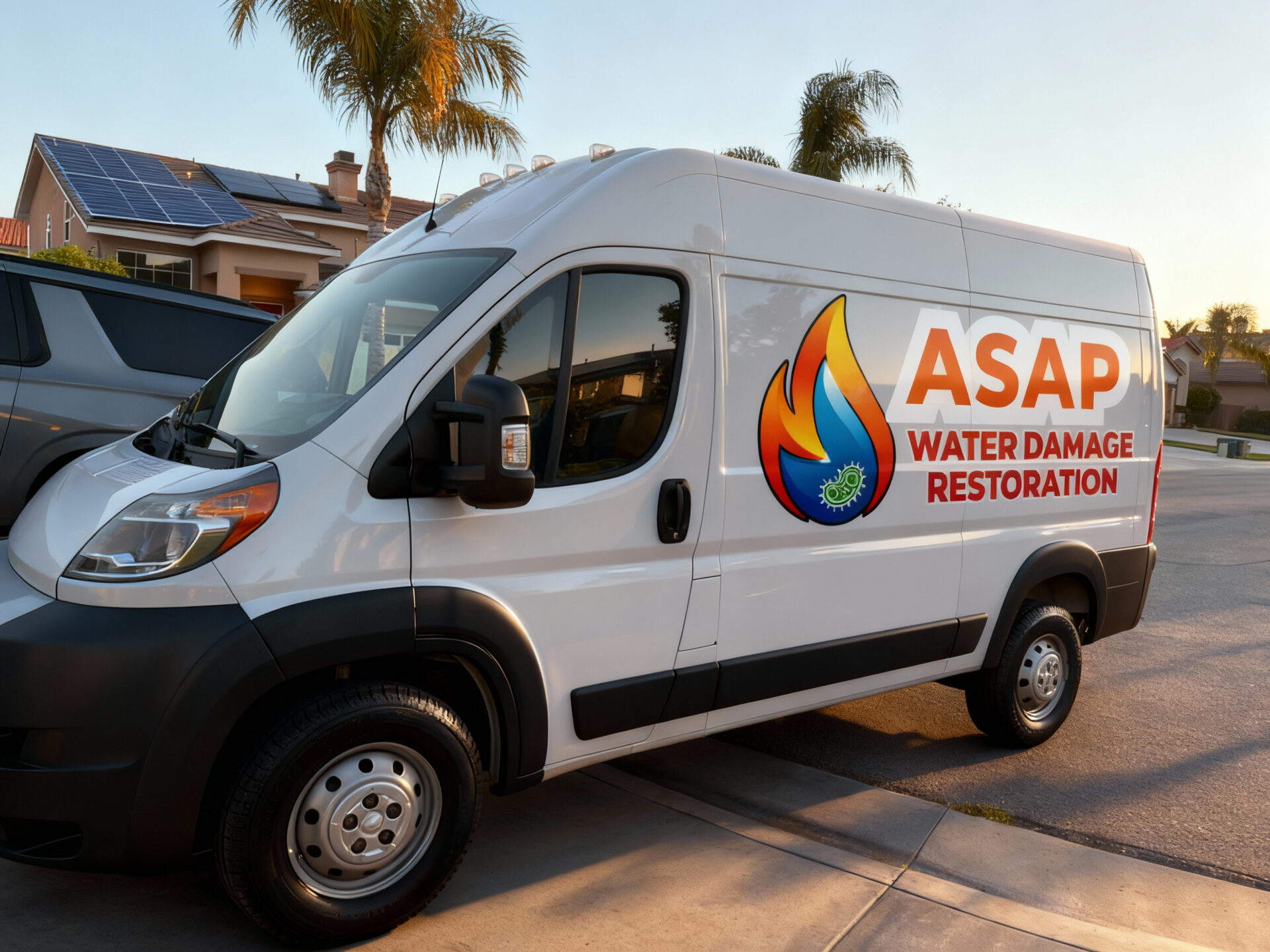
Water Damage Response for Los Angeles Businesses
A burst sprinkler or failed roof drain can shut down a storefront, office floor or kitchen overnight, and every closed hour costs revenue and customers.
Our crews extract water, dry the building and document every step, while planning the work so unaffected areas of your business can remain fully open.
24/7 commercial dispatch | IICRC-trained crews | After-hours work available | Daily moisture logs | Insurance-ready documentation
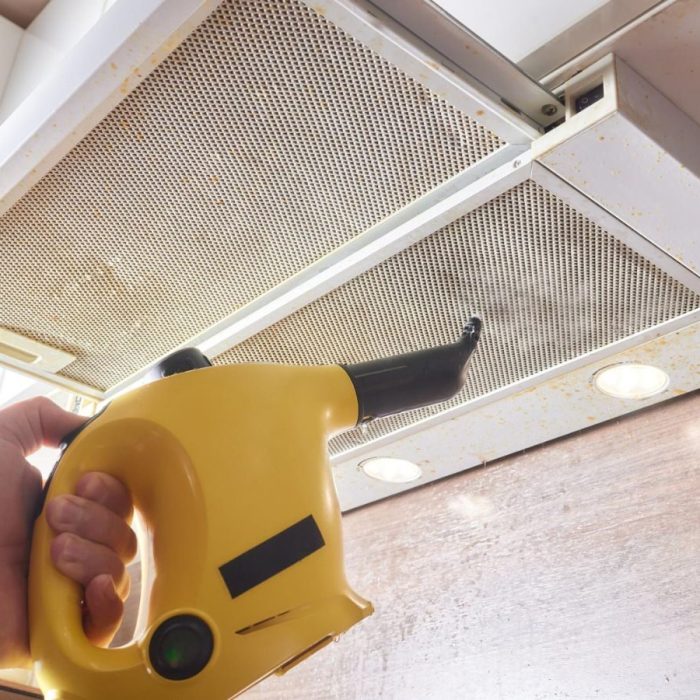
It means removing water from a business property, drying the structure and contents, and reopening the space for business with as little downtime as possible.
Tenants in a commercial building share pipes, roofs and mechanical systems, so one failure can send water through several suites before anybody even notices it.
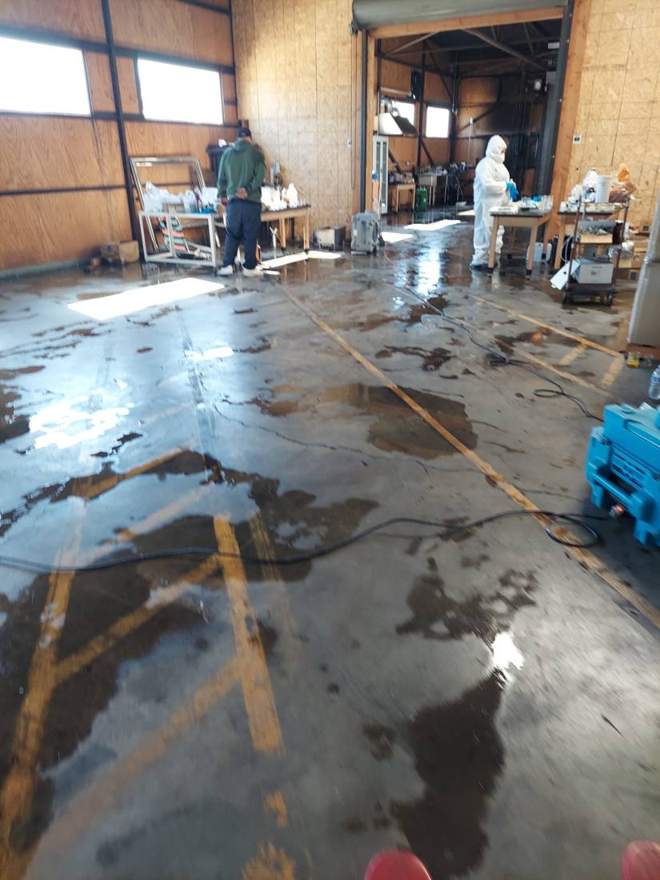
Each building type has its own priorities. A restaurant fears a failed health inspection, while an office worries about servers, files and lost work time.
Carpet tiles, cubicle walls and ceiling panels are dried or replaced in phases, so employees keep working in unaffected zones.
Crews clear water behind cooklines and coolers fast, then sanitize so health inspectors can quickly sign off on your reopening.
Inventory gets relocated and safeguarded first, then floors and walls dry while displays shift to keep the sales floor open.
One leak often crosses several units, so we track moisture floor by floor and coordinate access with managers and residents.
Clinics need barriers and gentle cleaning so exam rooms and charts stay protected and the day schedule barely shifts.
Slabs, racking and stored goods are handled with big extraction units and dehumidifiers sized for high ceilings and big volumes.
Shared building systems mean one failure rarely stays in one suite. Fast leak detection keeps a small fault from becoming a multi floor loss.
A cracked fitting or bumped head can release water fast, soaking ceilings, floors and everything stored on the levels below.
Flat commercial roofs rely on drains and scuppers, so leaves or debris during storms can force rainwater through ceiling tiles.
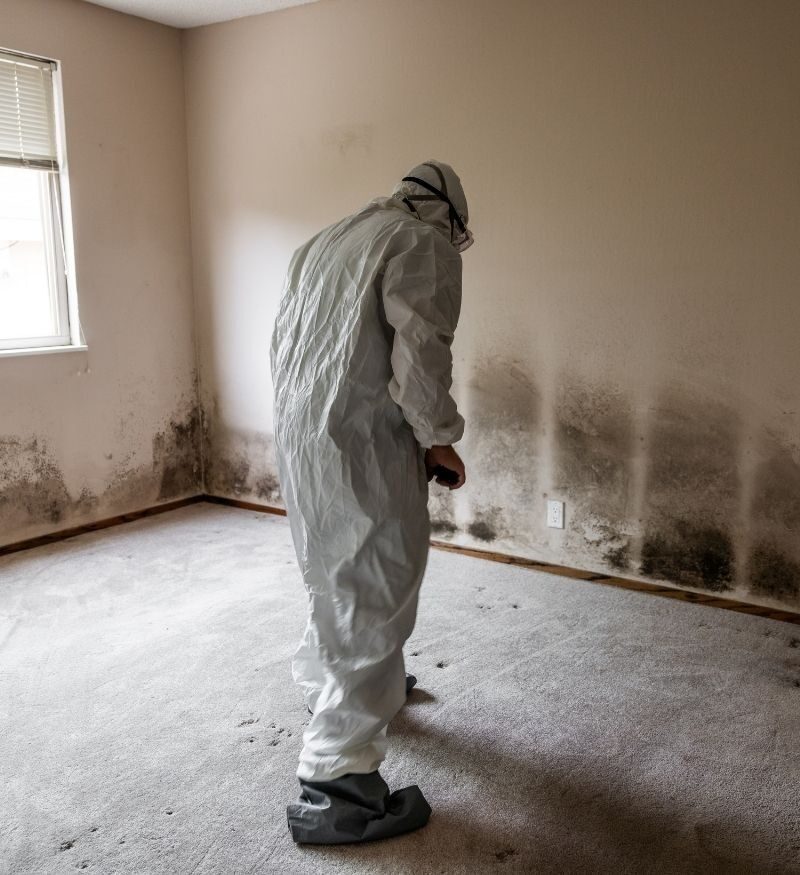
Condensate lines and equipment curbs leak slowly into ceilings, staining tiles and feeding mold long before anyone sees a drip.
Busy restrooms and kitchens see toilets, floor drains and sinks overflow, often with dirty water that must be fully sanitized.
Large water heaters and boilers hold big volumes, so one ruptured tank floods mechanical rooms and adjacent suites in minutes.
A sink, ice maker or plumbing line upstairs can force water through the floor structure into your workplace without warning.
Our Process
A crew arrives with pumps and extractors, helps locate the nearest shutoff and stops the source before damage spreads further.
Technicians identify live wiring, slip hazards and tainted water, then set up barriers so staff and customers stay safely clear.
Truck mounted and portable extractors pull water out of carpeting, concrete and hard floors, cutting the drying time by days.
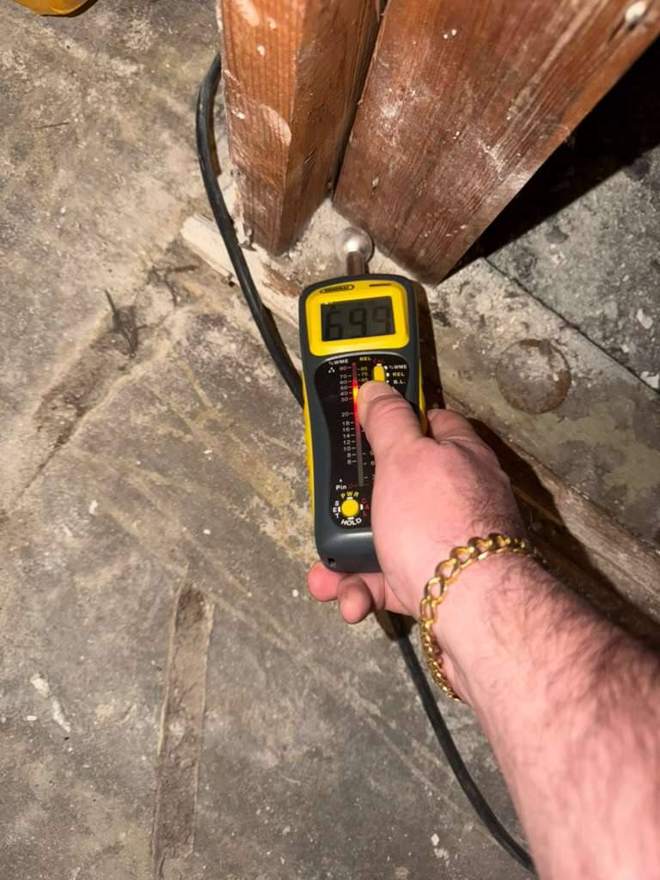
Moisture meters and thermal cameras trace water through shared walls, floors and nearby units, building one map for every party.
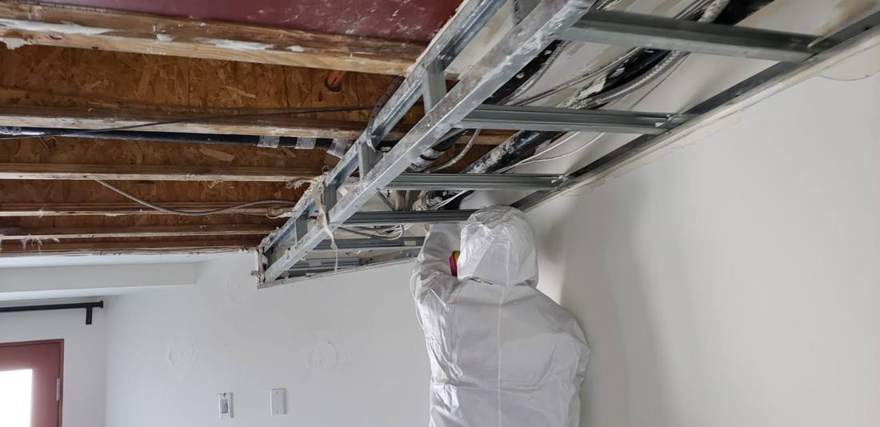
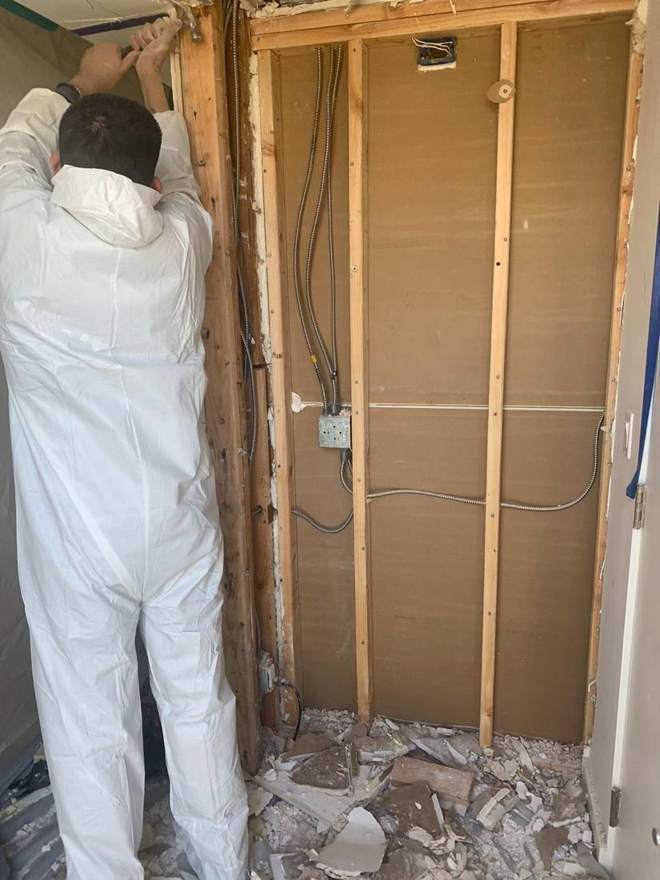
Older buildings get asbestos or lead testing before wet drywall or flooring comes out, protecting crews and every tenant inside.
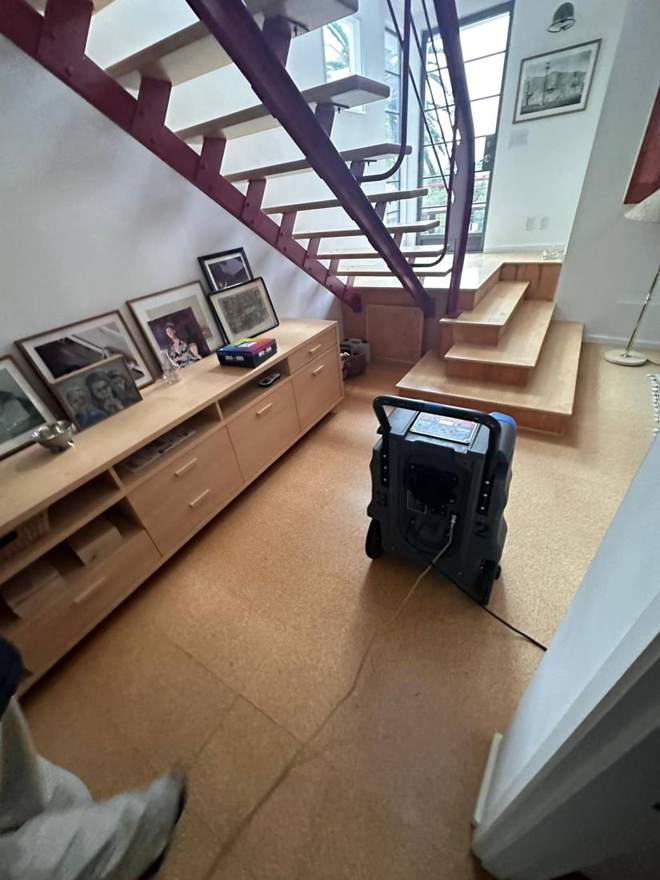
Dehumidifiers and air movers run while technicians log readings daily, moving the units until each material hits its dry goal.
Closing readings, photos and a written scope go to owners and adjusters, and your space returns to normal business operations.
Downtime often costs more than the physical repair itself. We plan each job around your operating hours, customers and employees, never the other way around.
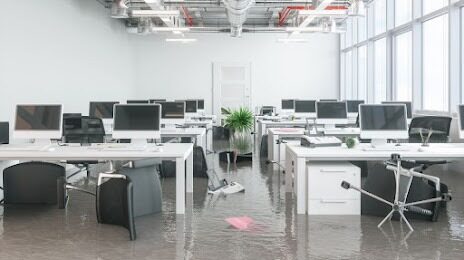
The first hour after a commercial leak shapes the size of any claim. These practical steps reduce damage and protect occupants until our crew arrives.
Close the nearest valve or main shutoff, or call building engineering, so water stops spreading into other floors and suites.
Turn off breakers feeding wet areas when the panel is safely reachable, because standing water near live circuits is hazardous.
Alert occupants above, below and beside the leak, and keep everyone away from slippery wet floors and sagging ceiling panels.
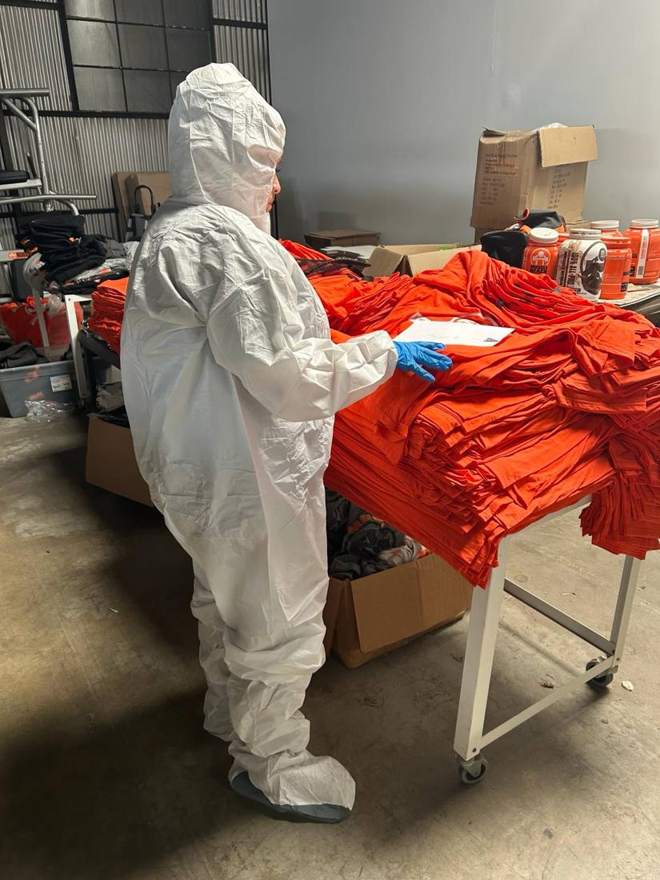
Lift files, electronics and stock onto tables or higher shelves, keeping them away from wicking water and future cleanup work.
Capture the source, standing water and wet contents before anything is moved, giving your adjuster a clear written first record.
Tearing out drywall or carpet yourself can spread contaminants and complicate claims, so wait for tests and a full assessment.
Commercial jobs vary considerably, so you receive a written scope and estimate once we map the moisture. These five factors shape the total cost most.
Total square footage and the number of wet suites decide how many extractors, dryers and technicians your project will need.
Clean supply water dries in place more often, while sewage or roof runoff adds sanitizing, protective gear and material removal.
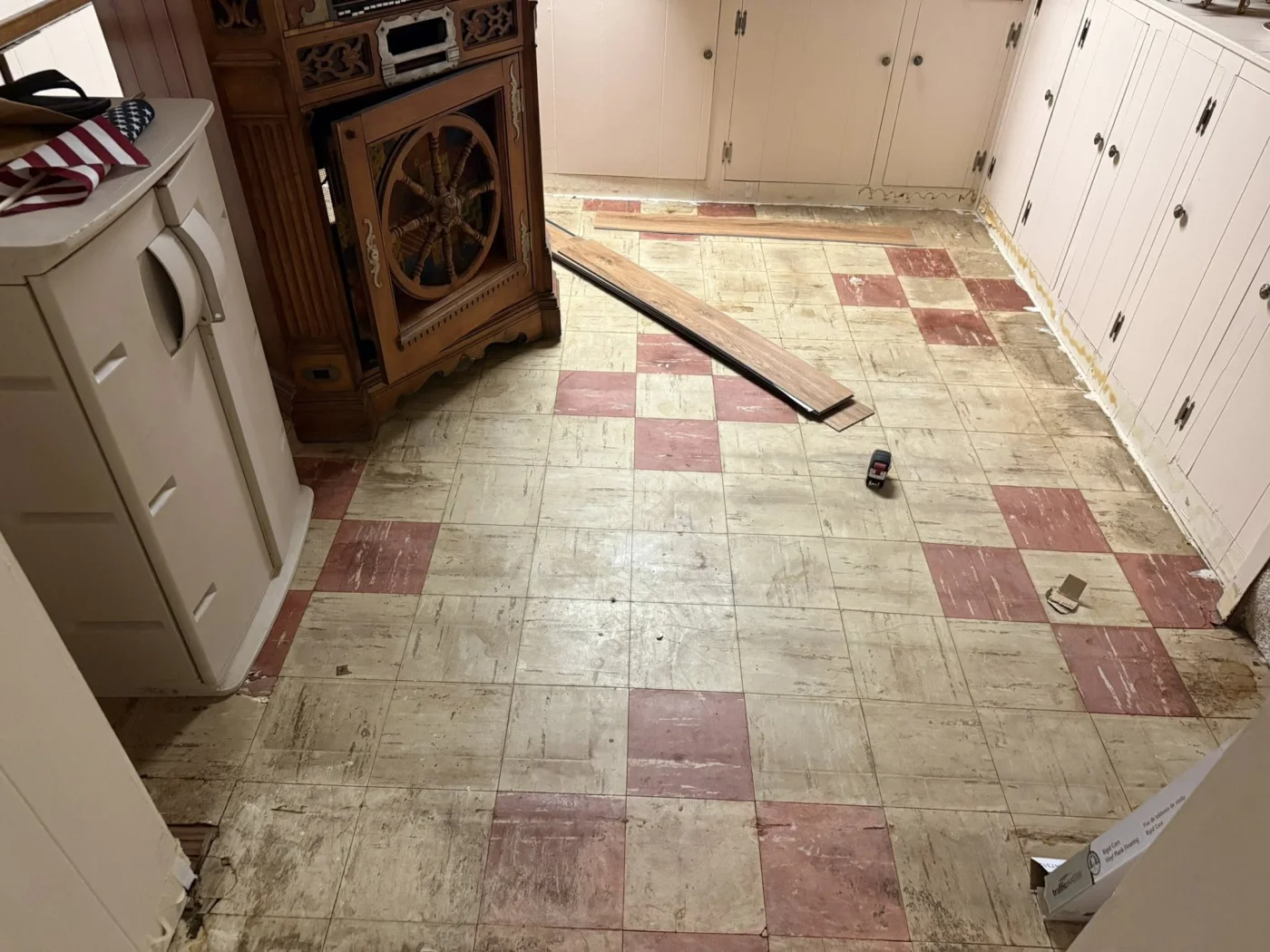
Concrete slabs, gypsum walls and carpet tile all dry at different speeds, so mixed materials can extend equipment rental days.
Water caught within hours stays shallow, while a leak left running all weekend soaks deeper and requires more extensive work.
After hours shifts, phased containment and extra protection add time, though they often cost less than closing for several days.
Commercial policies often cover sudden water losses, but terms differ by policy. Owners and property managers in Los Angeles ask about these points most often.
Every policy sets its own limits, deductibles and exclusions, so confirm details with your broker. We also work directly with your adjuster and site manager through our insurance claim assistance service.
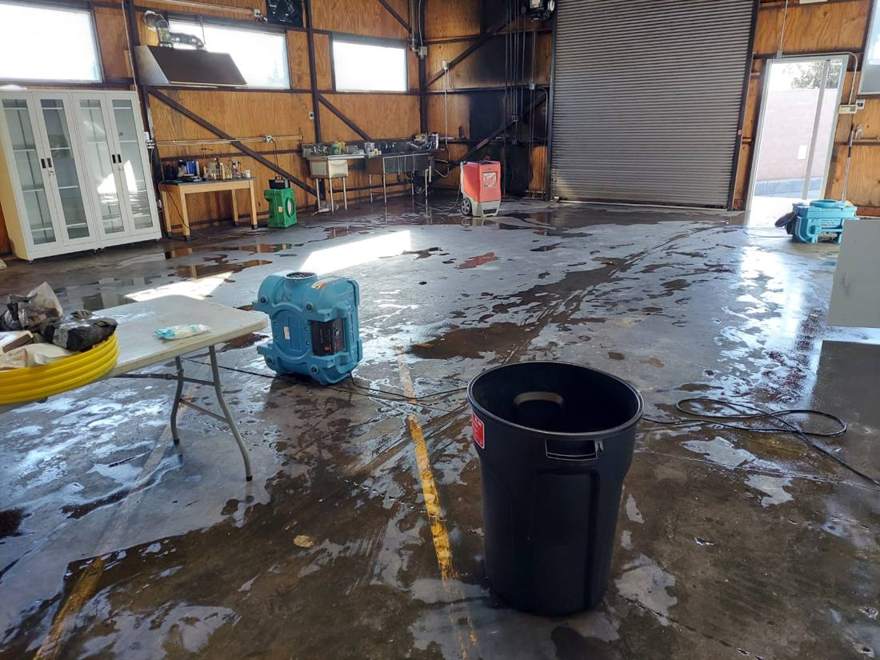
Our dispatch line stays staffed overnight, so crews can deploy while your building engineer is still tracing the leaking pipe.
Technicians follow the IICRC S500 standard on each commercial loss, from small office leaks to big multi floor sprinkler floods.
Truck mounted extractors, big dehumidifiers and high velocity air movers arrive with the crew, so big rooms dry without delay.
We book loud work after closing and keep containment tidy, so customers, patients or tenants barely notice the work underway.
Owners, tenants, managers and adjusters all get the same updates, readings and photos, so decisions happen fast and on schedule.
Readings, photos and itemized scopes are sorted by suite and date, making business income and property claims easier to support.
Leak detection, structural drying and mold remediation all come from one company, so you never have to juggle three vendors.
Full licensing and commercial insurance protect your property, your tenants and our crews while we work in your busy building.
Water left standing overnight turns a one suite problem into a multi floor claim. Our commercial crews can be extracting before your next shift starts.
We work around your trading hours, keep containment presentable and hand owners, tenants and adjusters the same documentation.
Commercial Water Damage Service Across Los Angeles
From Downtown high rises and Burbank studios to Long Beach warehouses, we dispatch from 925 N La Brea Ave to commercial properties throughout the county.
We proudly serve business owners, property managers and building engineers across:
FAQs
It means extracting water, drying the building and its contents, and fixing damage at offices, shops and restaurants, all with the least possible interruption to how you do business daily.
Pricing rests on square footage, the water category, wet materials, how quickly the leak was found and whether work runs after hours. You receive a detailed written scope following inspection.
Often, yes. We seal off affected zones, schedule noisy tasks after hours and place equipment away from customers, so many businesses keep serving clients in unaffected areas during the job.
Drying a single suite often takes a few days, while multi floor losses involving demolition take longer. Daily moisture readings, not guesses, decide when drying ends and repairs can begin.
Usually the lease decides it. Owners typically cover the building itself, while tenants cover their buildout, furniture and stock, so read the lease terms and call both insurers right away.
Most commercial policies cover sudden losses like burst pipes or sprinkler leaks, while slow drips and floods may be excluded. Your broker can confirm limits, deductibles and lost income coverage.
Mitigation stops damage from growing with extraction, drying and containment. Restoration then fixes the drywall, floors and ceilings, so the property looks and works as it did before the loss.
Yes. Extraction, tear out and equipment moves can be booked at night or on weekends, protecting daytime operations, customer traffic and your staff while the drying continues around the clock.
Close the sprinkler riser valve if trained, or call your fire protection contractor, then notify the monitoring company. Move valuables away from the water and call us for extraction immediately.
Yes, when the building is old enough to contain them. Asbestos and lead testing happens before any wet drywall, flooring or ceiling materials come out, protecting workers, tenants and visitors.
Often. Wet documents can be frozen and dried, and electronics should stay unplugged until cleaned and checked. Moving records and devices away from water quickly gives them the best chance.
We trace water across every affected apartment, schedule entry with managers and residents, and document each unit on its own, so owners, tenants and insurers know exactly what happened where.
A leak that starts tonight can close your doors tomorrow. Call ASAP Water Damage Restoration Los Angeles at (323) 677-2811 for commercial dispatch any time, or complete the form below.