The first 24 hours after water damage occurs in your Los Angeles home are the most critical period for protecting your property and preventing long-term structural problems. During this short window, the actions you take determine whether damage remains minimal and manageable or escalates into a costly remediation project requiring extensive reconstruction.
Water spreads rapidly through building materials. Within minutes, it penetrates drywall, soaks into subflooring, and seeps behind walls. Every hour that passes without proper mitigation increases repair costs and raises the risk of permanent structural damage and mold growth.
This guide outlines the exact steps property owners should take during the first 24 hours after discovering water damage, from immediate safety measures to professional restoration coordination.
Hour 1: Immediate Safety and Emergency Response
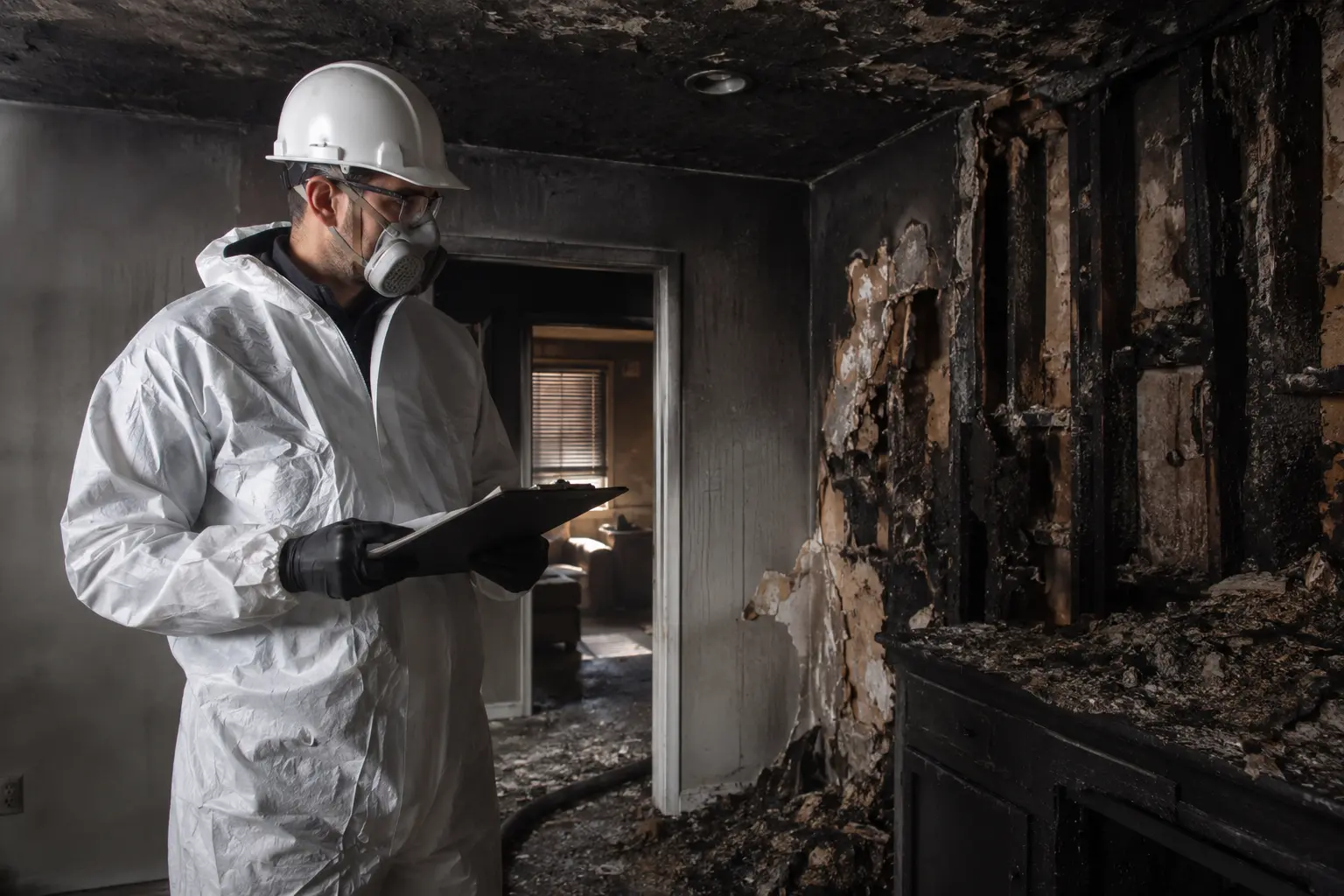
The moment you discover water damage, your first priority is safety. Water in contact with electrical systems creates serious electrocution risks. Standing water can hide structural hazards like weakened flooring or sharp debris.
Assess the Situation Quickly
Before entering affected areas, evaluate the severity of the damage:
- Identify the water source if possible
- Determine if the area is safe to enter
- Check for electrical hazards near standing water
- Look for structural damage like sagging ceilings or buckled floors
If water is actively entering the property from burst pipes, roof leaks, or flooding, avoid entering until the water source is controlled or professional help arrives.
Ensure Electrical Safety
If standing water is present near electrical outlets, appliances, or the electrical panel, do not enter the area. Contact a licensed electrician or wait for emergency responders.
If it is safe to access your electrical panel without stepping in water:
- Turn off power to affected areas
- Unplug electronics and appliances in water-damaged rooms
- Move electrical items away from water if safely possible
Never touch electrical equipment while standing in water or on wet surfaces.
Contact Professional Water Damage Restoration Services
Time is critical. Call our 24/7 emergency water damage restoration team immediately after discovering damage. Professional restoration companies respond quickly and bring industrial equipment that removes water far more effectively than household methods.
When you call, provide:
- Your address and contact information
- A description of the water source (burst pipe, flooding, leak, etc.)
- The extent of visible damage
- Whether the water has been stopped
Our team dispatches certified technicians immediately with professional extraction equipment, moisture detection tools, and commercial drying systems. We typically arrive within 60 minutes in most Los Angeles neighborhoods.
Stop the Water Source If Possible
If the water damage results from a plumbing failure and you can safely access the water supply:
- Burst pipes: Turn off the main water valve to the property
- Supply line failures: Close the shutoff valve for the specific fixture or appliance
- Roof leaks: Place buckets to catch dripping water and prevent further spread
For flood damage from external sources like storms or broken water mains, focus on protecting the interior and wait for professional help.
If you cannot locate or safely access water shutoff valves, wait for professional assistance rather than risking injury.
Hours 1 to 4: Initial Water Removal and Documentation
Once safety is confirmed and professional help is on the way, begin preliminary water removal and document the damage for insurance purposes.
Remove Standing Water
Use any available tools to begin removing standing water:
- Mop standing water on hard surfaces
- Use towels to absorb water from carpets
- Deploy a wet/dry vacuum if available
- Place buckets under active leaks
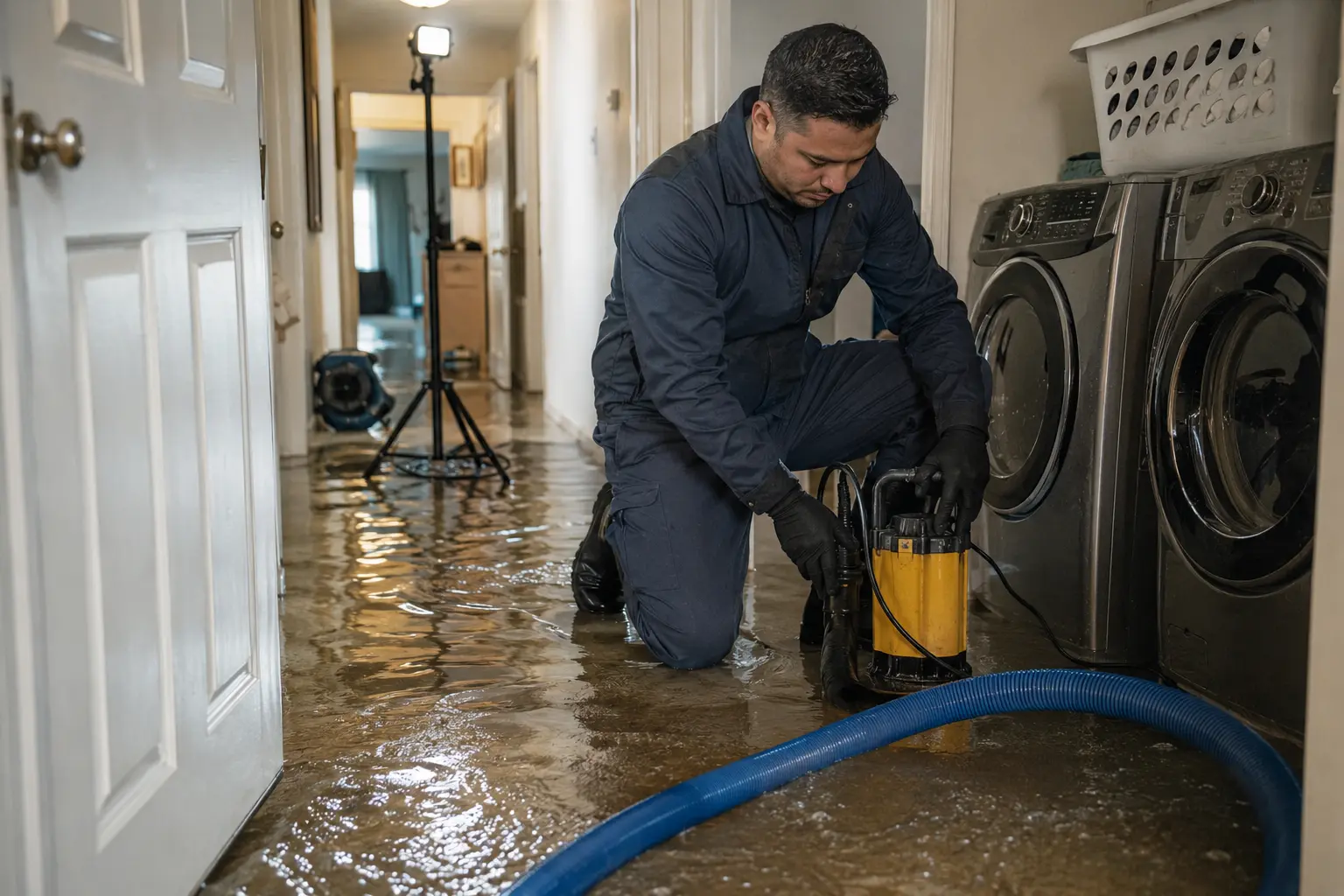
Surface water removal helps slow damage spread while you wait for professional extraction equipment to arrive. However, household methods cannot remove water trapped in structural materials, which is why professional water extraction remains essential.
Document Everything for Insurance
Thorough documentation supports your insurance claim and ensures proper coverage:
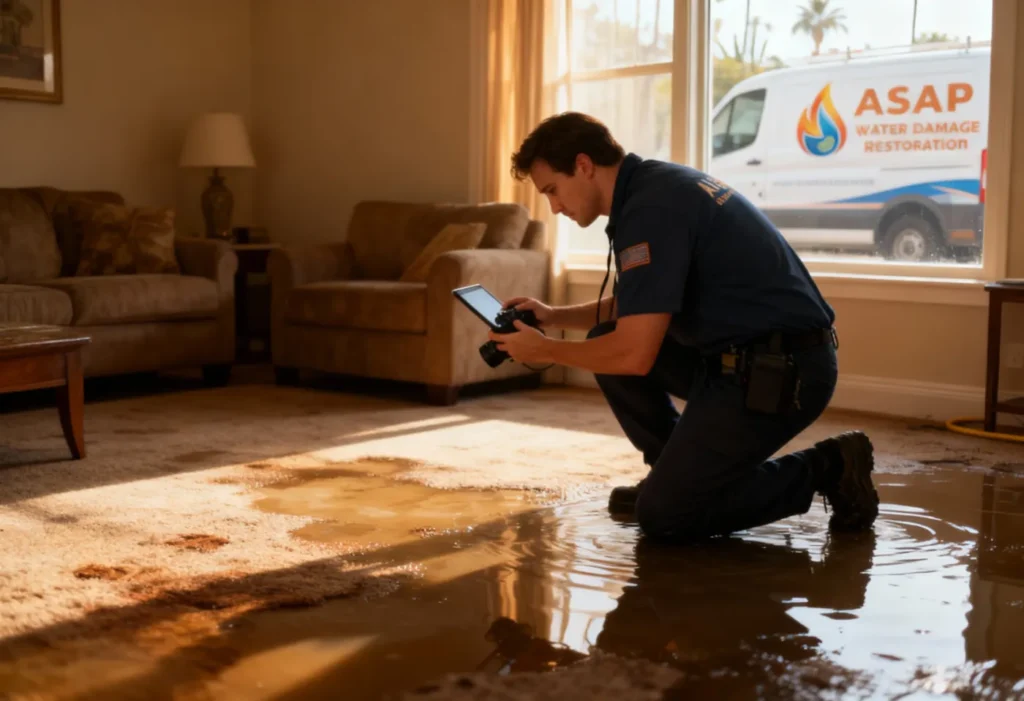
Photograph and video:
- All visible water damage in every affected room
- Water source if identifiable
- Damaged flooring, walls, and ceilings
- Damaged furniture and personal belongings
- Water staining and discoloration
Create an inventory:
- List all damaged items with descriptions
- Note approximate age and value
- Keep receipts for damaged items if available
Preserve evidence:
- Keep damaged items until the insurance adjuster has inspected
- Do not discard materials without adjuster approval
- Save all repair receipts and professional service invoices
Insurance claims require detailed evidence. The more thoroughly you document initial damage, the smoother the claims process becomes.
Contact Your Insurance Company
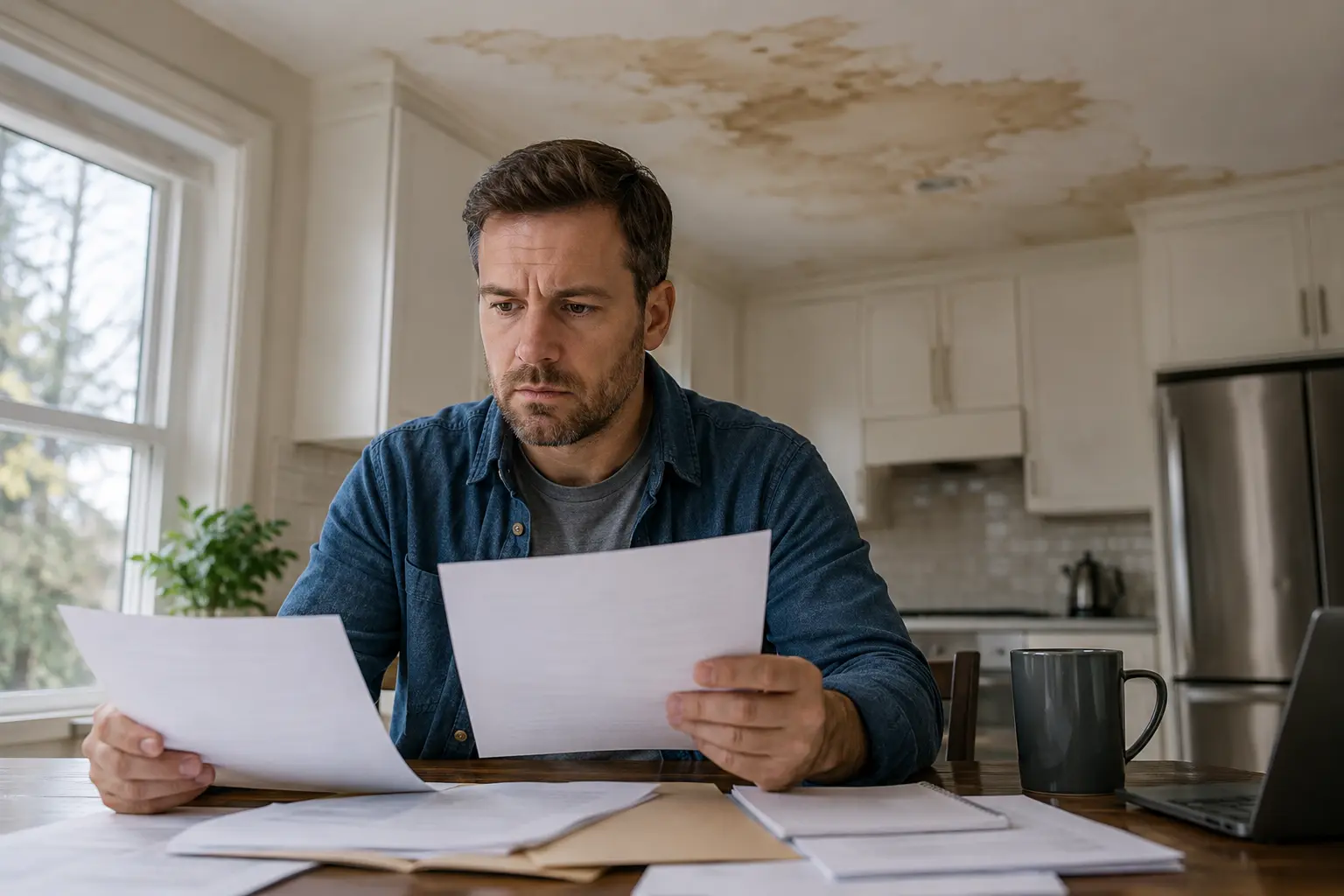
Report the water damage to your insurance provider as soon as possible. Most policies require prompt notification of damage. Delayed reporting can complicate claims or result in partial coverage denial.
When contacting your insurer:
- Provide your policy number
- Describe what happened and when
- Explain what immediate actions you have taken
- Ask about coverage for professional restoration services
- Request guidance on claims procedures
We work directly with insurance companies and provide detailed documentation to support your claim. Our team helps streamline the process by communicating with adjusters and providing professional moisture readings and restoration estimates.
Protect Undamaged Areas
While waiting for professional restoration to begin, protect unaffected areas from water spread:
- Close doors to contain water in affected rooms
- Move furniture and belongings from wet areas if safely possible
- Place plastic sheeting or tarps under furniture legs
- Remove area rugs and fabrics to prevent water absorption
- Elevate furniture with blocks or aluminum foil under legs
These temporary measures help limit damage until professional drying equipment is deployed.
Hours 4 to 12: Professional Water Extraction and Assessment
When our certified restoration technicians arrive, the professional mitigation process begins immediately.
Moisture Detection and Damage Assessment
Our team performs a comprehensive inspection using advanced technology:
Thermal Imaging Cameras: Infrared cameras detect hidden moisture behind walls, beneath flooring, and inside ceilings without invasive demolition. This technology identifies water you cannot see, which prevents hidden mold growth later. Learn more about our thermal imaging inspection services.
Moisture Meters: Professional-grade meters measure exact moisture content in drywall, wood framing, subflooring, and other building materials. These readings establish baseline moisture levels and guide the drying process.
Visual Inspection: Certified technicians examine all affected areas to identify structural damage, assess material conditions, and determine which materials can be dried and which require replacement.
This assessment provides a complete understanding of damage severity and creates a detailed restoration plan.
Industrial Water Extraction
Professional extraction equipment removes water far more effectively than household methods:
Truck-Mounted Extractors: High-powered vacuum systems remove thousands of gallons quickly from flooring and carpets.
Submersible Pumps: Commercial pumps extract standing water from basements, crawlspaces, and flooded areas.
Weighted Extraction Tools: Specialized equipment pulls water from carpet padding and subflooring through applied pressure.
Rapid extraction prevents water from penetrating deeper into structural materials and reduces drying time significantly.
Content Removal and Protection
Depending on damage severity, affected items may need to be removed:
- Furniture moved to dry areas or climate-controlled storage
- Electronics removed for evaluation and drying
- Important documents and valuables secured
- Wet textiles taken for professional cleaning or disposal
- Damaged materials removed if beyond restoration
Our team handles content carefully and creates detailed inventories for insurance documentation.
Hours 12 to 24: Structural Drying and Dehumidification
After water extraction, the structural drying process begins. This stage is critical because hidden moisture causes the most serious long-term damage.
Commercial Drying Equipment Deployment
Professional drying uses industrial equipment specifically designed for structural restoration:
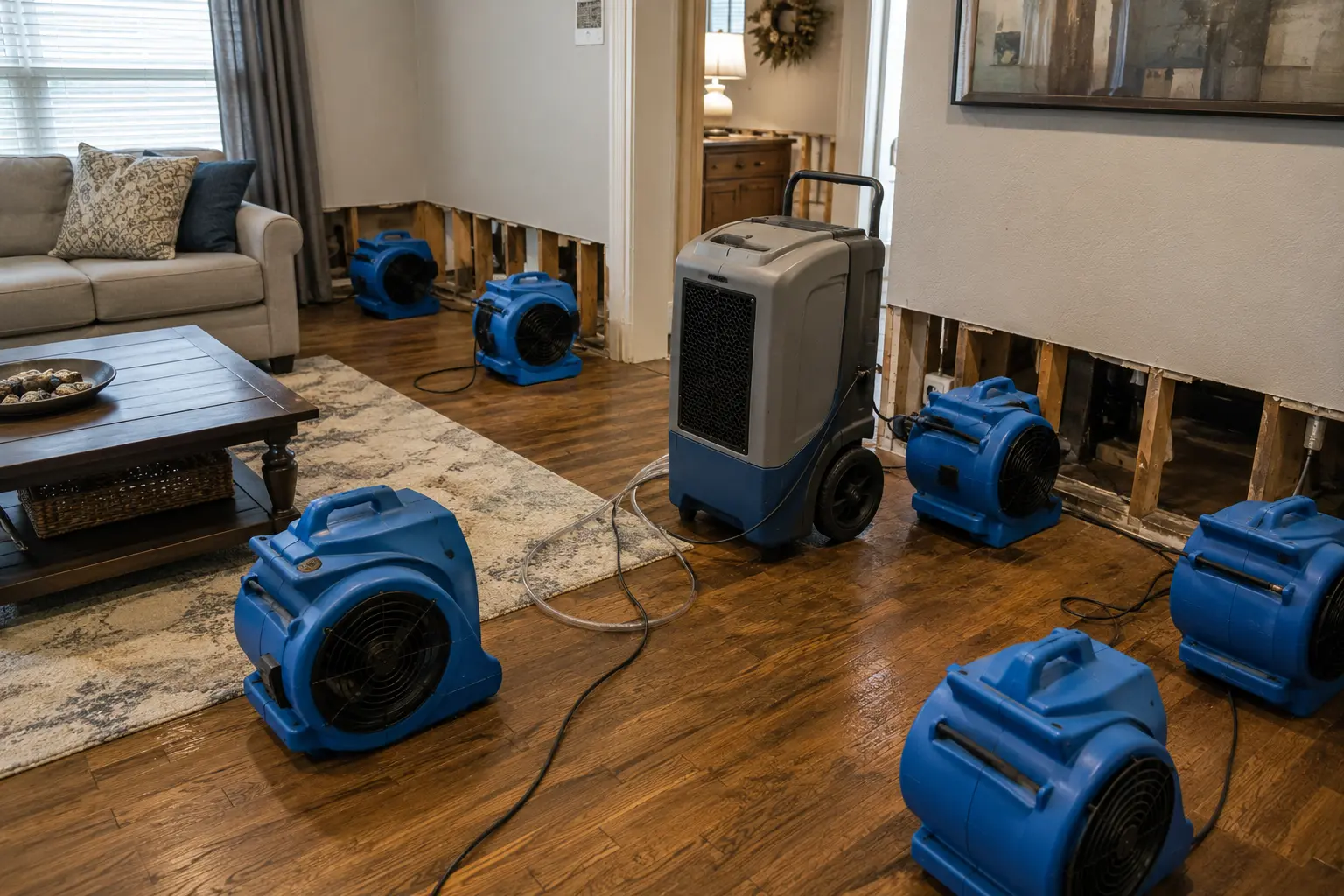
Air Movers: High-velocity fans create airflow across surfaces and through building materials. Strategic placement promotes rapid evaporation from floors, walls, and structural cavities. Depending on damage extent, dozens of air movers may be positioned throughout the property.
Commercial Dehumidifiers: Industrial dehumidifiers remove moisture from the air continuously. As materials release water vapor, dehumidifiers capture it and maintain low humidity levels that promote faster drying. Our equipment processes hundreds of pints per day, far exceeding consumer-grade units.
Drying Mats: Specialized mats extract water trapped beneath hardwood flooring without removing the floor. Vacuum pressure pulls moisture from below, preserving expensive flooring materials when possible.
Our certified technicians position equipment strategically based on moisture readings and airflow patterns. This scientific approach ensures efficient drying and prevents over-drying or under-drying.
Antimicrobial Treatment
When appropriate, EPA-registered antimicrobial solutions are applied to affected surfaces. These treatments prevent bacterial and mold growth during the drying process, particularly important for sewage backup cleanup and gray water damage.
Continuous Moisture Monitoring
Throughout the drying process, technicians return regularly to:
- Measure moisture levels in affected materials
- Adjust equipment positioning as needed
- Monitor humidity and temperature
- Track drying progress against established baselines
- Ensure materials reach proper moisture content
Professional monitoring prevents premature equipment removal and ensures thorough drying. Materials must reach specific moisture content levels before drying is considered complete.
Odor Control
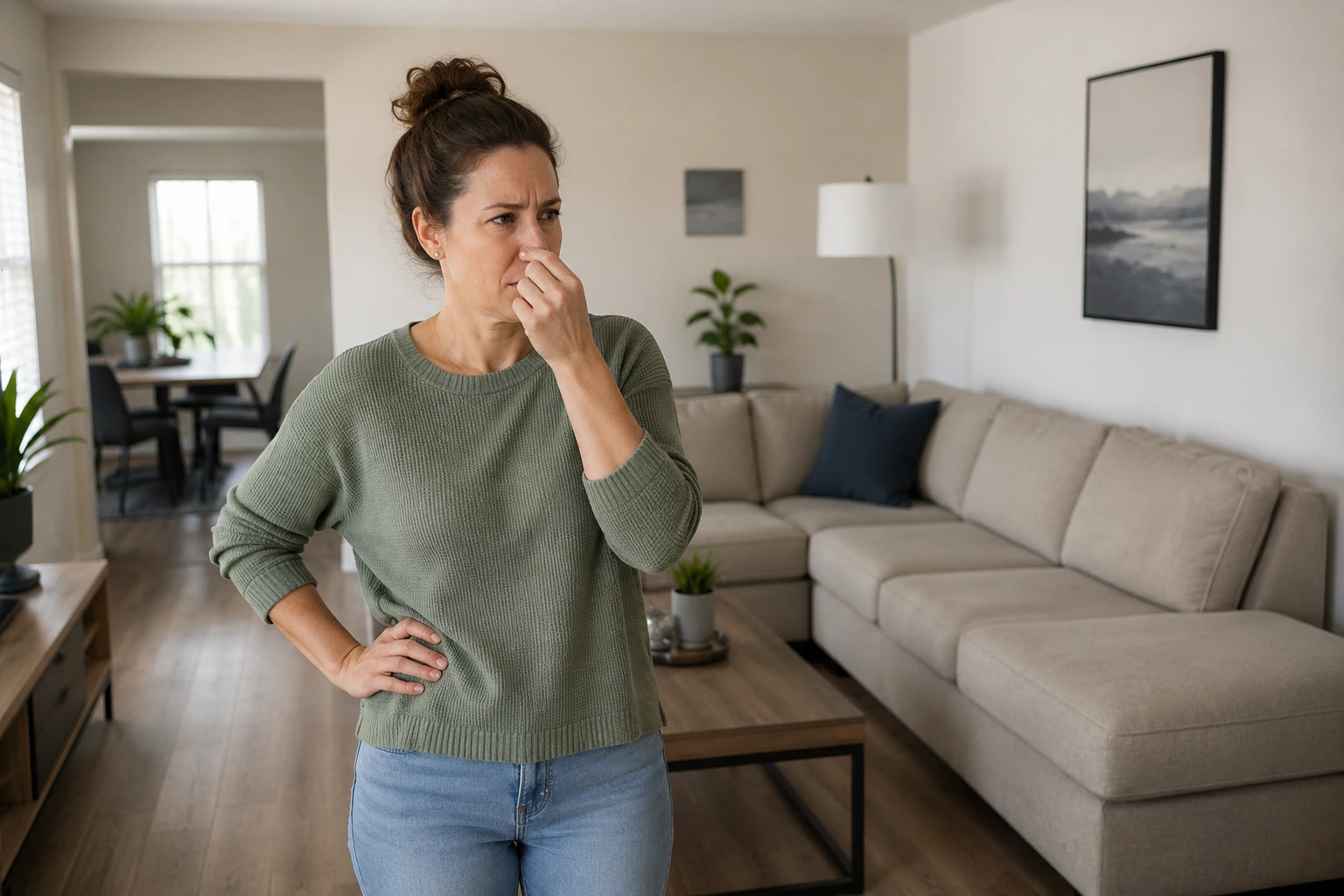
Water damage frequently creates musty odors, particularly if materials remained wet for extended periods. Our odor elimination services use professional deodorization equipment including:
- Hydroxyl generators that neutralize odor molecules
- Air scrubbers with activated carbon filtration
- Thermal fogging when needed for persistent odors
Odor removal is part of comprehensive restoration, not just masking smells with air fresheners.
Common Mistakes in the First 24 Hours
Property owners often make decisions during the first day after water damage that create larger problems later:
Using Household Fans Alone: Consumer fans move air but cannot remove water from inside walls, subflooring, or insulation. They provide minimal benefit and create false confidence that damage is being addressed.
Waiting to Call Professionals: Many property owners attempt DIY cleanup first and call restoration services only after several days. By this time, mold colonization has begun and structural damage has worsened significantly.
Not Documenting Damage: Inadequate photos or videos can complicate insurance claims. Document everything before beginning cleanup.
Discarding Damaged Materials Too Soon: Insurance adjusters need to see damaged items. Removing materials before inspection can reduce claim amounts.
Ignoring Hidden Moisture: Surface drying does not mean structural materials are dry. Without moisture meters, hidden water remains trapped and causes problems later.
Delaying Insurance Notification: Late reporting can affect coverage. Contact your insurer immediately after discovering damage.
Water Damage Categories and Response Requirements
Different types of water require different response approaches. Professional restoration follows IICRC standards for categorizing water damage:
Category 1: Clean Water
Water from sanitary sources like supply lines, faucets, and water heaters. While initially clean, this water becomes contaminated quickly as it contacts building materials. Burst pipe cleanup often involves Category 1 water initially.
Response: Extract water promptly and dry structural materials thoroughly to prevent deterioration to Category 2.
Category 2: Gray Water
Water containing some contamination from sources like washing machines, dishwashers, or toilet overflows without feces. This water carries bacteria and requires sanitization procedures.
Response: Extract water, remove contaminated porous materials if heavily saturated, sanitize affected surfaces, and dry structural components completely.
Category 3: Black Water
Highly contaminated water from sewage backups, toilet overflows with feces, storm flooding, or rising groundwater. This water contains harmful bacteria, viruses, and pathogens that create serious health risks.
Response: Full protective equipment required. Remove contaminated porous materials. Thoroughly disinfect all affected surfaces. Complete structural drying and antimicrobial treatment mandatory. Professional sewage cleanup and sanitization required.
Understanding water categories helps property owners recognize when professional help is absolutely necessary versus situations where limited DIY measures might be appropriate while waiting for professional assistance.
When DIY Water Removal Is Not Enough
Some property owners believe they can handle water damage cleanup themselves. While limited surface water removal helps during the first hours, DIY methods cannot provide:
Moisture Detection: Without professional moisture meters and thermal imaging, hidden water remains undetected behind walls and under flooring.
Structural Drying: Household fans and portable dehumidifiers cannot dry building materials effectively. Commercial equipment provides vastly superior results.
Contamination Control: Gray and black water require professional sanitization that goes beyond surface cleaning.
Documentation: Insurance claims benefit from professional moisture readings, photographic documentation, and detailed estimates.
Expertise: Certified technicians understand how water travels through different building materials and can identify secondary damage property owners miss.
Time Efficiency: Professional equipment completes drying in 3 to 7 days. DIY approaches often take weeks and frequently fail to dry materials completely.
Attempting full DIY water damage restoration usually results in:
- Hidden mold growth within weeks
- Structural damage that worsens over time
- Insurance claim complications
- Higher total costs when professional help eventually becomes necessary
Why the 24-Hour Window Matters
Mold colonization typically begins within 24 to 48 hours after water damage. Acting within the first 24 hours provides the best opportunity to prevent mold growth entirely.
Professional restoration within 24 hours:
- Removes water before it penetrates deeply into materials
- Begins structural drying while moisture remains near surfaces
- Prevents bacterial and mold colonization
- Reduces total drying time
- Limits reconstruction requirements
- Minimizes business or household disruption
Our emergency response team maintains rapid dispatch throughout Los Angeles specifically to meet this critical window. We respond 24 hours a day, 7 days a week because we understand that water damage does not wait for business hours.
Insurance Coverage and Professional Restoration
Most homeowner insurance policies cover water damage restoration when damage results from sudden and accidental events like:
- Burst pipes and plumbing failures
- Appliance leaks and overflows
- Roof leak damage during storms
- Accidental water discharge
Professional restoration services are typically covered expenses. Insurance companies often prefer working with certified restoration contractors who provide proper documentation and follow industry standards.
We work directly with insurance companies to:
- Provide detailed damage assessments
- Submit professional estimates
- Communicate with adjusters
- Document moisture readings and restoration progress
- Help expedite claim approval
This assistance reduces stress during an already difficult situation and helps ensure you receive the coverage available under your policy.
Contact ASAP Water Damage Restoration Los Angeles
The first 24 hours after water damage determine whether your property experiences minor, easily repaired damage or major structural problems requiring extensive reconstruction. Professional restoration within this critical window provides the best outcome.
Our IICRC-certified team responds rapidly throughout Los Angeles with industrial extraction equipment, commercial drying systems, and advanced moisture detection technology. We understand that every hour matters, which is why we maintain 24/7 emergency availability.
Call (323) 677-2811 immediately after discovering water damage.
We serve all Los Angeles neighborhoods, including Koreatown, Hollywood Hills, West Los Angeles, Boyle Heights, and throughout the greater Los Angeles area.
Don’t wait. The first 24 hours make all the difference.
Emergency Tip for LA Homeowners
Keep the number of a trusted local restoration service handy. Quick response can save thousands in repairs and prevent secondary damage like mold growth or structural weakening. Being prepared and having a plan gives homeowners confidence during emergencies and reduces stress while protecting property value.
Keep reading
- 10 Ways to Prevent Water Damage in Your Los Angeles Home
- Signs of Hidden Water Damage in Your Home
- Is It Safe to Stay in Your House During Water Damage Restoration?
Need help now? See our 24/7 water damage restoration in Los Angeles or call (323) 677-2811, 24/7.