Understanding insurance coverage for water damage, mold, and flooding is critical for Los Angeles homeowners. When disaster strikes, the difference between full coverage and denied claims often comes down to specific policy language, the cause of damage, and how quickly you respond.
Many homeowners assume their standard policy covers all water-related damage. In reality, coverage varies dramatically based on the water source, type of damage, and circumstances surrounding the event. This comprehensive guide explains what’s typically covered, common exclusions, and how to maximize your insurance claim.
Standard Homeowner Insurance Water Damage Coverage
Most standard homeowner insurance policies (HO-3 being the most common) provide coverage for water damage resulting from sudden and accidental events.
Typically Covered Water Damage Events
Burst Pipes and Plumbing Failures:
- Frozen pipes that burst during cold weather
- Corroded pipes that fail suddenly
- Water heater tank ruptures
- Failed appliance supply lines (washing machines, dishwashers, refrigerators)
- Accidental plumbing damage during construction or remodeling
These qualify as “sudden and accidental” events, meeting the coverage criteria for most policies.
Appliance Overflows and Leaks:
- Washing machine overflows from malfunction
- Dishwasher leaks from broken seals
- Refrigerator ice maker line failures
- Water softener malfunctions
- HVAC condensate line overflows
Coverage typically applies when the malfunction is accidental rather than resulting from poor maintenance.
Roof Leaks from Covered Events:
- Storm damage that creates roof openings
- Fallen tree damage to roofing
- Wind-driven rain through damaged areas
- Ice dam damage (less common in Los Angeles)
The key requirement is that roof damage must result from a covered peril like wind or falling objects, not from gradual deterioration.
Accidental Water Discharge:
- Bathtub or sink overflows from accidental inattention
- Toilet overflows (clean water only)
- Accidental activation of sprinkler systems
- Fire sprinkler discharge
These events meet the “sudden and accidental” standard.
Coverage Scope for Approved Claims
When coverage applies, standard policies typically pay for:
Emergency Mitigation:
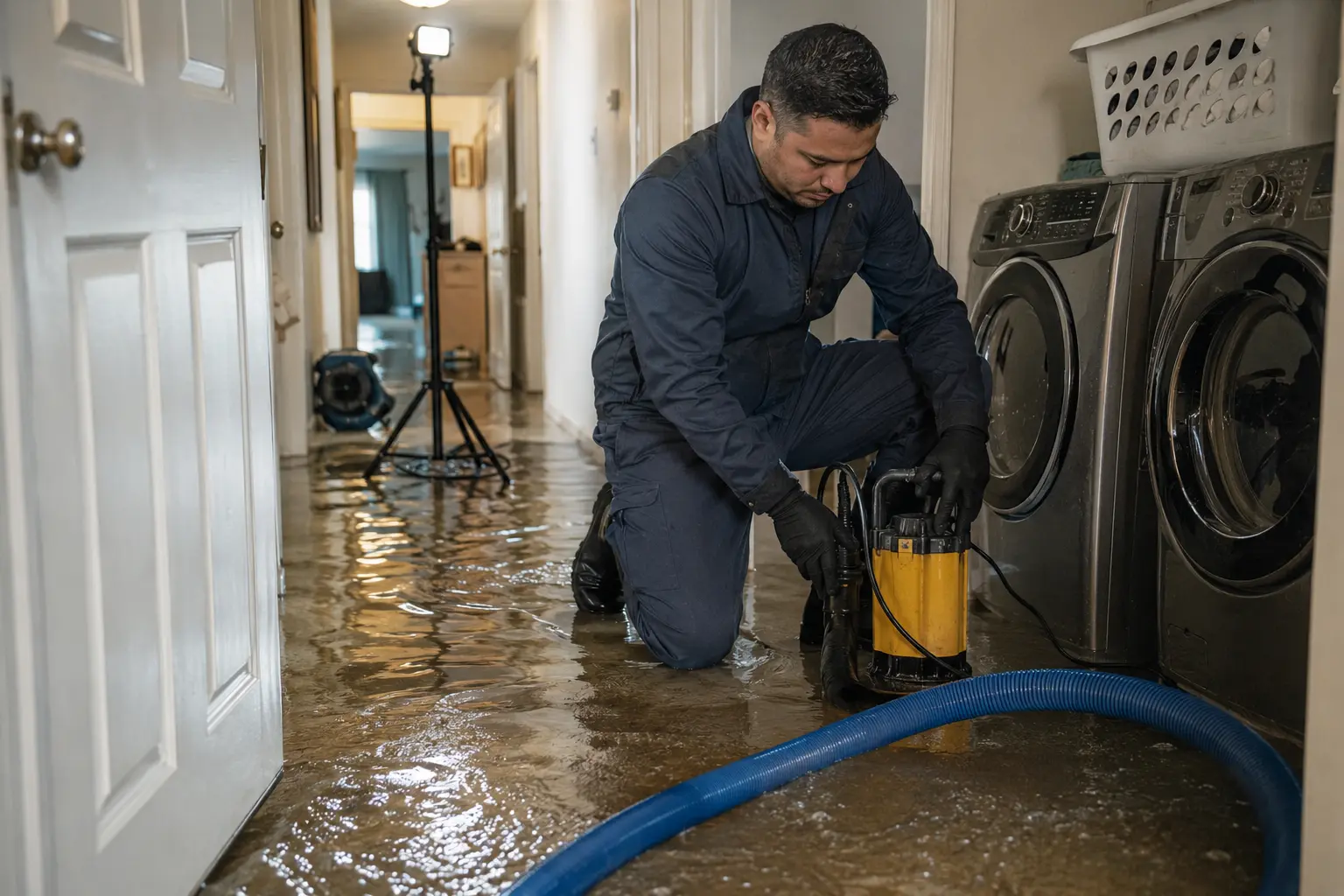
- Professional water extraction services
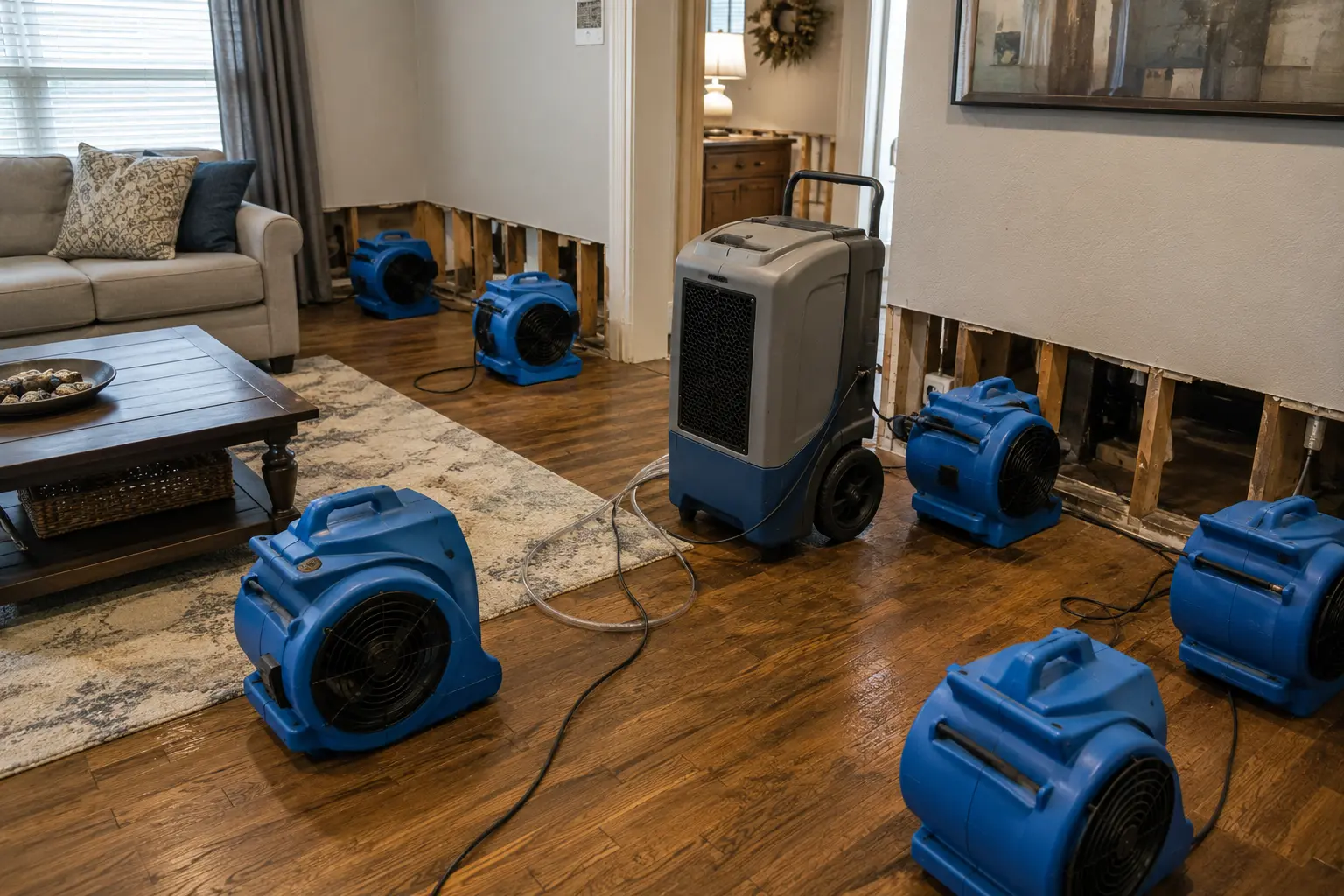
- Structural drying and dehumidification costs
- Immediate emergency services to prevent further damage
- Board-up services if needed
Restoration and Repair:
- Damaged drywall, flooring, and structural materials
- Replacement of destroyed personal property
- Professional restoration services
- Necessary reconstruction
Additional Living Expenses (ALE):
- Hotel costs if the home is uninhabitable
- Restaurant meals if kitchen is unavailable
- Storage for belongings during restoration
- Typical duration: Until restoration completes or policy limits reached
Professional Services:
- Restoration contractor fees
- Plumber costs to repair the failure
- Licensed electrician services if needed
- Structural engineer consultation if required
Common Water Damage Exclusions
Understanding exclusions is as important as knowing what’s covered:
Gradual Damage and Lack of Maintenance
Policies exclude damage that develops over time from:
Slow Leaks:
- Dripping pipes that leaked for weeks or months
- Gradual toilet seal failures
- Chronic appliance weeping
- Long-term roof deterioration
The reasoning: Homeowners are expected to maintain property and address minor leaks before they cause major damage.
Deferred Maintenance:
- Damage from failing to replace worn-out components
- Neglected roof repairs
- Ignored plumbing problems
- Unaddressed known issues
How Insurers Identify Gradual Damage:
- Extensive mold growth (indicates long-term moisture)
- Severe material deterioration
- Rust and corrosion patterns
- Wood rot
- Multiple coats of water staining
If adjusters determine damage developed gradually, claims may be partially or fully denied.
Flooding from External Sources
Standard homeowner policies specifically EXCLUDE flooding, defined as water entering from outside the structure:
Not Covered Without Flood Insurance:
- River or stream overflow
- Storm surge
- Heavy rain accumulation
- Snowmelt flooding
- Mudflow or debris flow
- Groundwater seepage through foundations
For Los Angeles properties, flash flooding during heavy storms requires separate flood insurance.
Sewer and Drain Backups
Many standard policies exclude or severely limit coverage for:
Sewer Backup:
- Municipal sewer system backups
- Private sewer line failures
- Tree root intrusion blockages
- Combined system overflows during storms
Coverage Options:
- Sewer backup coverage available as endorsement
- Typically adds $40-$80 annually to premium
- Usually has separate, lower limits than standard water damage
- Often includes $5,000-$25,000 coverage limits
Given Los Angeles’s aging sewer infrastructure, this endorsement is highly recommended.
Underground Water and Foundation Seepage
Policies exclude:
- Water seeping through foundation walls
- Rising groundwater during heavy rain
- Water entering through cracks or gaps
- Hydrostatic pressure damage
These fall under “earth movement” or “flood” exclusions.
Swimming Pool and Spa Damage
Damage from pool or spa water is often excluded or limited:
- Overflow from overfilling
- Leaks from pool structure
- Equipment failures
Some policies provide limited coverage; others exclude completely.
Mold Coverage: Complex and Often Limited
Mold coverage is one of the most misunderstood aspects of homeowner insurance.
When Mold Is Covered
Mold resulting from a covered water damage event may be covered IF:
The Water Damage Was Covered:
- Started from a covered peril (burst pipe, etc.)
- Homeowner acted reasonably to mitigate
- Mold developed despite reasonable mitigation efforts
Homeowner Responded Promptly:
- Called professional restoration within 24-48 hours
- Took reasonable steps to prevent further damage
- Followed insurer’s mitigation requirements
Mold Developed From the Covered Event:
- Direct causal relationship to the water damage
- Developed during the covered event, not from prior issues
- Professional documentation supports this timeline
When Mold Is Not Covered
Resulting from Excluded Water Damage:
- Mold from flooding (requires flood insurance)
- Mold from gradual leaks or poor maintenance
- Mold from condensation or humidity issues
- Mold from excluded sewer backups
Delayed Mitigation:
- Homeowner waited days or weeks to address water damage
- Failed to call professional restoration promptly
- Allowed standing water to remain
- Ignored obvious moisture problems
Pre-Existing Mold:
- Mold that existed before the water damage event
- Chronic mold problems from ongoing moisture issues
- Mold in areas unaffected by the covered event
Mold Coverage Limits
Even when mold is covered, policies often impose specific limits:
Typical Mold Sub-Limits:
- $5,000 to $10,000 maximum coverage
- Separate from overall dwelling coverage
- Applies to testing, removal, and restoration
- Often insufficient for extensive contamination
Upgrading Mold Coverage:
- Some insurers offer higher mold limits as endorsements
- Can increase to $25,000 or $50,000
- Costs vary based on property risk factors
Our mold remediation services often exceed basic policy limits, making enhanced coverage valuable.
Flood Insurance: Separate and Essential
Flood insurance is separate from homeowner insurance and sold through the National Flood Insurance Program (NFIP) or private insurers.
What Flood Insurance Covers
Structure Coverage:
- Building foundation
- Electrical and plumbing systems
- HVAC equipment
- Appliances (furnace, water heater)
- Permanently installed items
Contents Coverage (Separate Policy):
- Personal belongings
- Furniture
- Electronics
- Clothing
- Requires separate contents policy
Limits:
- NFIP maximum: $250,000 building, $100,000 contents
- Private flood insurance may offer higher limits
Flood Insurance Waiting Period
CRITICAL: Flood insurance has a 30-day waiting period before coverage begins.
You cannot:
- Buy flood insurance as a hurricane approaches
- Purchase coverage after flood warnings issued
- Get immediate coverage for existing risk
Los Angeles homeowners in flood zones or low-lying areas should maintain continuous flood coverage.
Los Angeles Flood Zones
While Los Angeles has desert climate, certain areas face flood risk:
High-Risk Zones:
- Areas near Los Angeles River
- Properties in natural drainage channels
- Low-lying neighborhoods
- Areas below hillsides (mudflow risk)
Moderate Risk Areas:
- Many Los Angeles neighborhoods
- Areas experiencing occasional flooding
- Properties near storm drains
Low Risk:
- Elevated areas
- Properties with excellent drainage
- Hillside homes (though mudflow risk exists)
Even low-risk properties can flood. 25% of flood claims come from outside high-risk zones.
Flood Insurance Costs
Premiums vary based on:
- Flood zone designation
- Building elevation
- Construction date
- Prior flooding history
Average Los Angeles costs: $700-$2,000 annually, though high-risk properties may pay more.
Maximizing Water Damage Insurance Claims
When water damage occurs, specific actions maximize coverage:
Immediate Steps
1. Stop the Water Source
- Turn off water if possible
- Document the source
- Take emergency measures
2. Contact Restoration Professionals Immediately
Call our 24/7 emergency water damage restoration services at (323) 677-2811.
Insurers expect prompt mitigation. Delays can affect coverage.
3. Document Everything
Before cleanup:
- Photograph and video all damage
- Document water source
- Show extent of damage
- Record damaged items
During restoration:
- Save all receipts
- Document restoration progress
- Keep contractor estimates
- Maintain detailed records
4. Notify Insurance Company Promptly
Report within 24 hours:
- Most policies require prompt notification
- Delays can void coverage
- Ask about emergency mitigation authorization
5. Mitigate Further Damage
Your policy requires reasonable efforts to prevent additional damage:
- Extract water quickly
- Protect undamaged areas
- Remove valuables from water
- Cover roof openings
Failure to mitigate can reduce or deny claims.
Working with Insurance Adjusters
Provide Professional Documentation:
- Detailed restoration estimates
- Moisture readings and thermal images
- Industry-standard pricing
- Clear scope of work
We provide complete documentation supporting your claim.
Understand Your Rights:
- You choose your restoration contractor, not the insurer
- You’re entitled to quality restoration
- You can dispute low settlement offers
- Public adjusters can help with complex claims
Don’t Accept Quick Settlements:
- Initial estimates may miss hidden damage
- Moisture can be trapped in walls
- Mold may develop later
- Reserve the right to amend claims if additional damage appears
Common Claim Mistakes to Avoid
Waiting Too Long to Report:
- Report within 24 hours
- Delays raise questions about coverage
- Some policies have specific notification deadlines
Throwing Away Evidence:
- Keep damaged materials until adjuster inspects
- Photograph before discarding
- Maintain damaged items for verification
Inadequate Documentation:
- Poor photos don’t show damage extent
- Missing receipts reduce payout
- Incomplete item lists limit recovery
Accepting Depreciation Without Question:
- Replacement cost coverage pays full replacement
- Actual cash value deducts depreciation
- Know which coverage you have
- Don’t accept ACV if you have RCV
Not Reading Your Policy:
- Understand coverage limits
- Know your deductible
- Review exclusions
- Understand claim procedures
Special Situations and Endorsements
Several optional endorsements enhance water damage coverage:
Water Backup Endorsement
Covers damage from:
- Sewer or drain backups
- Sump pump failures
- Water entering through drains
Cost: $40-$100 annually
Typical limits: $5,000-$25,000
Recommended for:
- Homes with basements
- Properties with aging sewer connections
- Areas with frequent backups
Service Line Coverage
Covers repair/replacement of:
- Underground water lines
- Sewer lines on your property
- Utility lines
Excludes:
- Lines beyond property boundaries
- Municipal system problems
Equipment Breakdown
Covers:
- HVAC system failures
- Appliance breakdowns
- Electrical system problems
May include resulting water damage from equipment failures.
Increased Replacement Cost
Standard policies pay replacement cost up to policy limits. This endorsement:
- Pays 125-150% of dwelling coverage
- Covers construction cost increases
- Protects against underinsurance
Ordinance or Law Coverage
When repairs trigger code compliance requirements:
- Brings entire system to current code
- Covers demolition of undamaged portions
- Pays for upgraded materials
Los Angeles building codes often require extensive upgrades during repairs. This coverage prevents out-of-pocket costs.
Prevention: The Best Insurance Strategy
While coverage is important, prevention is better:
Regular Maintenance:
- Inspect plumbing annually
- Replace washing machine hoses every 5 years
- Service water heater regularly
- Maintain roof and gutters
Install Leak Detection:
- Whole-home water monitors
- Automatic shutoff systems
- Smart leak sensors
Address Problems Early:
- Fix small leaks immediately
- Don’t defer minor repairs
- Respond to warning signs
Know Your System:
- Locate main water shutoff
- Understand your plumbing
- Know where pipes run
- Identify vulnerable areas
Specific Coverage Scenarios
Scenario 1: Burst Pipe During Vacation
Covered: Yes, if pipe failure was sudden and accidental
Requirements:
- Heating was maintained (if cold weather involved)
- Property was reasonably maintained
- Damage reported promptly upon discovery
Documentation Needed:
- Evidence of when burst occurred
- Utility bills showing heating usage
- Neighbor or house-sitter statements
- Professional plumber assessment
Scenario 2: Washing Machine Overflow
Covered: Usually yes
Requirements:
- Machine malfunction, not user error
- Reasonable maintenance performed
- Age of machine considered
Not Covered:
- If machine was known to be defective
- If overflow resulted from improper installation
- If machine was beyond normal service life without replacement
Scenario 3: Roof Leak During Storm
Covered: Depends on roof condition
Covered If:
- Storm damage created roof opening
- Roof was properly maintained
- Leak resulted from covered peril (wind, hail, falling tree)
Not Covered If:
- Roof was in poor condition before storm
- Leak existed prior to storm
- Damage from gradual deterioration
Scenario 4: Slab Leak
Covered: Usually yes
Requirements:
- Leak developed suddenly
- Not from corrosion over many years (this can be disputed)
- Resulting damage documented
Complications:
- Slab access and repair may have limits
- Foundation damage may be excluded
- Extensive claims investigation likely
Scenario 5: Mold Discovery
Covered: Depends on cause
Covered If:
- Mold resulted from recent covered water damage
- Homeowner responded reasonably
- Professional mitigation was attempted
Not Covered:
- Mold from chronic humidity
- Mold from excluded water source
- Mold from deferred maintenance
- Pre-existing mold conditions
Working with ASAP Water Damage Restoration
We help maximize your insurance recovery:
Professional Documentation:
- Detailed estimates using Xactimate software (industry standard)
- Thermal imaging showing hidden damage
- Moisture meter readings
- Comprehensive photo documentation
Insurance Communication:
- Direct communication with adjusters
- Technical explanations of restoration needs
- Support during disputes
- Fair pricing based on industry standards
Quality Restoration:
- IICRC-certified technicians
- Proper drying prevents mold
- Complete restoration reduces future claims
- Industry-standard procedures
We’ve worked with all major insurance carriers and understand what adjusters require.
Los Angeles-Specific Insurance Considerations
Earthquake Damage:
- Standard policies exclude earthquake damage
- Separate earthquake insurance available
- Water damage from earthquake-broken pipes may be covered under earthquake policy, not homeowner
Mudflow and Debris Flow:
- Considered flooding, not covered by standard homeowner
- Requires flood insurance
- Hillside properties should maintain flood coverage
Aging Infrastructure:
- Many Los Angeles neighborhoods have 60-100 year old plumbing
- Gradual failure claims often disputed
- Document maintenance to support sudden failure claims
High Property Values:
- Los Angeles property values often exceed standard coverage
- Review dwelling coverage annually
- Consider guaranteed replacement cost coverage
Contact ASAP Water Damage Restoration Los Angeles
Understanding your insurance coverage is important, but preventing damage and responding immediately when it occurs is even more critical.
When water damage strikes your Los Angeles property, our IICRC-certified team provides professional restoration services that meet insurance requirements and protect your coverage. We work directly with adjusters, provide detailed documentation, and ensure complete restoration.
Call (323) 677-2811 for 24/7 emergency water damage restoration.
We serve residential and commercial properties throughout Los Angeles. Our team understands insurance requirements and helps maximize your claim recovery while providing superior restoration services.
Don’t let insurance concerns delay your water damage response. Call now for immediate professional restoration.
Why Flash Flooding Is a Distinct Risk in Parts of Los Angeles
Unlike slow-developing river flooding common in other parts of the country, Los Angeles flooding is often flash flooding, rapid water accumulation during intense, short-duration storms, particularly in areas near hillsides or with significant impervious surface coverage (pavement and roofing that prevents water absorption into soil). Areas downhill from recent wildfire burn scars carry an elevated flash flood and mudflow risk for several years after a fire, since burned vegetation no longer holds soil in place the way healthy vegetation does. If your property is in or near a recent burn area, it’s worth specifically discussing this elevated risk with an insurance professional, since standard flood risk assessments don’t always immediately reflect post-fire conditions.
What Mortgage Lenders Require vs What’s Actually a Good Idea
It’s worth separating two different questions that often get conflated: what your mortgage lender legally requires, and what level of coverage genuinely protects your financial interests. Lenders generally only require flood insurance for properties in officially designated high-risk zones, since that requirement is tied to federal regulations governing federally backed loans, not a broader risk assessment of your specific situation. A property just outside a designated high-risk zone, sometimes literally on the other side of a boundary line, may carry meaningfully similar real-world flood risk to a property just inside that zone, despite very different insurance requirements. Treating the lender’s requirement as the ceiling of what’s worth considering, rather than the floor, leads many homeowners to skip coverage that would have been genuinely worthwhile based on their actual exposure.
Will renters insurance cover mold damage?
Renters insurance may cover mold damage to your personal belongings when the mold comes from a sudden, covered peril, but it never covers the building itself.
This is the part most renters in Los Angeles get wrong, and it matters because so much of LA is renter-occupied. Your renters policy and your landlord’s policy cover two different things:
- Your renters insurance covers your personal property, such as furniture, electronics, and clothing, if they’re damaged by mold from a covered event like a burst pipe.
- Your landlord’s insurance covers the building structure: walls, flooring, and the actual remediation of the unit.
The same sudden-versus-gradual rule applies. If mold grew because you ignored a known leak or kept a unit poorly ventilated, your claim will likely be denied as neglect. But if a pipe in the wall burst and ruined your belongings, your personal property coverage may apply. When the building itself has mold, that’s your landlord’s responsibility to remediate, and documentation from a professional inspection helps you make that case.
If you suspect mold in a rental, a documented professional mold inspection gives you the evidence to bring to your landlord and your insurer.
How to document a mold claim so it gets approved
The strength of your claim depends on documentation, and the best time to start is the moment you discover the damage.
Insurers approve claims that are well-evidenced and deny claims that are vague. Here’s how to protect yourself:
-
Document everything immediately
Photograph and video the damage from multiple angles before anything is moved or cleaned. Date-stamp everything.
-
Identify and record the water source
Establish that the cause was sudden, a burst pipe, an overflow, not a long-standing leak. This is the fact your claim hinges on.
-
Contact your insurer promptly
Report quickly. Delays can be read as neglect and used to reduce or deny a claim.
-
Get a professional inspection and moisture readings
A restoration company’s written documentation, moisture meter data, and photos carry weight a homeowner’s word does not.
-
Keep every receipt
Emergency mitigation, drying, repairs. Mitigating further damage promptly is also something most policies require of you.
ASAP works directly with major carriers, including State Farm, Allstate, Farmers, Liberty Mutual, AAA, Mercury, Travelers, USAA, and Chubb, and handles the moisture documentation and photo evidence that supports your claim from start to finish.
Keep reading
- Can Water Damage Cause Mold Even After It Looks Dry?
- How Quickly Does Mold Grow After Water Damage?
- Why Does Mold Keep Coming Back After Cleanup?
Need help now? See our Mold remediation in Los Angeles or call (323) 677-2811, 24/7.