A burst pipe can release hundreds of gallons of water within minutes, transforming a normal day into a water damage emergency. For Los Angeles homeowners, burst pipes result from various causes including earthquake damage, corrosion in aging galvanized pipes, freeze damage during rare cold snaps, or excessive water pressure stressing plumbing systems.
The actions you take in the first minutes after discovering a burst pipe determine whether damage remains contained and manageable or spreads throughout your property, destroying flooring, drywall, personal belongings, and structural components.
This comprehensive guide explains exactly what to do when a pipe bursts, from immediate emergency response to professional restoration coordination.
Immediate Actions: The First 5 Minutes
When you discover a burst pipe, every second matters. Water under pressure can discharge 10-15 gallons per minute from a typical 3/4-inch supply line. A delay of just 10 minutes means 100-150 gallons of water spreading through your home.
Step 1: Turn Off the Main Water Supply
The absolute first priority is stopping water flow. Locate and shut off your property’s main water valve immediately.
Main Water Valve Locations in Los Angeles Properties:
Single-Family Homes: The main shutoff valve is typically located:
- In the front yard near the property line, often near the street in a concrete box
- Inside the garage along the front wall
- In a basement or crawlspace if the property has one
- On an exterior wall near where the water meter is located
Condominiums and Apartments: Individual units may have shutoff valves:
- Inside the unit near the water heater
- In a dedicated utility closet
- Behind an access panel in a bathroom or kitchen
- In a common area accessible to the unit
If You Cannot Locate the Main Valve:
Call Los Angeles Department of Water and Power (LADWP) emergency line at 1-800-342-5397. The city can shut off water at the meter, though response time varies. Don’t wait for this
before taking other emergency measures.
How to Operate the Main Shutoff Valve:
- Gate Valves: Turn clockwise (right) until fully closed
- Ball Valves: Rotate the lever 90 degrees until perpendicular to the pipe
- May require significant force if valve hasn’t been operated in years
Once the main valve is closed, water pressure stops immediately. However, water already in the pipes will continue draining from the burst location for several minutes.
Step 2: Turn Off Electricity to Affected Areas
Water and electricity create deadly electrocution risks. If water is near outlets, appliances, or electrical panels:
Safe Access to Electrical Panel:
- Only access the panel if you can do so without stepping in water
- Never touch electrical equipment while standing in water
- If uncertain, stay clear and wait for professional help
What to Shut Off:
- Flip breakers for all affected rooms to the OFF position
- If the entire area is flooded, consider shutting off the main breaker
- Leave lights off in flooded areas to avoid electrical hazards
If you cannot safely access the electrical panel, evacuate the area and call emergency services.
Step 3: Contact Professional Water Damage Restoration Services
While you are taking emergency measures, have someone contact professional restoration services immediately.
Call our 24/7 emergency water damage restoration line at (323) 677-2811.
When calling, provide:
- Your address and contact information
- Location of the burst pipe
- Approximate water volume if possible
- Whether the main water is shut off
- Any safety concerns (electrical hazards, structural issues)
We dispatch certified technicians immediately with professional extraction equipment. Rapid response limits damage and reduces total restoration costs.
Minutes 5-15: Initial Damage Control
With the water shut off and professionals on the way, take immediate steps to control damage spread.
Document the Damage
Before moving items or beginning cleanup:
Photograph Everything:
- The burst pipe location and condition
- All visible water damage
- Affected rooms from multiple angles
- Water levels and spread patterns
- Damaged furniture and belongings
Video Record:
- Walk through all affected areas
- Document the extent of flooding
- Show the burst pipe if accessible
- Capture audio description of what happened
This documentation is critical for insurance claims. Many policies require prompt damage reporting with photographic evidence.
Protect Valuable Items
If safely accessible, remove valuable items from affected areas:
Priority Items:
- Electronics and computers
- Important documents and paperwork
- Photographs and irreplaceable items
- Medications
- Jewelry and valuables
Move items to dry, elevated locations. Don’t waste time organizing—just get irreplaceable items out of harm’s way.
Remove Standing Water
Begin removing standing water using any available methods:
Household Tools:
- Mop hard surfaces
- Use towels to absorb water from carpets
- Deploy wet/dry vacuum if you have one
- Place buckets under active drips
While household water removal is limited compared to professional equipment, every gallon removed reduces total damage.
Do Not:
- Use regular household vacuum cleaners (water will destroy them)
- Enter rooms with significant standing water near electrical outlets
- Attempt removal if water is contaminated or if you’re unsure of its source
Open Doors and Windows
If weather permits, open windows and doors to:
- Increase air circulation
- Begin surface evaporation
- Reduce indoor humidity
- Provide ventilation
Airflow helps with initial surface drying while you wait for professional equipment to arrive.
Understanding Burst Pipe Causes in Los Angeles
Knowing why pipes burst helps with insurance claims and future prevention:
Earthquake Damage
Los Angeles sits on major fault lines. Even moderate seismic activity can stress plumbing connections, particularly:
- Older soldered copper joints
- Transitions between different pipe materials
- Connections to water heaters and fixtures
- Lines running through foundation walls
Earthquake-damaged pipes may not burst immediately. Small stress cracks can weaken over days or weeks before failing catastrophically.
Corrosion in Aging Pipes
Many Los Angeles properties built before 1960 have original galvanized steel plumbing. These pipes corrode from the inside over decades, eventually developing pinhole leaks or complete failures.
Corrosion is particularly severe:
- In homes with acidic or high-mineral water
- At connection points and joints
- In horizontal pipe runs where sediment settles
- Near water heaters where heat accelerates deterioration
Galvanized pipe replacement prevents ongoing burst pipe risks in older properties.
High Water Pressure
Los Angeles properties in hillside areas or near water mains sometimes experience excessive pressure (over 80 PSI). High pressure stresses:
- Older plumbing systems not designed for current pressures
- Appliance connections and supply lines
- Fixture valves and connections
Installing a pressure reducing valve (PRV) protects plumbing systems from pressure-related failures.
Freeze Damage
While rare in Los Angeles, hard freezes occur occasionally in valley areas and at higher elevations. Freezing causes burst pipes when:
- Water expands inside pipes, creating internal pressure
- Exterior pipes or pipes in unheated spaces freeze solid
- Rapid temperature changes create stress fractures
Properties in Sunland-Tujunga, La Crescenta, and other foothill areas face higher freeze risk than coastal or central Los Angeles locations.
Water Hammer
Sudden water pressure changes create shock waves called water hammer. Repeated water hammer weakens pipe walls and connections, eventually causing failures.
Water hammer occurs from:
- Fast-closing automatic valves
- Washing machines and dishwashers
- Improperly sized pipes
- Missing or failed air chambers
Installing water hammer arrestors prevents pressure spike damage.
Professional Water Extraction and Restoration
When our certified restoration team arrives, professional mitigation begins immediately.
Comprehensive Moisture Assessment
Technicians perform detailed inspection using advanced technology:
Thermal Imaging: Infrared cameras detect hidden water behind walls, beneath flooring, and inside ceilings. This technology reveals moisture invisible to the naked eye. Learn more about our thermal imaging inspection services.
Moisture Meters: Professional meters measure exact water content in drywall, wood, concrete, and other materials. These readings establish baselines and guide the drying process.
Visual Assessment: Experienced technicians identify structural damage, assess material conditions, and determine which items can be salvaged.
This comprehensive assessment reveals the full extent of water penetration and creates a detailed restoration plan.
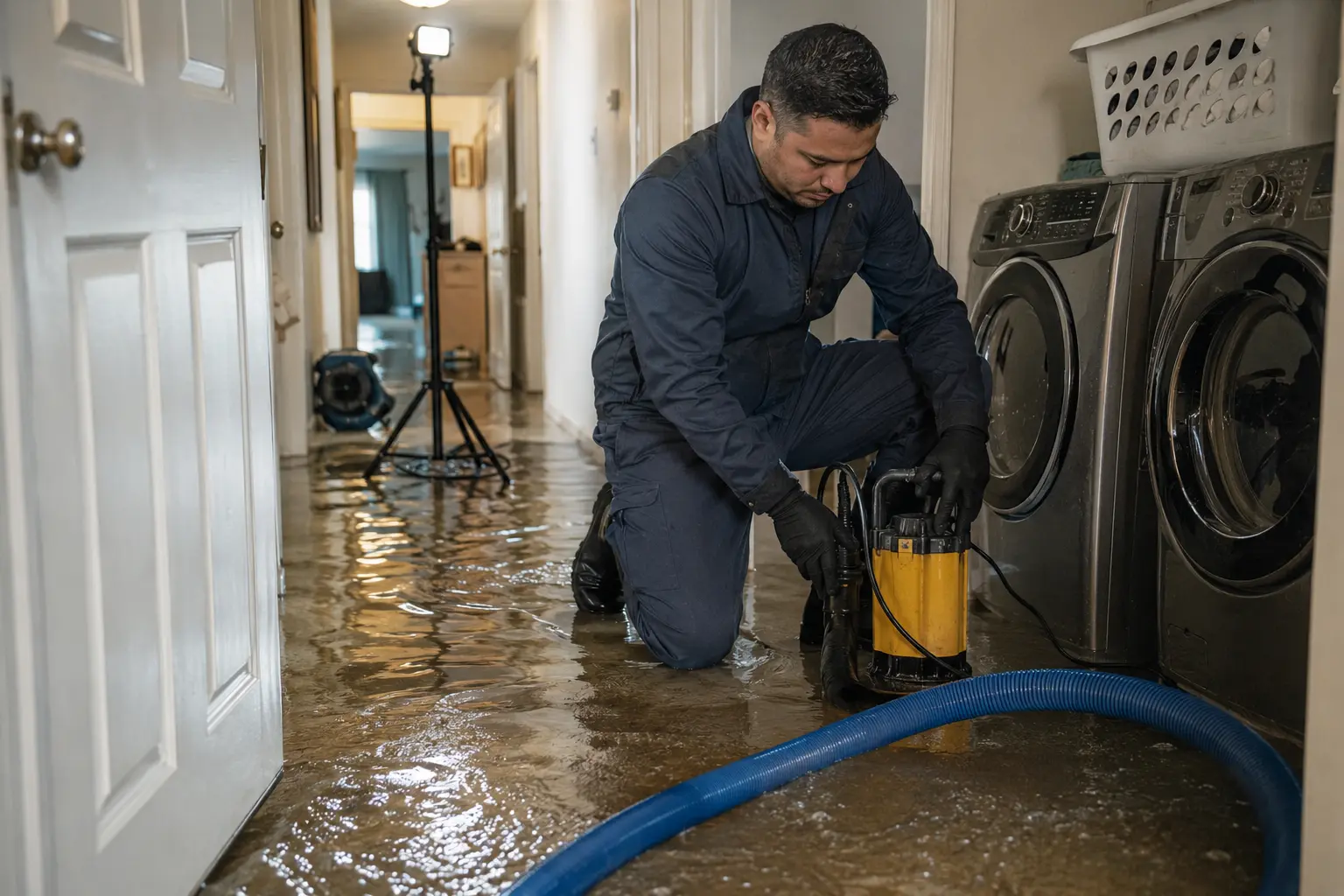
Industrial Water Extraction
Professional extraction equipment removes water far more effectively than household methods:
Truck-Mounted Extractors: High-powered vacuum systems mounted in service vehicles extract thousands of gallons per hour from floors and carpets.
Portable Extractors: Commercial units handle areas inaccessible to truck-mounted equipment.
Submersible Pumps: Heavy-duty pumps remove standing water from basements and crawlspaces.
Weighted Wands: Specialized tools extract water from carpet padding and subflooring through applied pressure.
Rapid professional extraction prevents water from penetrating deeper into structural materials and reduces total drying time significantly.
Our water extraction services typically remove 90-95% of standing water within hours of arrival.
Content Pack-Out and Protection
Depending on damage severity, affected items may require removal:
Pack-Out Services:
- Furniture moved to dry storage or climate-controlled facilities
- Electronics documented and sent for professional evaluation
- Textiles removed for cleaning or disposal
- Important documents and photos secured
On-Site Protection:
- Remaining furniture elevated on blocks or aluminum foil
- Plastic sheeting placed under items to prevent water absorption
- Valuable items relocated to unaffected areas
Complete inventories document all moved items for insurance purposes.
Structural Drying Process
After water extraction, the critical structural drying and dehumidification phase begins.
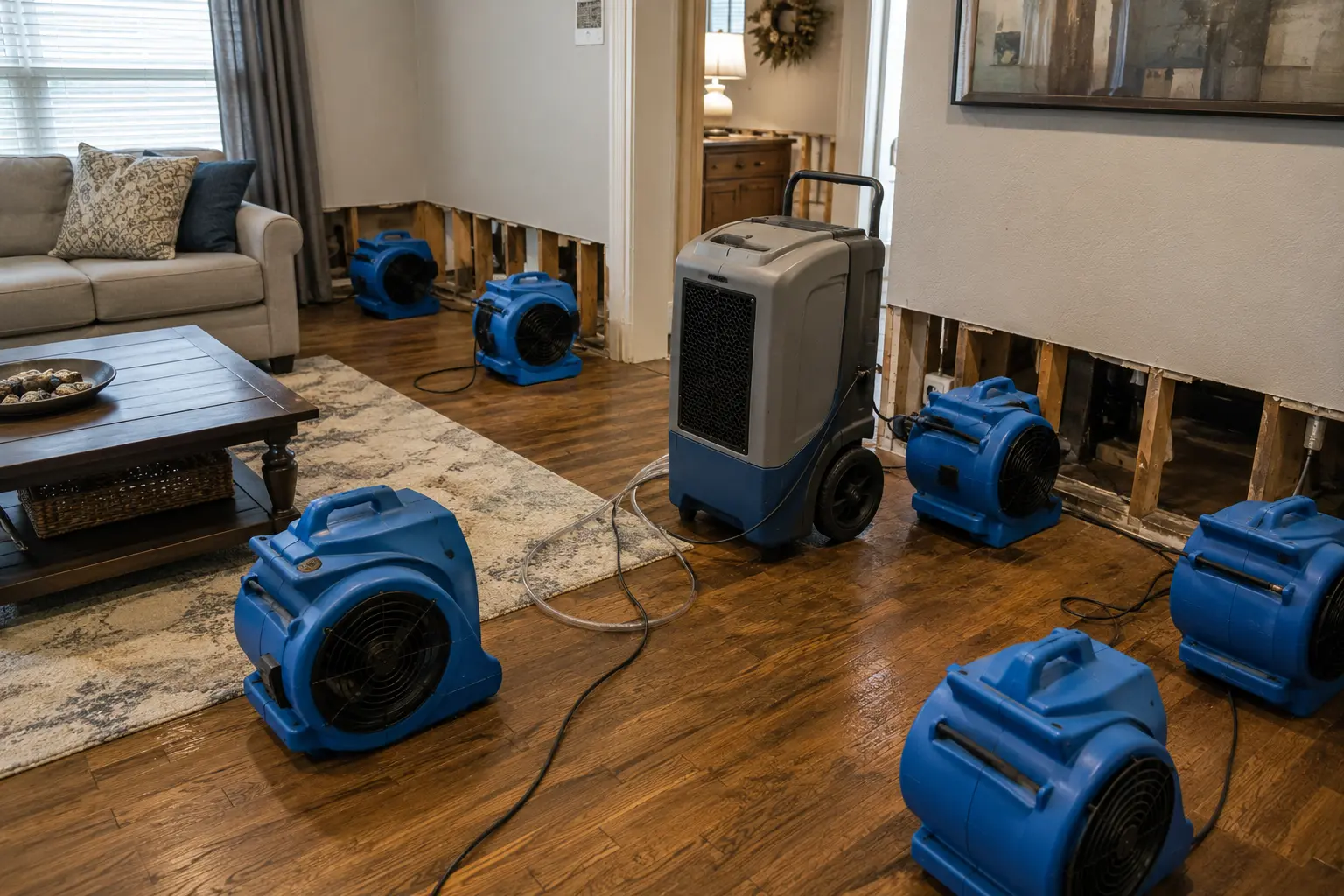
Commercial Drying Equipment
Professional drying uses industrial equipment designed specifically for water damage restoration:
Air Movers: High-velocity fans create focused airflow patterns that promote rapid evaporation. Depending on affected area size, we deploy 10-30+ air movers positioned strategically based on moisture readings and building configuration.
Commercial Dehumidifiers: Industrial units remove 100-300+ pints of moisture per day from the air. As building materials release water vapor, dehumidifiers capture it continuously, maintaining low humidity levels that accelerate drying.
Specialty Equipment:
- Drying Mats: Extract moisture trapped beneath hardwood floors without removing the flooring
- Injecti-Dry Systems: Force heated, dry air into wall cavities to dry behind drywall
- Desiccant Dehumidifiers: Provide low-humidity drying for specialty materials
Equipment runs continuously, typically 24 hours per day, until moisture levels reach acceptable ranges.
Moisture Monitoring Protocol
Throughout the drying process, technicians return regularly to:
- Measure moisture content in all affected materials
- Adjust equipment positioning for optimal results
- Monitor temperature and humidity levels
- Document drying progress
- Verify when materials reach proper moisture content
Professional monitoring ensures thorough drying and prevents premature equipment removal that could lead to mold growth.
Drying Timeline
Typical drying duration varies based on several factors:
3-5 Days: Most residential burst pipe events with prompt professional intervention
5-7 Days: Larger areas, heavily saturated materials, or properties with limited ventilation
7-10 Days: Extensive damage, Category 2 or 3 water involvement, or hard-to-dry materials like concrete
Complete drying cannot be rushed. Materials must reach specific moisture content levels to prevent mold growth and structural problems.
Preventing Mold Growth After Burst Pipes
Burst pipe water starts as Category 1 (clean water) but deteriorates rapidly. Mold prevention requires:
Rapid Response: Professional extraction within 24 hours prevents most mold growth. Delays beyond 48 hours dramatically increase mold risk.
Complete Structural Drying: Surface drying is insufficient. Materials must dry completely to prevent hidden mold growth behind walls and beneath floors.
Antimicrobial Treatment: When appropriate, EPA-registered antimicrobial solutions applied to affected surfaces prevent bacterial and mold growth during drying.
Air Quality Control: HEPA air scrubbers filter airborne particles during restoration.
If mold does develop, our mold remediation services eliminate contamination completely.
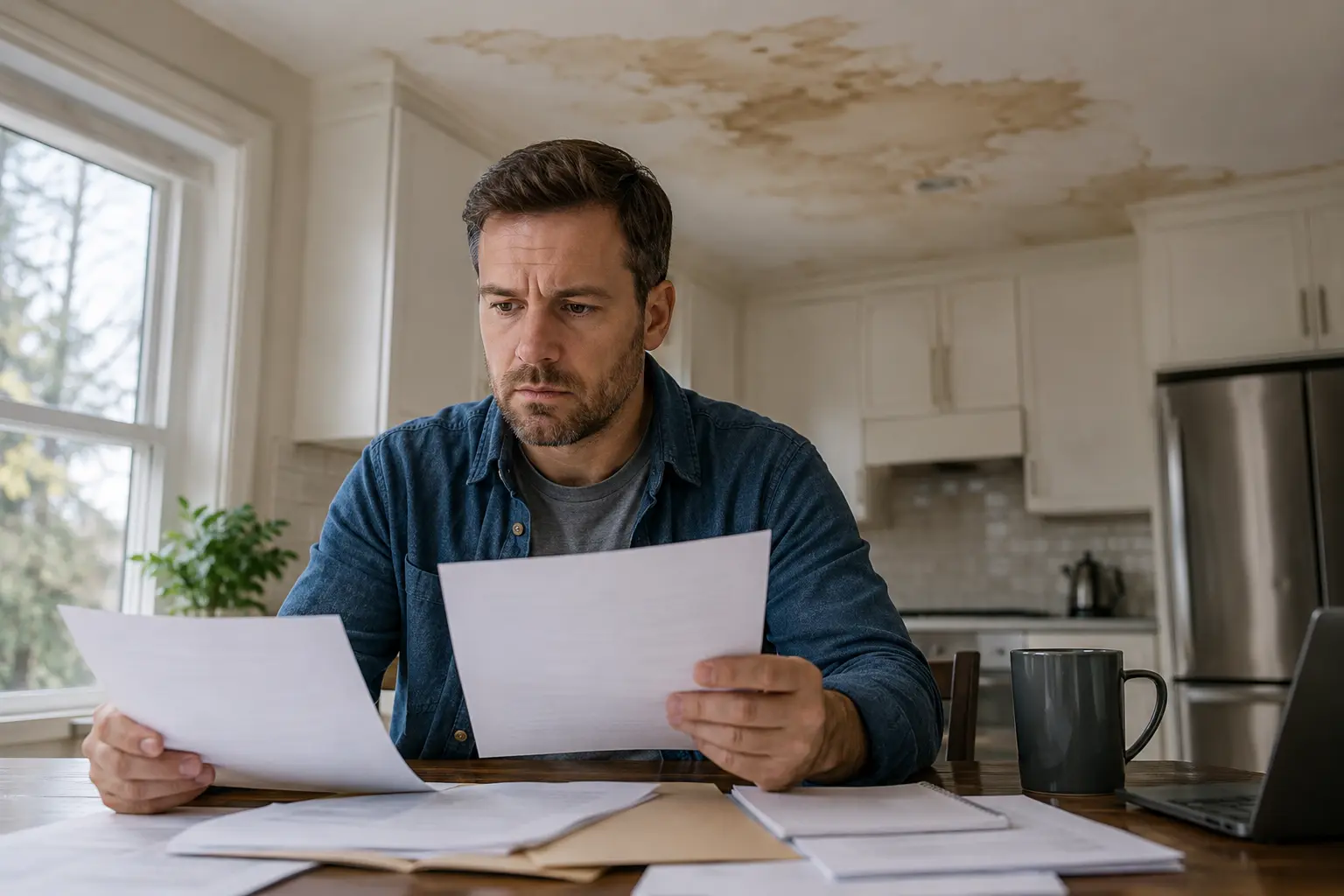
Insurance Claims for Burst Pipe Damage
Most homeowner insurance policies cover burst pipe water damage. To maximize your claim:
Immediate Notification
Report the damage to your insurance company within 24 hours. Prompt notification is often a policy requirement.
When calling your insurer:
- Provide policy number
- Describe what happened and when
- Explain immediate actions taken
- Ask about next steps and adjuster assignment
Professional Documentation
We provide comprehensive documentation including:
- Detailed damage assessment reports
- Thermal imaging showing hidden moisture
- Moisture meter readings throughout restoration
- Photographic documentation of all affected areas
- Complete restoration estimates
This professional documentation supports claims and helps ensure appropriate coverage.
Direct Insurance Coordination
Our team communicates directly with insurance adjusters to:
- Explain damage extent and restoration requirements
- Provide technical expertise supporting the claim
- Answer adjuster questions about procedures
- Help expedite claim approval
We work with all major insurance carriers throughout Los Angeles.
Preventative Measures for Future Protection
After restoration, consider preventative measures:
Upgrade Aging Plumbing
If your property has galvanized pipes, schedule complete replacement. Modern copper or PEX plumbing eliminates corrosion-related burst risks.
Install Leak Detection Systems
Whole-home water leak detection systems:
- Monitor water flow continuously
- Shut off water automatically when leaks detected
- Send smartphone alerts about problems
- Provide peace of mind during vacations
Replace Supply Lines
Replace rubber washing machine and dishwasher supply lines with braided stainless steel versions every 5 years.
Install Pressure Regulation
If your property experiences pressure over 80 PSI, install a pressure reducing valve to protect plumbing.
Earthquake Retrofitting
Consider flexible gas and water line connections to reduce seismic damage risk.
Regular Inspections
Have licensed plumbers inspect your system every 3-5 years to identify problems before they cause failures.
What Not to Do After a Burst Pipe
Avoid common mistakes that worsen damage or create safety risks:
Don’t Delay Calling Professionals: Every hour without professional extraction and drying increases total damage and costs.
Don’t Enter Flooded Rooms with Electricity On: Electrocution risk is real. Turn off power before entering.
Don’t Assume Surface Drying Is Sufficient: Hidden moisture causes long-term problems. Professional structural drying is essential.
Don’t Discard Damaged Items Before Adjuster Inspection: Insurance requires evidence. Keep everything until the adjuster completes inspection.
Don’t Use Heat to Speed Drying: Excessive heat can damage materials and increase fire risk. Professional equipment provides controlled drying.
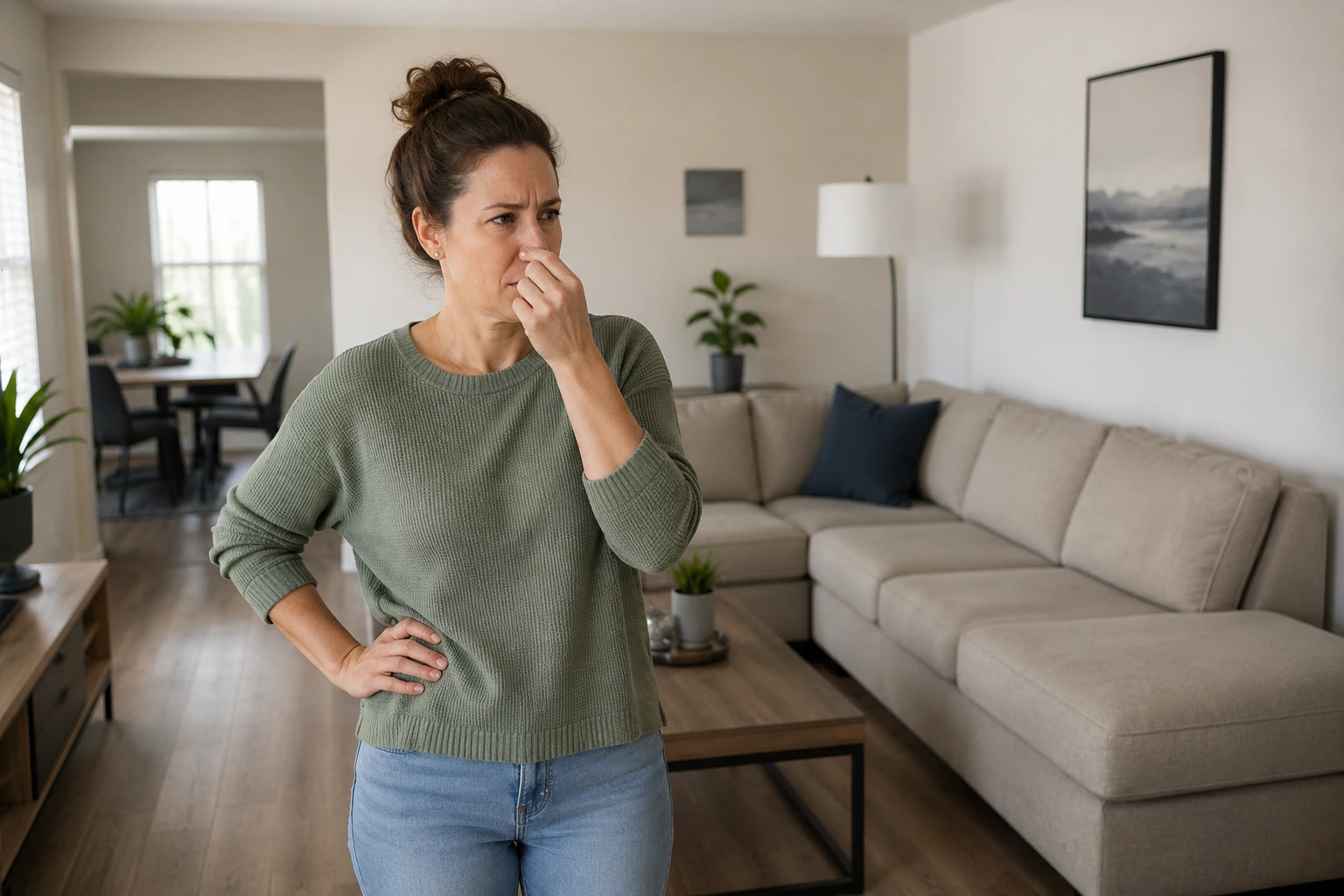
Don’t Ignore Musty Odors: If odors develop after drying, mold growth may be present. Professional inspection is necessary.
Los Angeles-Specific Burst Pipe Considerations
Los Angeles properties face unique factors:
Earthquake Vulnerability: Regular seismic activity stresses plumbing connections. Post-earthquake inspections help identify weakened pipes before they fail.
Older Housing Stock: Many Los Angeles neighborhoods contain properties built 60-100 years ago with original galvanized plumbing approaching failure.
Water Pressure Variation: Hillside properties and areas near pressure zones experience variable pressure that stresses systems.
Hard Water Issues: Los Angeles water contains minerals that accelerate pipe corrosion in some areas.
Limited Freeze Risk: While less common than other regions, valley areas and mountains do experience occasional hard freezes requiring protection.
Cost Considerations
Professional burst pipe cleanup costs vary based on damage extent:
Typical Costs:
- Emergency response: $200-$500
- Water extraction: $500-$2,000
- Structural drying (3-7 days): $1,500-$4,000
- Minor reconstruction: $1,000-$3,000
- Total average: $3,200-$9,500
Delayed Response Costs:
- Mold remediation: $3,000-$10,000+
- Major reconstruction: $10,000-$40,000+
- Extended displacement: $2,000-$5,000+
Professional restoration within 24 hours costs significantly less than delayed response requiring mold remediation and major reconstruction.
Contact ASAP Water Damage Restoration Los Angeles
Burst pipes create water damage emergencies requiring immediate professional response. The actions you take in the first minutes determine whether damage remains minor and manageable or becomes a major reconstruction project.
Our IICRC-certified team provides rapid burst pipe cleanup and water damage restoration throughout Los Angeles. We respond 24/7 with industrial extraction equipment, commercial drying systems, and thermal imaging technology.
Call (323) 677-2811 immediately after discovering a burst pipe.
We serve residential and commercial properties in Melrose Hill, Whitley Heights, and throughout the greater Los Angeles area.
When a pipe bursts, every minute matters. Call now for emergency water damage restoration.
Keep reading
- Water Damage Categories Explained: Clean, Gray, and Black Water
- What to Do in the First 60 Minutes (and 24 Hours) After Water Damage
- 10 Ways to Prevent Water Damage in Your Los Angeles Home
Need help now? See our 24/7 water damage restoration in Los Angeles or call (323) 677-2811, 24/7.