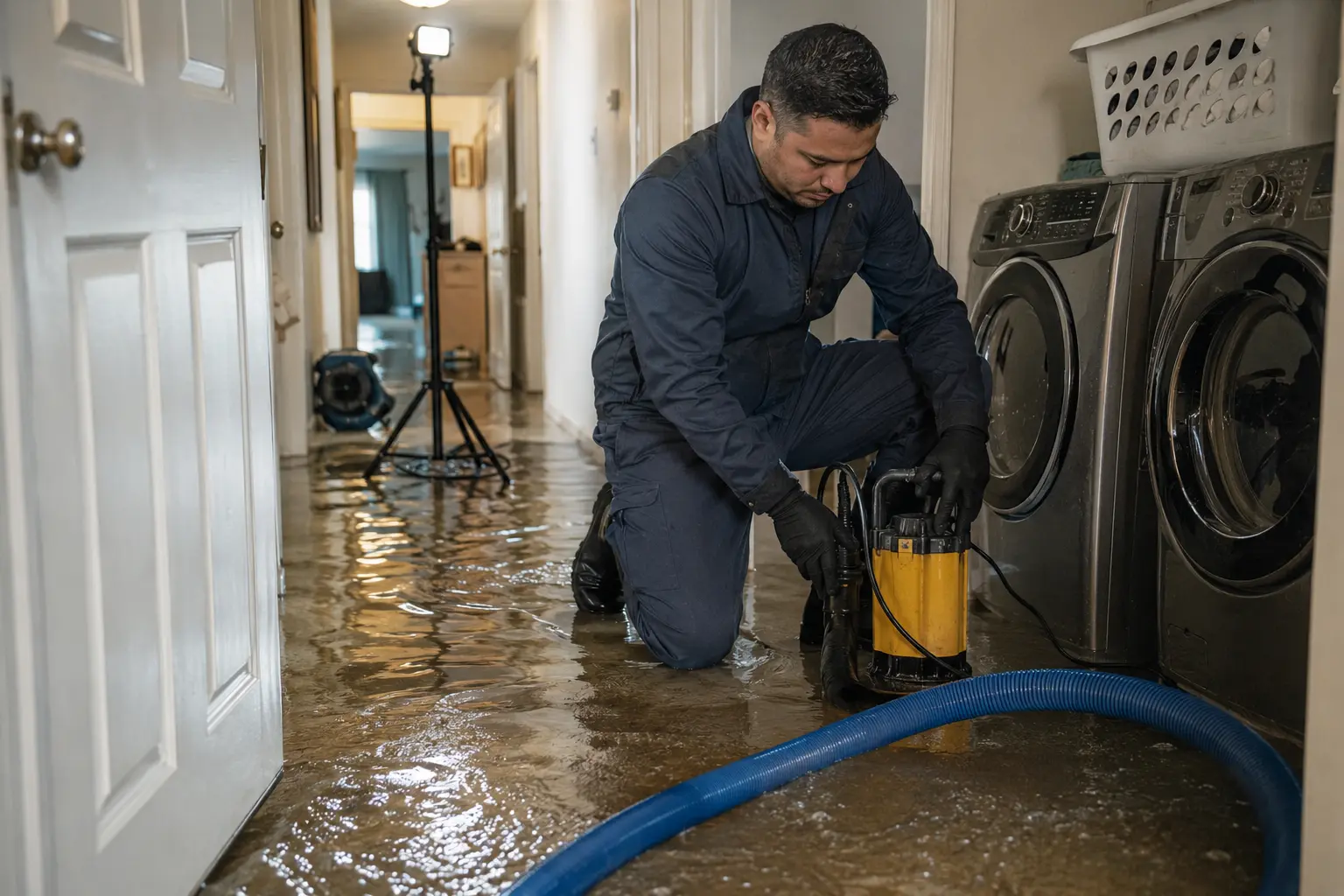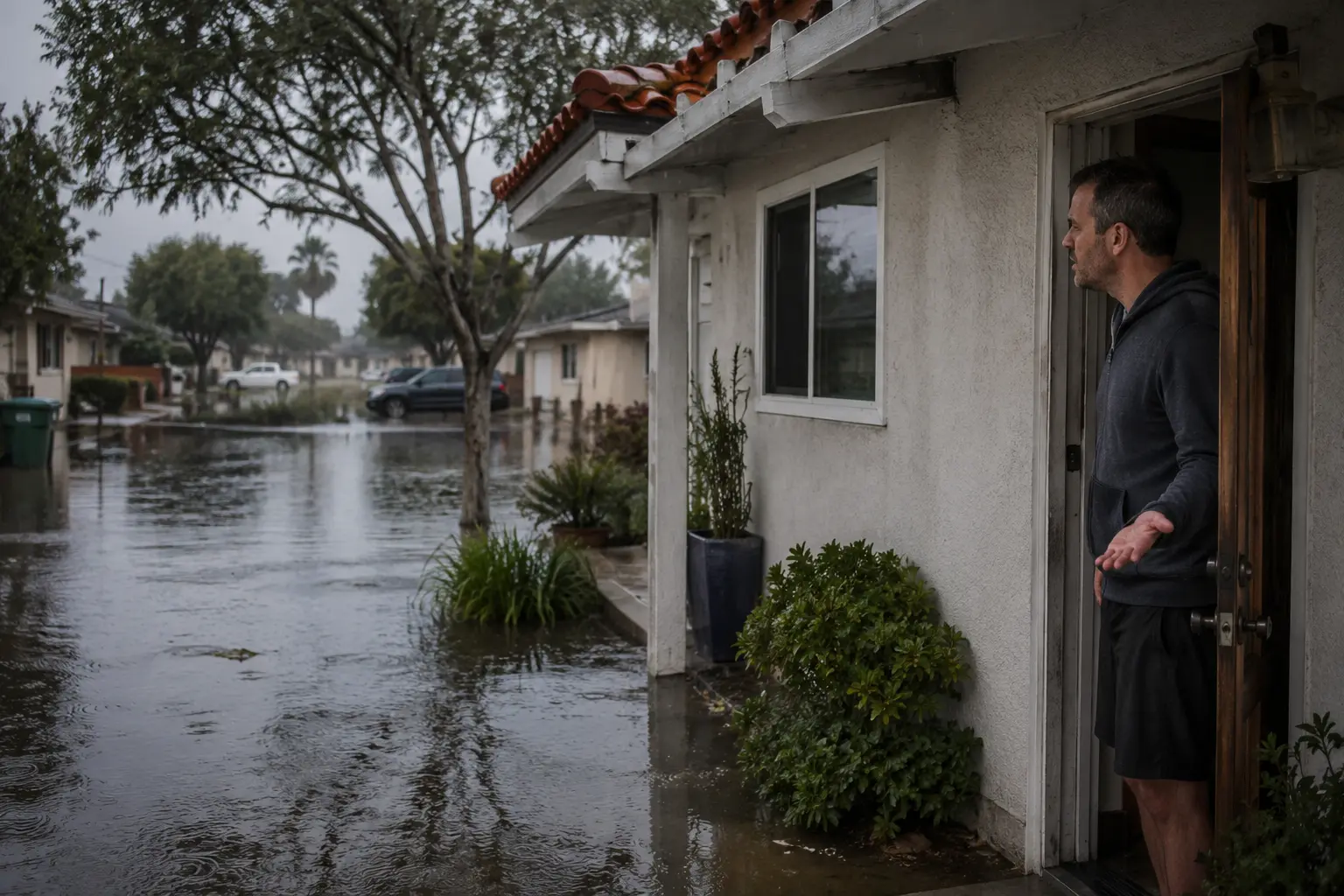
Water damage does not always announce itself with obvious flooding or visible leaks. Some of the most destructive water damage develops silently behind walls and above ceilings, where moisture accumulates for weeks or months before property owners discover the problem.
By the time hidden water damage becomes visible, serious structural deterioration and mold contamination may already exist. Understanding the warning signs of concealed moisture helps Los Angeles homeowners identify problems early and prevent costly repairs.
This guide explains how to recognize hidden water damage, why it develops undetected, and what steps to take when you suspect moisture problems in your walls or ceilings.
Why Water Damage Hides Behind Walls and Ceilings
Modern home construction creates numerous spaces where water can accumulate without immediate visibility. Wall cavities between studs, spaces above ceiling drywall, gaps around plumbing penetrations, and areas beneath bathroom fixtures all provide hidden pathways for water travel.
Several common situations cause concealed water damage in Los Angeles properties:
Slow Plumbing Leaks: Small pinhole leaks in supply lines, drain pipes, or fixture connections often drip slowly for months. Water accumulates inside walls where plumbing runs vertically between floors or horizontally through wall cavities.
Roof Leak Migration: Water entering through damaged roof shingles or flashing does not always drip directly below the entry point. It often travels along roof decking, down rafters, or through insulation before appearing inside the structure, sometimes several feet from the actual roof penetration.
Slab Leaks: Water lines and drain pipes beneath concrete foundations develop leaks that remain completely invisible until moisture rises through the slab and appears on flooring or walls. By this time, significant water may have already damaged the foundation.
HVAC Condensate Issues: Air conditioning systems produce condensation that drains through dedicated lines. When these drain lines clog or disconnect, water accumulates in wall cavities near air handlers or drips above ceilings near ductwork.
Shower and Tub Leaks: Failed grout, caulking, or waterproofing membranes allow water to seep behind tile and into wall cavities during every shower. Damage accumulates slowly over time until wood framing rots and mold colonies establish.
Window and Door Leaks: Improperly sealed windows and doors allow rainwater to enter wall cavities during storms. In Los Angeles, where heavy rain is infrequent, these leaks may only activate occasionally, making them harder to identify.
Because these moisture sources develop in concealed areas, property owners often have no idea damage is occurring until it becomes severe.
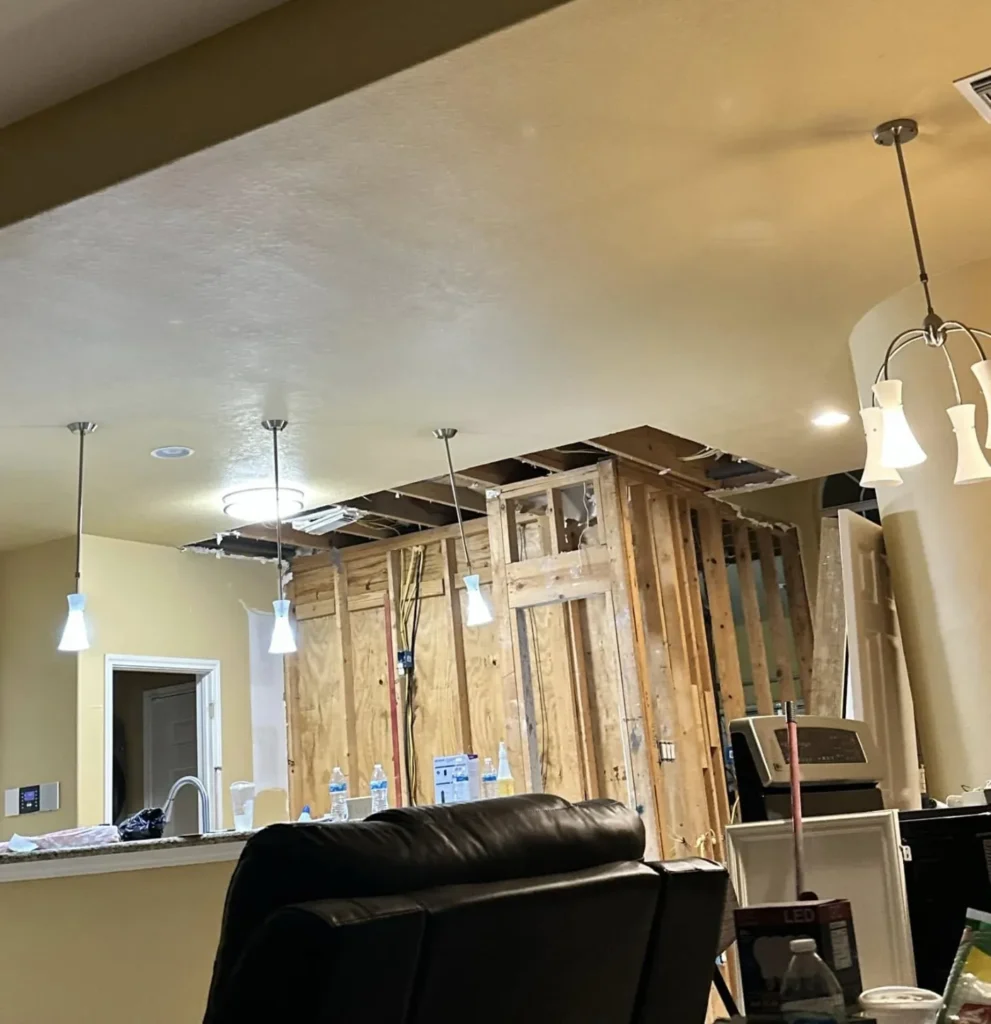
Visual Warning Signs of Hidden Water Damage
While water damage behind walls and ceilings is not directly visible, several indicators reveal moisture problems before major structural failure occurs.
Wall Discoloration and Staining
Water stains on drywall or plaster appear as yellowish, brownish, or dark patches. Fresh water stains often look wet or darker than surrounding areas. Older stains appear as faded discoloration.
Pay particular attention to:
- Stains that appear suddenly without explanation
- Discoloration near ceiling corners
- Staining along wall-to-ceiling seams
- Water marks near plumbing fixtures
- Stains that grow larger over time
Even small stains indicate moisture problems. The visible stain represents only a fraction of the actual water damage, as moisture spreads through materials beyond what appears on the surface.
Peeling or Bubbling Paint and Wallpaper
Paint and wallpaper adhere properly only to dry surfaces. When moisture penetrates drywall, paint loses adhesion and begins peeling, bubbling, or flaking.
Warning signs include:
- Paint that bubbles or blisters without touch
- Wallpaper edges that curl or separate from walls
- Paint that flakes or chips when touched lightly
- Glossy or wet-looking patches on painted surfaces
These symptoms develop because trapped moisture behind the surface pushes outward as it attempts to evaporate. By the time paint shows visible damage, significant moisture typically exists within the wall.
Warped or Sagging Ceilings
Drywall and plaster ceilings absorb water like sponges. As moisture accumulates, these materials become heavy and lose structural integrity.
Look for:
- Ceilings that sag or bow downward
- Visible waviness or irregular surfaces
- Ceiling tiles that droop or hang lower than others
- Cracks running across ceiling surfaces
Sagging ceilings represent serious structural concerns. The weight of water-saturated drywall can cause sudden collapse, creating safety hazards and extensive damage.
Bulging or Bowing Walls
When water saturates drywall, the material swells and expands. Prolonged exposure causes walls to bulge outward or bow.
Check for:
- Walls that appear curved rather than flat
- Sections that protrude beyond surrounding areas
- Drywall that feels soft or spongy when pressed
- Visible distortion when viewing walls from angles
Bulging indicates severe water saturation. The drywall has likely absorbed moisture to the point where it can no longer maintain proper structure and will require replacement.
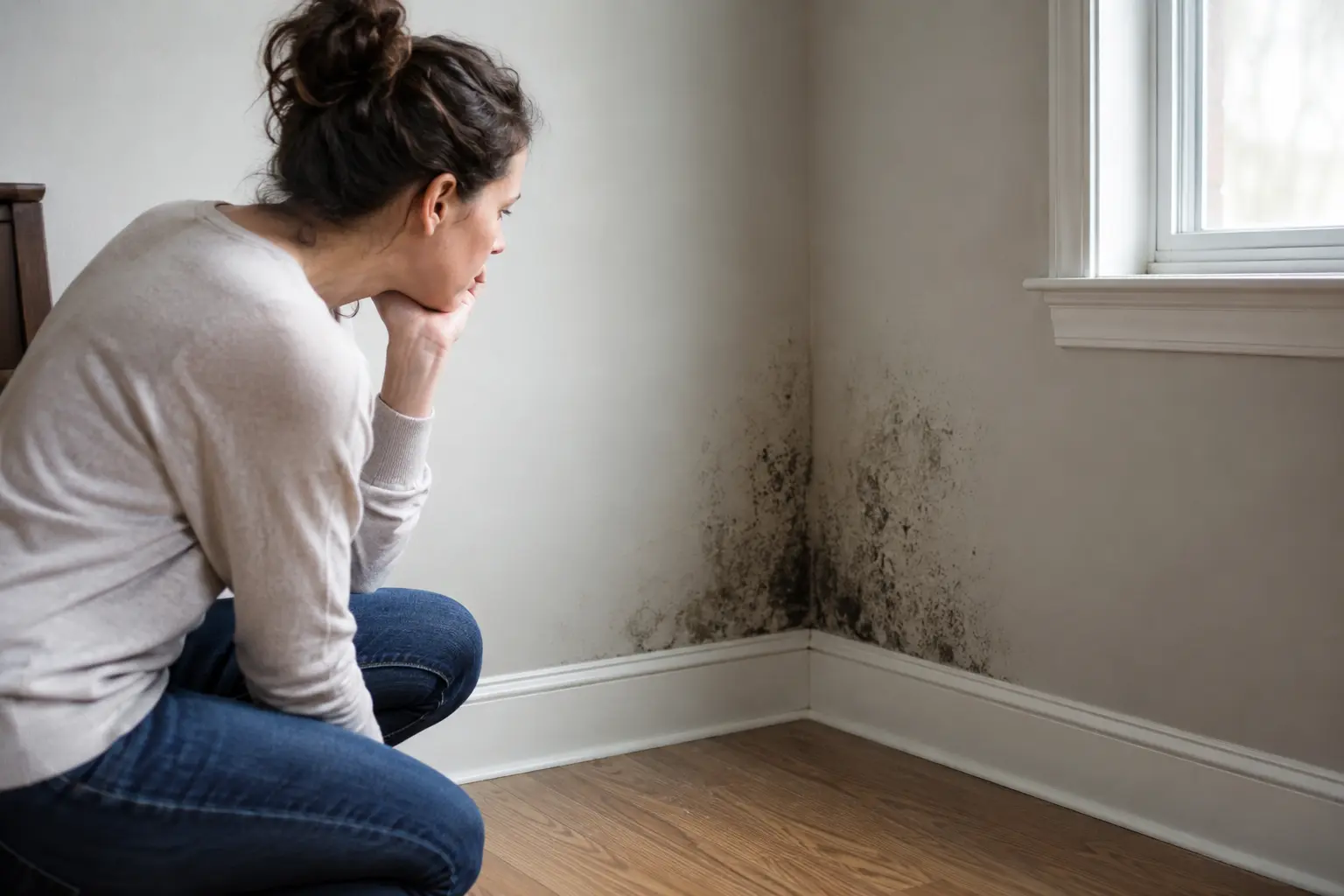
Visible Mold Growth
Mold grows wherever moisture and organic materials meet. Surface mold on walls or ceilings always indicates moisture problems, and visible growth often represents only a small portion of total contamination.
Common mold indicators include:
- Black, green, or gray spots or patches
- Fuzzy or powdery surface growth
- Mold appearing in corners or along baseboards
- Growth patterns following wall seams or studs
If mold appears on visible surfaces, extensive growth likely exists inside wall cavities where moisture has been present longer. Professional mold inspection and air testing determines the full extent of contamination.
Cracked or Damaged Drywall
Water weakens drywall’s structural integrity. As materials dry and re-wet through repeated cycles, cracking develops.
Warning signs include:
- Cracks appearing along seams between drywall sheets
- Vertical or horizontal cracks that develop suddenly
- Crumbling or flaking drywall texture
- Sections that sound hollow when tapped
Cracks themselves do not always indicate active water damage, but when combined with other symptoms like staining or musty odors, they suggest ongoing moisture problems.
Physical and Sensory Indicators
Some signs of hidden water damage appeal to senses other than sight:
Musty or Moldy Odors
One of the most reliable indicators of concealed water damage is smell. Trapped moisture creates ideal conditions for mold and bacterial growth, which produce distinctive musty odors.
Pay attention to:
- Persistent musty smells that do not dissipate
- Odors that seem stronger near specific walls or rooms
- Smells that worsen during humid weather
- Earthy or rotten odors without visible source
Musty odors indicate active mold growth somewhere in the structure. The smell often becomes noticeable before visible mold appears, providing early warning of moisture problems.
Soft or Spongy Surfaces
Drywall and wood materials maintain firmness when dry. Water-saturated materials feel soft, spongy, or compressible.
Test walls and ceilings by:
- Pressing gently with fingertips
- Checking for give or flex in normally rigid surfaces
- Feeling for soft spots near plumbing fixtures
- Testing areas around windows and doors
Softness indicates significant water absorption. These areas require immediate professional assessment to determine damage extent.
Temperature Changes
Water-damaged areas often feel cooler than surrounding surfaces due to evaporation. Running your hand along walls may reveal temperature variations that indicate hidden moisture.
Increased Humidity
Unexplained humidity increases in specific rooms suggest moisture entering from hidden sources. Condensation on windows, mirrors, or walls can indicate excess humidity from concealed water damage.
Auditory Clues
Sometimes hidden water damage produces sounds that reveal its presence:
Dripping or Running Water Sounds
Hearing water movement when no fixtures are running suggests active leaks. Water running inside walls or above ceilings indicates plumbing failures or roof leaks.
Check for:
- Dripping sounds inside walls
- Flowing water sounds when no fixtures operate
- Trickling noises that start and stop
- Sounds that change with water pressure fluctuations
These sounds often indicate active leaks requiring immediate attention to prevent further damage.
Unusual Creaking or Cracking
As wood framing absorbs moisture, it swells and shifts. This movement can produce creaking or cracking sounds, particularly in older structures.
Utility and Performance Changes
Hidden water damage sometimes reveals itself through changes in home performance:
Unexplained Increases in Water Bills
Water bills that rise without explanation often indicate hidden leaks. A sudden spike or gradual increase over several months suggests water escaping somewhere in the plumbing system.
Compare:
- Current bills to historical averages
- Water usage patterns during vacations when no one is home
- Meter readings before and after shutting off all fixtures
If the water meter continues running when all fixtures are off, an active leak exists somewhere in the system.
Decreased Water Pressure
Leaks in supply lines reduce water pressure throughout the property. If pressure decreases without explanation, water may be escaping through concealed breaks in pipes.
Warm Flooring
Slab leaks in hot water lines cause flooring above the leak to feel warm. Unexplained warm spots on floors, particularly in areas where hot water lines run, indicate concealed leaks beneath the slab.
Foundation Cracks
While not all foundation cracks indicate water damage, cracks that appear suddenly or grow rapidly can result from slab leaks undermining the foundation. Water eroding soil beneath concrete creates voids that allow settling and cracking.
High-Risk Areas in Los Angeles Homes
Certain locations within Los Angeles properties experience hidden water damage more frequently:
Bathrooms
Bathrooms contain multiple water sources and extensive plumbing, making them prime locations for concealed leaks:
- Behind shower and tub enclosures where tile and waterproofing fail
- Under sinks where supply lines and drains connect
- Around toilets where wax rings deteriorate
- Behind washing machines in combination bath/laundry rooms
Water damage in bathrooms often remains hidden until flooring fails or mold becomes severe.
Kitchens
Kitchen plumbing concentrates dishwashers, sinks, refrigerators with ice makers, and garbage disposals in small spaces:
- Under sinks where disposal connections leak
- Behind dishwashers where supply lines fail
- Around refrigerators with water line connections
- Below sinks where drain pipes corrode
These leaks frequently occur inside cabinets where they remain concealed until significant damage develops.
Laundry Rooms
Washing machines combine high water volume with flexible supply lines that fail over time:
- Behind washing machines where supply hoses connect
- At floor drains that become clogged
- In walls where hot and cold supply lines run
Washing machine supply line failures can release hundreds of gallons before anyone notices, causing extensive hidden damage.
Attics and Roof Spaces
Roof leaks often develop in attics before appearing in living spaces below:
- Around roof penetrations like vents and chimneys
- At valley joints where roof planes meet
- Near skylights and roof hatches
- Along roof edges where flashing fails
Attic insulation absorbs water, preventing it from dripping into living spaces while allowing mold growth and wood rot.
Exterior Walls
Water can enter through exterior walls without creating obvious interior damage initially:
- Around windows and doors with failed seals
- Through stucco cracks in Los Angeles’s common stucco-clad homes
- At wall penetrations for utilities and fixtures
- Where siding materials deteriorate
These leaks often create damage in wall cavities long before interior walls show symptoms.
Professional Moisture Detection Methods
When hidden water damage is suspected, professional moisture detection provides accurate assessment without destructive demolition.
Thermal Imaging Technology
Infrared cameras detect temperature differences caused by moisture. Water-saturated materials appear cooler than dry areas due to evaporation.
Our thermal imaging inspection services use advanced cameras to:
- Scan walls and ceilings for hidden moisture
- Identify active leak locations
- Map moisture patterns throughout structures
- Pinpoint areas requiring further investigation
Thermal imaging reveals problems without removing drywall, saving time and repair costs.
Moisture Meters
Professional moisture meters measure exact water content in building materials:
Pin-Type Meters: Insert pins into materials to measure electrical resistance, which changes with moisture content. These provide precise readings at specific points.
Non-Invasive Meters: Scan surfaces without penetration, detecting moisture several inches into materials. These help identify affected areas before using pin meters for verification.
Moisture meter readings determine:
- Whether materials are actively wet
- How deeply moisture has penetrated
- Which areas require drying or replacement
- When drying is complete
Infrared Scanning
Beyond thermal cameras, full infrared scanning creates detailed moisture maps showing:
- Moisture distribution patterns
- Severity of water intrusion
- Multiple leak sources
- Areas requiring immediate attention
Combined with moisture meters, infrared scanning provides comprehensive assessment of concealed water damage.
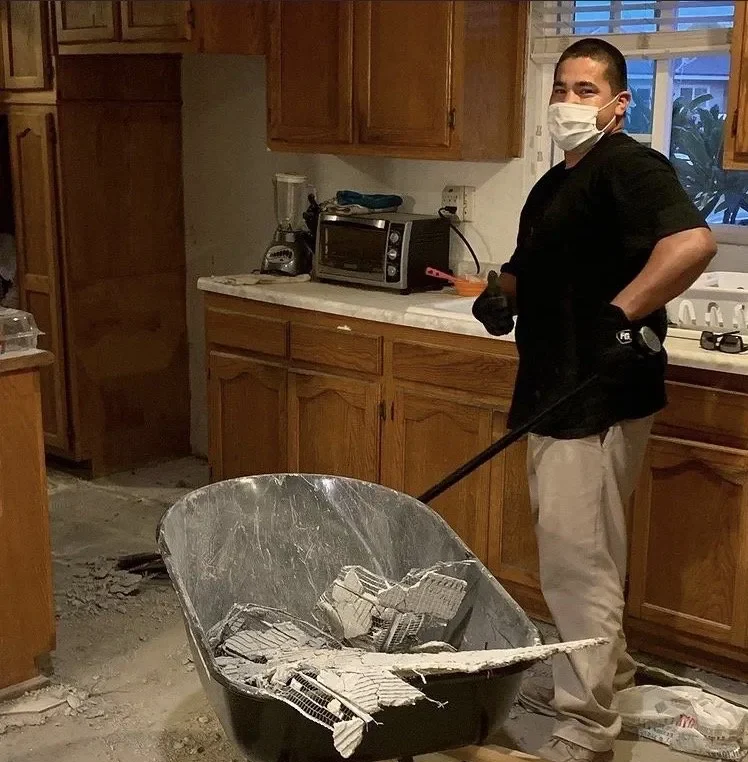
When to Call Professional Water Damage Restoration
Hidden water damage requires professional assessment and restoration. Property owners should contact restoration services when:
- Musty odors persist without identified source
- Water stains appear on walls or ceilings
- Mold growth is visible
- Walls or ceilings feel soft or spongy
- Water bills increase unexpectedly
- Sounds of dripping or running water occur
- Paint or wallpaper bubbles or peels
- Visible damage appears that suggests hidden moisture
Our 24/7 emergency restoration services provide rapid response throughout Los Angeles. We bring professional moisture detection equipment to every inspection and begin mitigation immediately when active water damage is confirmed.
Early professional intervention:
- Locates hidden moisture accurately
- Prevents mold growth from establishing
- Reduces total repair costs
- Protects structural integrity
- Documents damage for insurance claims
The Progression of Hidden Water Damage
Understanding how concealed moisture damage develops helps property owners recognize the urgency of professional intervention:
Stage 1: Initial Leak Development
A small leak begins in a supply line, drain pipe, roof, or fixture seal. Water enters wall cavities or ceiling spaces in small amounts, often just a few drops per hour or per day.
At this stage:
- No visible symptoms exist
- Moisture accumulates slowly
- Materials begin absorbing water
- Early detection would prevent all significant damage
Stage 2: Material Saturation
As water continues entering the concealed space, building materials reach saturation. Drywall, insulation, and wood framing hold as much moisture as they can absorb.
Observable symptoms begin:
- Musty odors develop
- Paint or wallpaper may bubble slightly
- Small stains might appear
- Professional detection would still limit damage substantially
Stage 3: Mold Colonization and Structural Weakening
After 24 to 48 hours of saturation, mold spores activate and begin growing. Wood framing starts deteriorating. Drywall loses structural integrity.
Symptoms become clearer:
- Visible staining appears
- Mold odors strengthen
- Paint peeling or bubbling worsens
- Professional restoration still prevents major reconstruction
Stage 4: Advanced Deterioration
Weeks or months of concealed moisture create severe damage:
- Wood rot develops in framing
- Mold colonies spread extensively
- Drywall crumbles or sags
- Structural integrity compromises
At this stage:
- Major reconstruction becomes necessary
- Full mold remediation is required
- Costs escalate dramatically
- Safety concerns develop
The progression from Stage 1 to Stage 4 can take days for major leaks or months for slow drips. Regardless of speed, earlier intervention always results in lower costs and less extensive repairs.
Preventing Hidden Water Damage
While not all concealed water damage can be prevented, several measures reduce risk:
Regular Inspections: Check attics, crawlspaces, and areas around plumbing fixtures quarterly for moisture signs.
Maintain Roofing: Replace worn shingles and repair flashing before leaks develop. Los Angeles properties should inspect roofs before winter storms arrive.
Monitor Water Bills: Review utility bills monthly and investigate unexplained increases immediately.
Update Old Plumbing: Replace galvanized pipes, rubber washing machine hoses, and aging water heaters before failures occur.
Seal Exterior Penetrations: Maintain caulking around windows, doors, and utility penetrations.
Test Water Pressure: High pressure stresses pipes and accelerates failures. Install pressure regulators if pressure exceeds 80 PSI.
Professional Inspections: Schedule professional moisture detection inspections periodically, particularly in older homes or after purchasing property.
Insurance Coverage for Hidden Water Damage
Insurance coverage for concealed water damage varies depending on circumstances:
Typically Covered:
- Sudden pipe bursts inside walls
- Accidental appliance leaks
- Storm-related roof leak damage
- Immediate professional mitigation costs
Often Not Covered:
- Damage from long-term neglect
- Slow leaks that developed over months or years
- Mold resulting from deferred maintenance
- Damage the homeowner should have discovered through reasonable inspection
To maximize insurance coverage:
- Report damage promptly after discovery
- Take immediate mitigation steps
- Document all damage thoroughly
- Contact professional restoration services quickly
- Maintain records of home maintenance
We provide detailed documentation including moisture readings, thermal images, and damage reports to support insurance claims. Our team works directly with adjusters to help expedite the claims process.
Contact ASAP Water Damage Restoration Los Angeles
Hidden water damage may be concealed, but the warning signs are clear when you know what to look for. If you notice musty odors, wall discoloration, soft surfaces, or any other indicators of concealed moisture, immediate professional assessment protects your property from escalating damage.
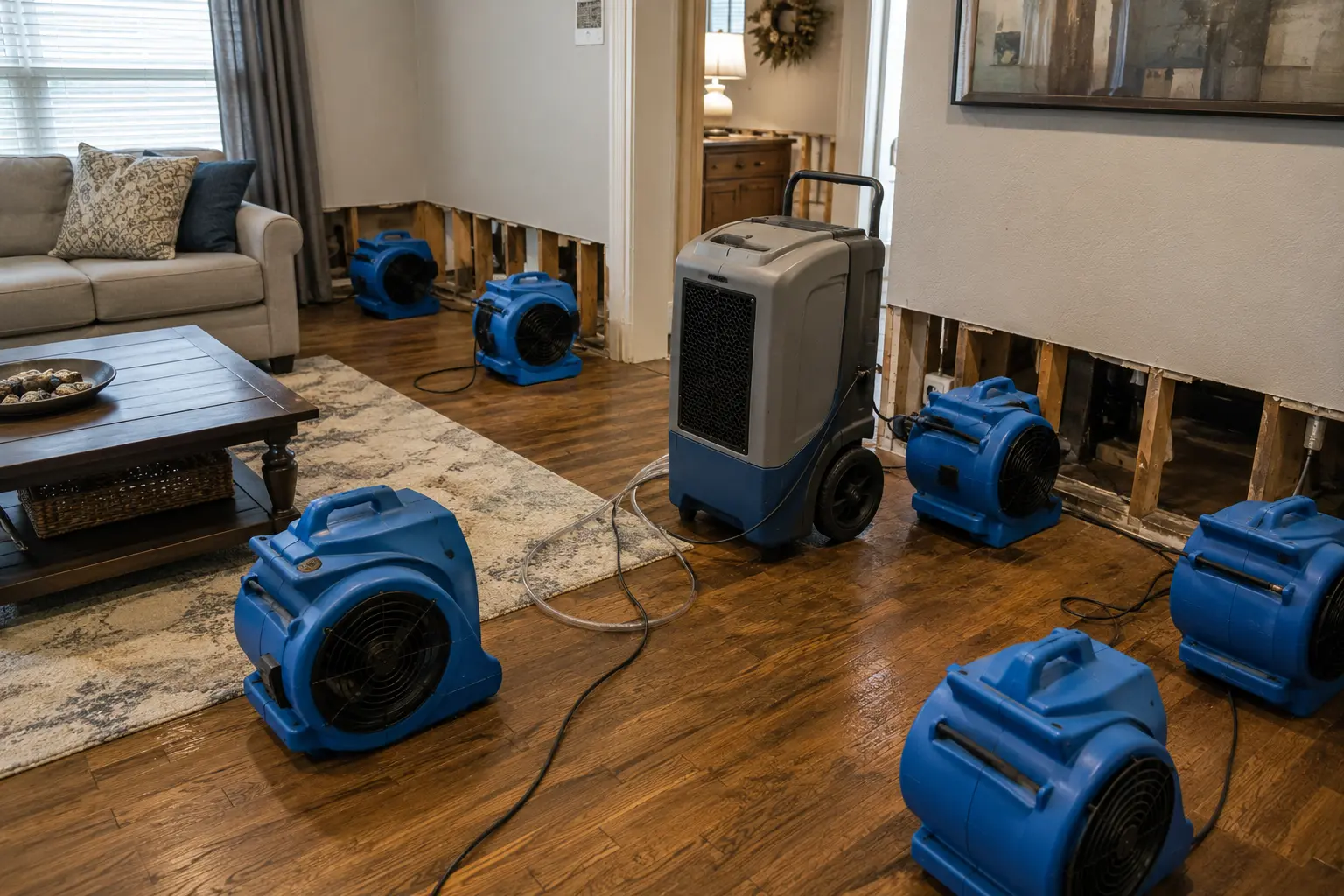
Our IICRC-certified technicians use advanced thermal imaging cameras and moisture detection equipment to locate hidden water damage without unnecessary demolition. We provide comprehensive structural drying and dehumidification services to restore affected areas completely.
Call (323) 677-2811 for professional moisture detection and water damage restoration throughout Los Angeles.
We serve residential and commercial properties in Highland Park, Echo Park, Mid-City, and all surrounding neighborhoods.
Don’t wait for hidden damage to become visible. Contact us today for professional moisture assessment.